Diagnosis-led dental care in Nizampet
Wisdom Teeth Treatment in Nizampet
Not every wisdom tooth needs to be removed. Pain, swelling or a partially erupted tooth can warrant a dental assessment—but a healthy wisdom tooth may simply need monitoring.
At Nizampet Dentist, the first step is to examine your concern, review imaging when needed, and discuss monitoring, dental care or extraction along with expected recovery and costs.
Clinical assessment first
Examination before any decision
Options clearly explained
Monitor, treat or extract
Recovery guidance
Aftercare and warning signs
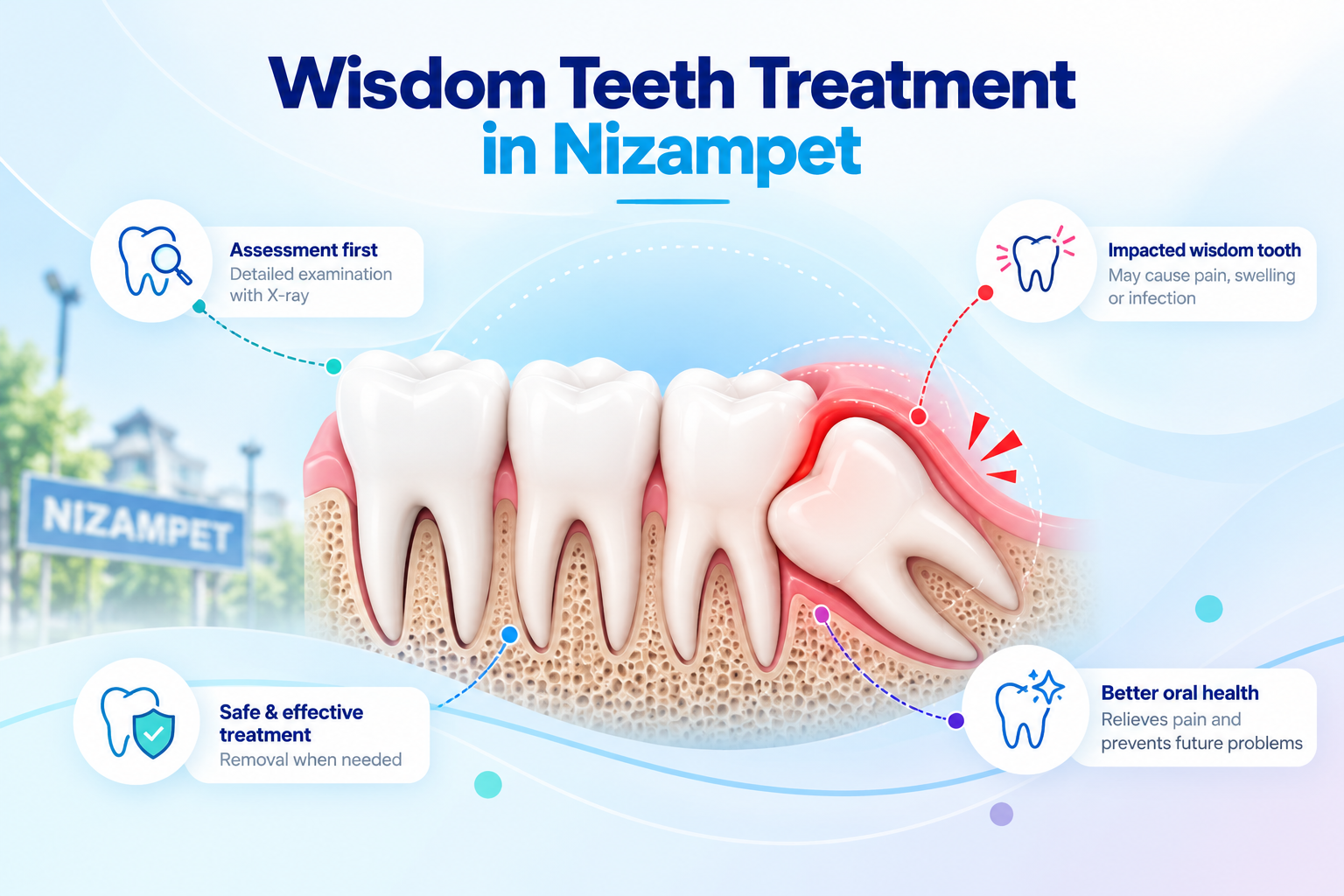
Illustration for education; not a patient X-ray
At a glance
Wisdom Teeth Care in Nizampet
Useful facts before booking a consultation for wisdom teeth treatment in Nizampet.
Clinic location
Nizampet Main Road, opposite Balaji Park Town, Hyderabad 500090
Clinic hours
Monday–Sunday
10:00 AM–9:00 PM
Dental team
Dental surgeon and oral & maxillofacial surgeon at Dr. White Dental Care
Call / WhatsApp
+91 98480 85789
Send a WhatsApp enquiry
Understand the basics
What Are Wisdom Teeth?
A straightforward explanation for patients who want to understand their third molars.
What is a wisdom tooth?
Wisdom teeth are the last permanent molars, also called third molars, at the back of the upper and lower jaws. They commonly emerge during the late teens or early adulthood, but may stay under the gum or become partly erupted. Only an examination can determine whether a tooth is healthy, impacted or affected by disease.
Must it be removed?
No. A symptom-free wisdom tooth without disease may be monitored. Removal may be considered for recurrent infection, unrestorable decay, pathology or damage to an adjacent tooth. The decision depends on the examination and imaging findings. Reference: NICE guidance on impacted wisdom teeth ↗
Treatment choices
Do All Wisdom Teeth Need Removal?
A fully erupted wisdom tooth that is healthy, functional and easy to clean may need nothing beyond routine dental care. Even an impacted tooth may sometimes be reviewed over time if it shows no evidence of disease.
Repeated gum infections, decay that cannot be restored, abscesses, cysts or problems involving adjacent teeth can change the risk–benefit discussion. Your dentist may suggest further imaging or refer you to an oral and maxillofacial surgeon if the tooth is close to important structures.
Not a reason on its own: Wisdom tooth removal is not routinely recommended just to prevent crowding of the front teeth.
Before extraction
Questions worth asking
✓ What problem does the tooth have now?
✓ Could monitoring or another treatment be reasonable?
✓ What does my X-ray show about roots and nearby nerves?
✓ What are the likely benefits, risks and recovery steps?
✓ Who will perform the procedure, and where?
Common concerns
Signs That a Wisdom Tooth Needs Assessment
Symptoms can have several causes. A dentist must examine the area to identify the actual problem.
Pain at the back of the jaw
Aching or discomfort behind your last molars may involve a wisdom tooth, gums or another tooth.
Swollen or tender gums
Inflammation around a partly erupted tooth can be associated with pericoronitis or local irritation.
Food trapping or bad taste
Partly erupted teeth can be difficult to clean and may collect food and bacteria.
Trouble opening the mouth
Jaw stiffness can occur with local inflammation or infection and needs assessment.
Decay or adjacent tooth problems
A difficult-to-reach wisdom tooth may develop cavities or affect the neighbouring molar.
Recurrent infection or swelling
Repeated swelling, discharge, fever or increasing symptoms warrant timely evaluation.
Urgent warning: Rapidly spreading swelling, difficulty swallowing or difficulty breathing requires emergency medical care—not a routine website enquiry.
Tooth position
Types of Wisdom Tooth Impaction
The tooth position influences cleaning, treatment options and whether surgical removal might be complex.
Fully erupted
The tooth has emerged into the mouth. If healthy and accessible, routine care or a simple extraction may be possible.
Partially erupted
Part of the tooth remains beneath gum tissue. This can create a pocket where food accumulates, increasing the risk of local inflammation.
Impacted / unerupted
The tooth remains blocked by bone, gum or a neighbouring tooth. Impaction alone does not establish that extraction is necessary.
A clinical examination and, when appropriate, a dental X-ray help identify tooth angulation and proximity to adjacent teeth or nerves.
Treatment pathways
Options for Wisdom Teeth Treatment in Nizampet
Wisdom teeth treatment in Nizampet may involve monitoring, local care or extraction, depending on the diagnosis and individual risk.
Monitoring and preventive care
For selected healthy or asymptomatic wisdom teeth, review appointments, hygiene advice and imaging when indicated may be sufficient.
Care for gum inflammation
A dentist may clean the affected area, address local infection and discuss prevention or additional treatment when appropriate.
Simple wisdom tooth extraction
An erupted tooth may be removable using a conventional technique, depending on its condition and access.
Surgical tooth removal
An impacted or difficult-to-access tooth may need a gum incision, tooth sectioning or limited bone removal.
Specialist evaluation
Complex anatomy, proximity to nerves or other risk factors may require assessment by an oral and maxillofacial surgeon.
Aftercare and review
Patients receive recovery guidance appropriate to the procedure and advice about when to return for reassessment.
Booking tip: For complex surgical removal, ask the clinic which specialist appointments are available at Nizampet when you book.
Decision support
Monitoring vs Treatment vs Extraction
A comparison to help you understand the discussion you may have with your dentist.
Finding
Possible approach
Important point
Healthy, functional tooth
Routine dental checks and cleaning
Removal may not be needed.
Impacted but without disease
Individual assessment and monitoring
Impaction alone is not an automatic indication for extraction.
Mild first episode of gum inflammation
Local assessment and care
Extraction is not always the first treatment.
Recurrent infection or unrestorable decay
Consider extraction
Risks and alternatives should be discussed.
Cyst or adjacent-tooth damage
Specialist assessment; surgery may be indicated
Imaging and diagnosis guide the decision.
Possible pathways based on clinical findings; not an individual diagnosis.
Procedure comparison
Simple vs Surgical Wisdom Tooth Extraction
Not every extraction requires an incision. The approach depends on anatomy, access and clinical findings.
Feature
Simple extraction
Surgical extraction
Typical situation
Accessible, erupted tooth
Impacted, fractured or difficult-to-access tooth
Gum incision
Usually not needed
Sometimes required
Tooth sectioning
Not often needed
May be used
Bone removal
Usually not needed
Sometimes necessary
Recovery
Often less involved
Swelling and recovery may be more substantial
Cost
Depends on diagnosis and quote
Depends on surgical complexity and quote
General comparison; the treating dentist or surgeon determines your actual procedure.
Qualified care
Meet the Wisdom Tooth Care Team
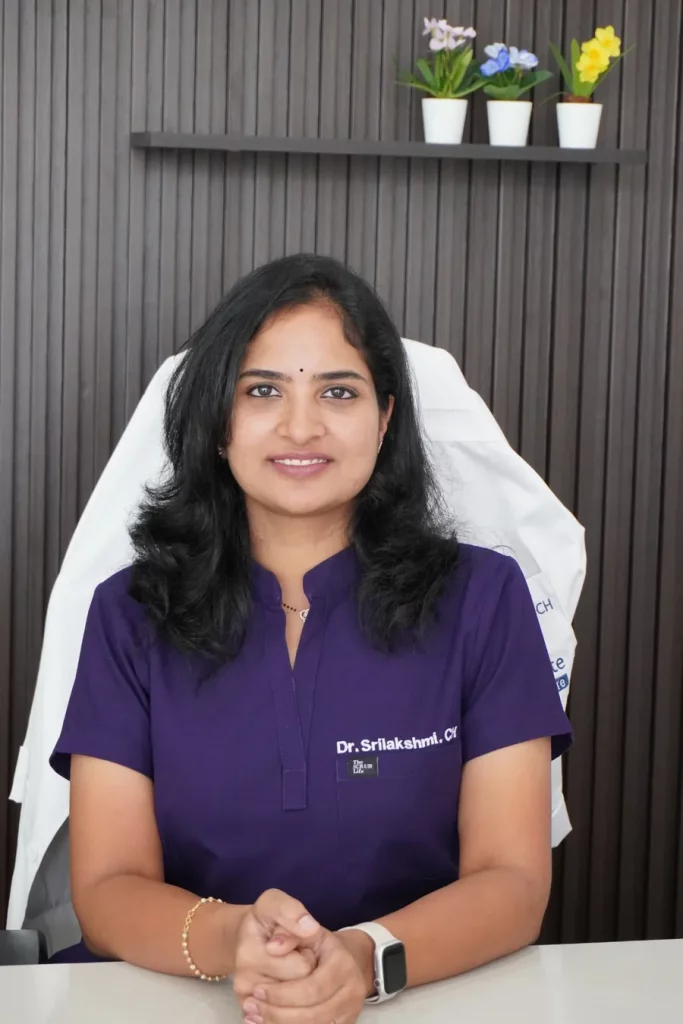
Dr. Srilakshmi Champati
BDS · Dental Surgeon & Implantologist · Founder, Dr. White Dental Care
Dr. Srilakshmi Champati has 13+ years of clinical experience. A dental consultation with her can assess symptoms, review options and help coordinate specialist evaluation when needed.
Dr. B. Tejaswi Rao
Oral & Maxillofacial Surgeon
Listed by Dr. White Dental Care for wisdom tooth removal, extractions and oral surgery. Ask the clinic for Nizampet consultation availability when booking.
Before a decision
Dental Examination and Imaging
The goal is to understand the wisdom tooth, not automatically schedule surgery.
01
Discuss symptoms
Share when pain started, whether swelling recurs, and any relevant medical conditions or medications.
02
Examine the mouth
The clinician checks gum health, the tooth’s accessibility, adjacent teeth and areas that may be hard to clean.
03
Review imaging if needed
X-rays, and occasionally 3D imaging, may be recommended based on the case; ask where any additional imaging is arranged.
If the lower wisdom tooth roots are close to a nerve, the surgeon may discuss extra risk, alternative approaches or specialist referral. Additional imaging is not required for every patient.
Step by step
How Wisdom Tooth Removal Is Performed
A general outline. Your dentist or surgeon will explain how your procedure may differ.
01
Assessment and consent
Discuss the diagnosis, alternatives, risks, expected recovery and treatment quote before proceeding.
02
Comfort and anaesthesia
Local anaesthesia is commonly used. Other arrangements depend on clinical needs and service availability.
03
Extraction
The clinician removes the tooth using a simple or surgical approach according to its position and access.
04
Wound care
The socket is checked; gauze and, for some surgical extractions, stitches may be used.
05
Recovery instructions
You receive directions about bleeding control, eating, oral care, medicines and warning signs.
06
Follow-up if needed
The team advises whether a review is required and whom to contact if symptoms change.
Comfort and consent
Anaesthesia and Patient Comfort
With local anaesthesia, the area is numbed to reduce pain during extraction. Pressure and movement can still be felt. Tell the treating clinician if you experience sharp pain or if you are anxious.
Sedation or general anaesthesia is not necessary for every removal and is discussed only when clinically indicated and available through the treating team.
Before treatment, tell your dentist about
✓ Medical conditions, allergies and regular medicines.
✓ Previous problems with local anaesthetics.
✓ Bleeding disorders or blood-thinning medicines.
✓ Pregnancy or other health issues relevant to care.
✓ Dental anxiety and any concerns about the procedure.
Price clarity
Wisdom Tooth Removal Cost in Nizampet
The cost of wisdom teeth treatment in Nizampet depends on the treatment proposed. A reliable estimate describes what is included; the cost cannot be set from symptoms alone.
Factors that can change the price
✓ Simple versus surgical extraction.
✓ Tooth position and level of impaction.
✓ Imaging, medicines and surgical complexity.
✓ Need for specialist consultation or additional care.
✓ Follow-up arrangements and any complications.
What to ask for in your written estimate
✓ Consultation and diagnostic imaging charges.
✓ Tooth and procedure being quoted.
✓ Anaesthesia and extraction/surgery components.
✓ Medication, reviews or stitch-related charges.
✓ Payment terms, changes and cancellation policy.
The clinic confirms an itemised quote after examination. Ask the team directly about payment options.
For general price information, read our Wisdom Tooth Removal Cost Guide ↗.
Recovery guidance
Wisdom Tooth Recovery and Aftercare
Your dentist’s instructions take priority. These are general points commonly provided after extraction.
First 24 hours
Protect the blood clot
✓ Follow gauze-pressure instructions if provided.
✓ Avoid vigorous rinsing, spitting and disturbing the socket.
✓ Avoid smoking, alcohol, hot drinks and strenuous exercise.
✓ Choose soft, suitably cool foods once safe to eat.
After 24 hours
Clean gently
✓ Follow the clinician’s instructions for gentle mouth care.
✓ Warm salt-water rinses may be advised after the first day.
✓ Brush remaining teeth carefully; avoid traumatising the site.
✓ Use medicines only as instructed by your clinician.
Following days
Watch healing
✓ Some discomfort, jaw stiffness and swelling can occur.
✓ Return to activities when clinically appropriate.
✓ Contact the clinic if symptoms worsen or bleeding persists.
✓ Complex cases may require a longer recovery period.
Important: Do not start salt-water rinses immediately after extraction unless your treating professional specifically instructs you to. See the NHS aftercare guidance ↗.
Informed decisions
Benefits, Limitations and Possible Risks
Removal may address specific disease or symptoms, but surgery can also have complications. Your clinician should explain risks that apply to you.
Potential reasons for treatment
✓ Recurrent infection around a partly erupted tooth.
✓ Decay or pathology that cannot be managed conservatively.
✓ Damage to nearby teeth or surrounding tissues.
✓ Problems with function or persistent symptoms.
Risks and limitations to discuss
! Pain, swelling, bruising or limited jaw opening.
! Bleeding, infection or dry socket.
! Temporary or, rarely, longer-lasting altered sensation when nearby nerves are involved.
! Possible additional treatment or follow-up.
The likelihood and nature of complications depend on the tooth position, your health, the procedure and other factors. Ask your dentist about personal risks and realistic alternatives.
Safety first
When Should You Seek Urgent Dental or Medical Help?
Some symptoms need urgent assessment rather than waiting for a standard appointment.
Difficulty breathing or swallowing?
Rapidly spreading swelling affecting the face or neck, or difficulty breathing/swallowing, needs emergency hospital assessment. Do not wait for an online enquiry reply.
Call Nizampet ClinicUncontrolled bleeding
Seek prompt dental or emergency assessment if bleeding does not settle with the instructions you were given.
Increasing pain or swelling
Call the clinic for worsening symptoms, fever, pus or severe pain that is not improving.
Numbness or unusual changes
Report persistent or changing numbness, severe jaw stiffness or other concerning symptoms after extraction.
Our approach
Why Choose Nizampet Dentist for a Wisdom Tooth Consultation?
Clear information, diagnosis-led planning and honest treatment discussions.
Diagnosis before extraction
Monitoring, other treatment choices and surgery are all considered rather than presenting extraction as automatic.
Clear professional roles
Know who you are consulting: a BDS dental surgeon and an oral & maxillofacial surgeon at Dr. White Dental Care.
Personalised discussion
Ask about imaging, anaesthesia, costs, individual risks and expected recovery before making a decision.
Local clinic access
Contact the Nizampet branch directly using its published number and address.
Aftercare information
A practical first-24-hour checklist and clear guidance on symptoms that require further attention.
Transparent information
Honest explanations of options, risks and costs with an itemised estimate after examination.
Patient trust
Patient Reviews and Care Experiences
Reviews can help you understand communication, explanation and support at the clinic. For current patient feedback, visit the Nizampet clinic’s public Google listing. Patient experiences vary and are not a substitute for clinical assessment.
Find Clinic Reviews on Google Maps ↗Frequently Asked Questions
01 What is the usual age for wisdom teeth to appear?
Third molars often emerge in the late teens or early twenties, although timing and eruption patterns vary. Some do not erupt fully.
02 Does every impacted wisdom tooth need removal?
No. A healthy impacted wisdom tooth without disease may be monitored. Recurrent infection, unrestorable decay, cysts or damage to an adjacent tooth can change the treatment recommendation.
03 Can a wisdom tooth be kept if it is not painful?
Often yes, if it is healthy and can be monitored appropriately. Your dentist will assess cleanliness, disease and the neighbouring tooth before deciding.
04 Does removing wisdom teeth prevent crooked front teeth?
Removal is not routinely recommended solely to prevent crowding of the front teeth. The relationship between third molars and later front-tooth crowding is not a reliable reason for extraction by itself.
05 What is the difference between simple and surgical extraction?
A simple extraction usually involves an accessible erupted tooth. Surgical removal may involve an incision, bone removal or sectioning for impacted or difficult teeth.
06 How is wisdom tooth removal pain managed?
Local anaesthesia is commonly used to numb the area. Pressure can still be felt, and postoperative discomfort is possible. Discuss your concerns and anaesthesia options with the treating clinician.
07 How long does recovery take?
Many people return to ordinary daily activities within a few days, but swelling and jaw stiffness can last longer. More complex extractions may require up to around two weeks for early recovery, while deeper healing continues.
08 Can I rinse my mouth with salt water on the same day?
Usually avoid forceful rinsing or spitting during the first 24 hours after extraction because the blood clot needs protection. Gentle rinsing may be advised after that, following your dentist’s instructions.
09 How much does wisdom teeth treatment in Nizampet cost?
The cost depends on the diagnosis, whether extraction is simple or surgical, imaging, anaesthesia and any follow-up. Ask the clinic for an itemised estimate after examination.
10 Will I need an X-ray before wisdom tooth removal?
Dental imaging is commonly considered to assess tooth position, roots and adjacent anatomy. Whether additional imaging is needed depends on the examination and clinical findings.
11 What is dry socket?
Dry socket is a painful condition that can occur when the clot protecting an extraction socket is lost or does not form adequately. Worsening pain after extraction needs prompt dental advice.
12 What are warning signs after extraction?
Uncontrolled bleeding, fever, increasing swelling or severe worsening pain should be assessed promptly. Difficulty breathing or swallowing requires emergency medical attention.
13 Which doctor treats impacted wisdom teeth at Nizampet Dentist?
Dr. White Dental Care lists Dr. Srilakshmi Champati as a BDS dental surgeon and Dr. B. Tejaswi Rao as an oral and maxillofacial surgeon. Call the Nizampet branch to confirm the treating clinician and specialist availability for your case.
14 Can I book a wisdom tooth consultation over WhatsApp?
Yes, you can send an appointment enquiry to the Nizampet number on WhatsApp or use the form on this page. Your appointment is confirmed once the clinic replies with a time.
Visit our clinic
Visit Our Dental Clinic in Nizampet
Clear location details for patients coming from Nizampet and nearby areas such as Miyapur, Bachupally, Pragathi Nagar and Hydernagar. Call before travelling to confirm dentist or specialist availability.
Nizampet Dentist
Dr. White Dental Care · Nizampet branch
Address
1st Floor, House No. 3, 10/2/A, Main Road, opposite Balaji Park Town, Nizampet, Hyderabad, Telangana 500090
Hours
Monday–Sunday, 10:00 AM–9:00 PM
Phone
+91 98480 85789
Email
nizampet@dwdc.in
Nizampet Main Road
Opposite Balaji Park Town · Hyderabad 500090. Open the map for live directions to the clinic.
Open Google Maps ↗Appointment enquiry
Book a Wisdom Tooth Consultation in Nizampet
Tell our Nizampet team how to contact you and the general reason for your visit. We’ll help you request an assessment and discuss specialist availability when appropriate.
✓ Request a wisdom tooth assessment.
✓ The clinic confirms your appointment time.
✓ Ask about imaging, specialist care and written estimates.
If swelling is spreading quickly or breathing or swallowing is difficult, seek emergency care rather than using this form.
Medical disclaimer: Information here is for general education and is not an examination, diagnosis or personalised treatment plan. Clinical recommendations and recovery instructions must come from the treating dentist or surgeon. Contact emergency medical services for trouble breathing/swallowing or serious spreading infection.