
Periodontal health · Nizampet, Hyderabad
Gum Problems Treatment in Nizampet
Bleeding while brushing, swollen or receding gums and persistent bad breath deserve a proper dental assessment. At Nizampet Dentist, we help patients understand whether they may have gingivitis, periodontitis or another gum concern—and what treatment or monitoring may be appropriate.
Learn about examinations, professional cleaning, deep cleaning, costs and ongoing care before booking.
Assessment first
Identify gum inflammation and risk
Clear care options
Cleaning, deep cleaning or specialist care
Local support
Nizampet · Open seven days
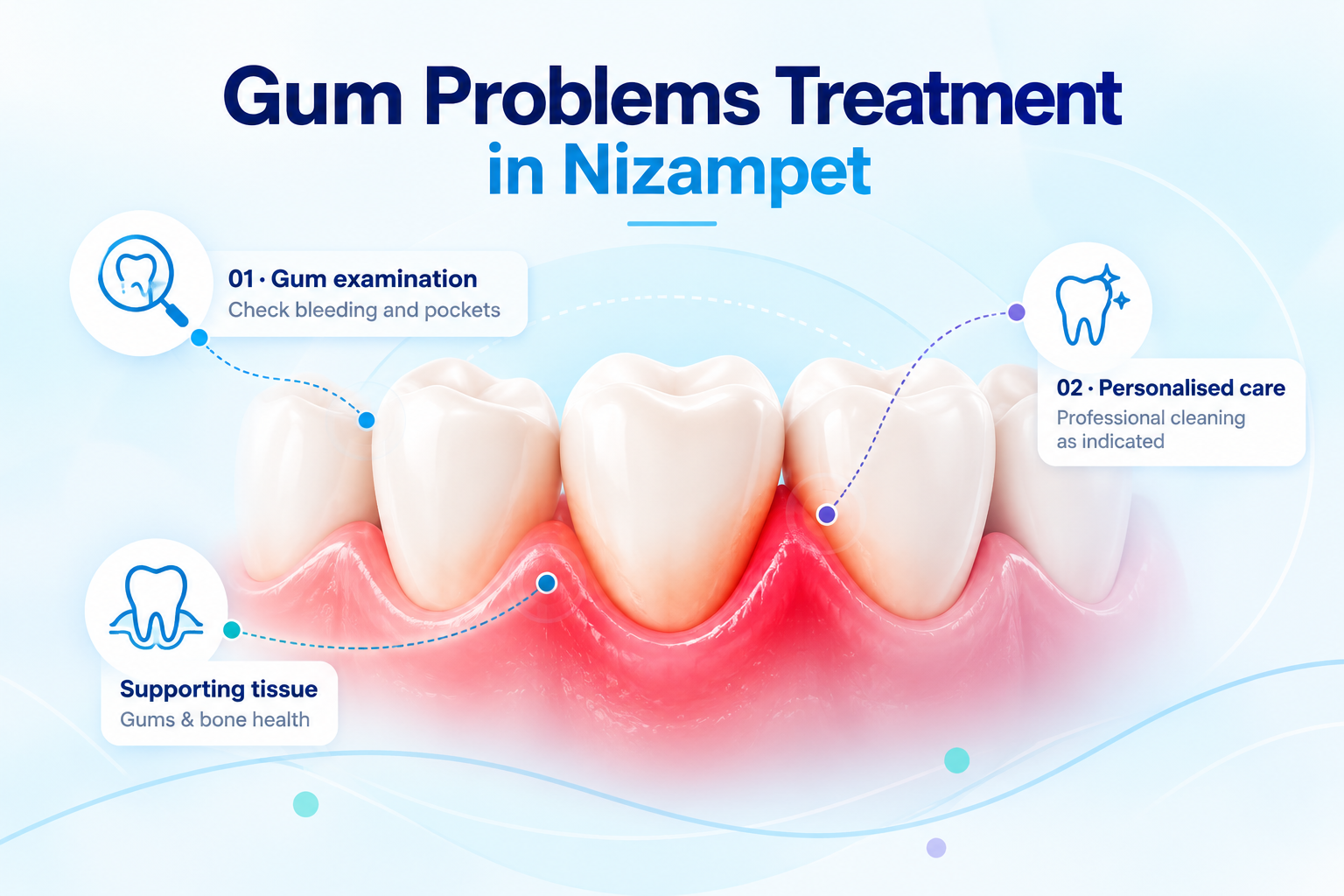
Educational illustration · not a diagnostic image
At a glance
Gum Care in Nizampet
Useful facts before booking a gum consultation.
Nizampet clinic
Nizampet Main Road, opposite Balaji Park Town, Hyderabad 500090
Gum-care specialist
Dr. Yashashwini · Consultant Periodontist, Dr. White Dental Care
Open every day
Monday–Sunday
10:00 AM–9:00 PM
Call Nizampet
+91 98480 85789
nizampet@dwdc.in
Gum health
What Are Gum Problems?
Gum problems are conditions that affect the gums and, in some cases, the tissues and bone supporting the teeth. Gingivitis is early gum inflammation that commonly causes redness or bleeding. Periodontitis is a more advanced disease that can damage the tooth-supporting structures.
Gum recession, infections and irritation can have other causes, so an accurate diagnosis matters before treatment.
Why early assessment helps
Act on the early signs
✓ Bleeding gums are not something to ignore or repeatedly self-treat.
✓ Gingivitis may be reversible when addressed early.
✓ Periodontitis often needs professional treatment and ongoing maintenance.
✓ Visible gum changes do not always tell the full story; examination may be needed.
Clinical reference: NIDCR gum disease guide ↗
Recognise the signs
Signs You May Have Gum Disease
Gum disease can progress without severe pain. These concerns are reasons to arrange a dental examination rather than assume a diagnosis from symptoms alone.
Bleeding during brushing
Recurring bleeding while brushing or flossing may indicate gum inflammation, although other causes are possible.
Red or swollen gums
Persistent puffiness, tenderness or redness around the gumline warrants assessment.
Persistent bad breath
Odour that does not improve with routine care can accompany deposits, gum inflammation or other conditions.
Gum recession
Teeth looking longer or exposed root surfaces may reflect recession; gum disease is one possible cause.
Loose or shifting teeth
Tooth mobility or new spacing can indicate changes to supporting tissues and should be evaluated promptly.
Gum pain or pus
An abscess, significant swelling, fever or worsening pain should receive urgent clinical assessment.
Urgent warning: New or rapidly worsening facial swelling, fever with gum swelling, difficulty opening your mouth or serious bleeding requires prompt clinical assessment. Difficulty breathing or swallowing needs emergency hospital care.
Causes & risk factors
What Causes Gum Problems?
Most gum disease begins with plaque accumulating near and below the gumline. Risk is also influenced by individual health, tobacco exposure and daily oral-care practices.
Plaque and tartar
Bacterial plaque around teeth is the main cause of gum inflammation. Tartar cannot be removed with a toothbrush alone.
Daily cleaning gaps
Cleaning between teeth and along the gumline helps control plaque; technique and consistency matter.
Tobacco use
Smoking and other tobacco exposure increase periodontal disease risk and may affect healing.
Diabetes and health factors
People with diabetes may face higher periodontal risk, especially when blood glucose is poorly controlled.
Medications and dry mouth
Some medicines or reduced saliva can affect oral tissues; mention relevant medicines at your visit.
Crowded or restored areas
Crowded teeth or poorly contoured restorations can create plaque-retentive areas that need assessment.
Clinical comparison
Gingivitis vs Periodontitis
Both conditions may cause gum bleeding, but periodontitis can damage the supporting structures of teeth. An examination is needed to distinguish them.
Feature
Gingivitis
Periodontitis
What it affects
Inflammation of the gingiva (gums).
Gums plus the supporting attachment and bone around teeth.
Common signs
Redness, swelling and bleeding.
Bleeding, deep pockets, recession; sometimes looseness or shifting.
Supporting bone loss
Not caused by gingivitis itself.
May be present and can progress without treatment.
Can it be reversed?
Often reversible when plaque and other causes are controlled.
Can usually be managed, but lost attachment/bone does not always return.
Common first care
Oral hygiene guidance and professional cleaning as indicated.
Periodontal examination, scaling and root planing when indicated, then reassessment.
Follow-up
Preventive reviews based on risk.
Long-term periodontal maintenance and risk-factor management.
When to get checked
When Should You See a Gum Specialist?
Book a gum assessment when you notice:
✓ Bleeding that keeps returning even with careful daily cleaning.
✓ Gums pulling away from teeth or persistent bad breath.
✓ Loose teeth, persistent swelling, deep periodontal pockets or pain.
✓ A history of gum disease or implant-related gum concerns.
A general dentist can assess concerns and advise when a periodontist is appropriate.
A useful distinction
Not every patient needs gum surgery.
For many people, care begins with improving plaque control and professional cleaning. Others may need scaling and root planing, targeted management or specialist review. The treatment depends on disease severity, pocket measurements and clinical response.
Discuss your gum symptomsKnow before treating
How Are Gum Problems Diagnosed?
Gum treatment should be based on clinical findings, not only a photograph or a promotional claim.
01
Symptom and health history
The dentist asks about bleeding, swelling, tobacco use, diabetes, medications and previous gum care.
02
Gum and tooth examination
The clinician checks gum colour, inflammation, plaque, tartar, recession, tooth mobility and areas difficult to clean.
03
Periodontal probing
Measurements around teeth may identify bleeding on probing and periodontal pockets to guide diagnosis.
04
Imaging if needed
Dental X-rays may help assess supporting bone levels or rule out other causes of symptoms.
05
Discussion and plan
The team explains findings, appropriate options, likely follow-up and the items included in a written estimate.
Treatment options
Gum Disease Treatment Options in Nizampet
The appropriate periodontal plan may include more than one stage of care. A clinic examination determines whether routine cleaning, periodontal therapy or specialist follow-up is suitable.
Professional scaling & polishing
Removes calculus and plaque deposits above the gumline; useful in many preventive and gingivitis-care plans.
Scaling and root planing
A deeper periodontal cleaning below the gumline for selected patients with periodontitis. It may require several appointments.
Oral hygiene coaching
Daily brushing technique, interdental cleaning, toothbrush choice and practical routines are important parts of care.
Periodontal reassessment
The dentist reviews healing, inflammation and pocket measurements after initial therapy and decides what comes next.
Specialist periodontal care
Some persistent pockets, advanced defects, recession or other concerns may require specialist procedures or surgery.
Adjunctive treatments
Antibiotics, medicated products or lasers are not automatic first-line substitutes for mechanical periodontal therapy.
Clinical perspective: The American Dental Association supports scaling and root planing as an initial nonsurgical treatment for periodontitis. Extra procedures or medicines depend on the individual diagnosis; they are not necessary for every patient. Read the ADA guideline ↗
Decision support
Cleaning vs Deep Cleaning vs Gum Surgery
Patients often ask whether cleaning and gum surgery are the same. They are different approaches selected for different findings.
Treatment
Purpose
When it may be used
What to know
Professional scaling
Remove deposits from accessible tooth surfaces.
Routine care and selected gingivitis cases.
Not the same as cleaning diseased root surfaces below gum pockets.
Scaling and root planing
Remove biofilm/calculus from roots below gumline.
Periodontitis, based on periodontal measurements.
May need local anaesthesia and more than one visit.
Periodontal reassessment
Review bleeding, plaque control and pocket response.
After active therapy.
Determines maintenance and need for further care.
Periodontal surgery
Access difficult areas or manage selected advanced defects.
When clinically indicated following specialist evaluation.
Not necessary for every patient; risks and benefits need discussion.
Periodontal maintenance
Control plaque, monitor disease and reinforce home care.
Long-term following periodontal treatment.
Recall intervals depend on individual risk and response.
Your care team
Meet the Gum-Care Team
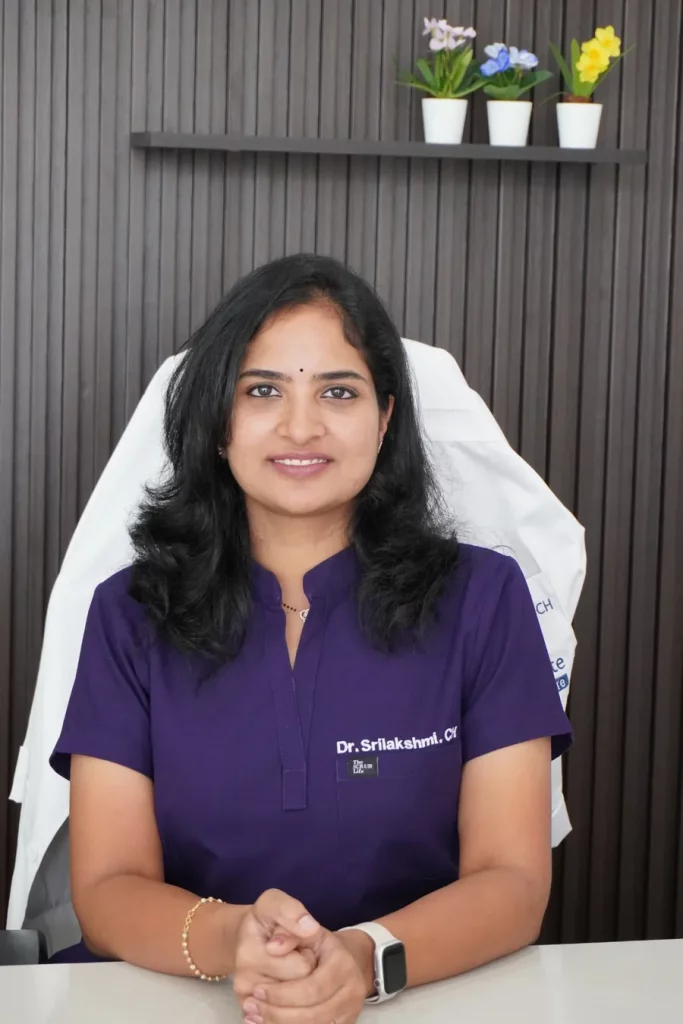
Dr. Srilakshmi Champati
BDS · Dental Surgeon & Implantologist · Founder, Dr. White Dental Care
Dr. Srilakshmi Champati has 13+ years of clinical experience. She examines gum concerns, explains the findings and coordinates specialist periodontal care when it is needed.
Dr. Yashashwini
Consultant Periodontist
Consultant for gum disease, deep cleaning and periodontal health at Dr. White Dental Care. Ask the clinic for her Nizampet consultation days when booking.
What to expect
How Gum Treatment Works — Step by Step
An outline of how a periodontal consultation may proceed. Each patient’s plan depends on their own findings.
01
Listen and examine
Describe symptoms and relevant medical history; the dentist assesses teeth and gums.
02
Document gum findings
Periodontal probing and appropriate diagnostics identify areas needing care.
03
Explain the options
Discuss likely stages, possible discomfort, alternative approaches and written cost inclusions.
04
Provide indicated care
Professional cleaning, scaling and root planing or a coordinated specialist service as appropriate.
05
Reassess and maintain
Review response, support daily plaque control and set a recall interval based on risk.
Transparent estimates
Gum Treatment Cost in Nizampet
Costs vary significantly with the diagnosis and extent of treatment. The clinic provides a written estimate after examination.
What determines your final quotation?
✓ Gingivitis care versus treatment for established periodontitis.
✓ Number of teeth, sites or periodontal quadrants needing treatment.
✓ Whether X-rays, local anaesthesia or specialist assessment are required.
✓ Complexity of cleaning, surgery (if indicated) and follow-up visits.
✓ Current clinic fees and any applicable payment terms.
Request an itemised care estimate
Ask whether the quotation is per visit, quadrant or procedure, and what diagnostics, reviews and follow-up are included.
The amount is confirmed by the clinic after examination. Ask the team directly about payment options.
Balanced clinical guidance
Benefits, Limitations and Possible Risks
What appropriate treatment may help with
✓ Reducing plaque and calculus burden.
✓ Reducing inflammation, bleeding and periodontal pocket depths in responsive cases.
✓ Supporting hygiene and reducing the risk of further periodontal damage.
✓ Identifying areas that need continued monitoring or specialist care.
Limitations and possible side effects
! Temporary gum tenderness, sensitivity or minor bleeding may occur following cleaning.
! Periodontal attachment or bone lost to disease may not fully regenerate.
! Some patients require several visits, maintenance or additional specialist procedures.
! Persistent disease, smoking, uncontrolled diabetes or inconsistent plaque control can affect outcomes.
Important: A consultation should explain expected benefits, alternative approaches, relevant risks and whether you need any treatment at all. Gum care is planned around your diagnosis, not a one-visit promise.
Everyday maintenance
Gum Care After Treatment
Most long-term gum care depends on the routine you can maintain at home, alongside any professional care that is clinically needed.
Brush thoroughly, gently
Brush twice daily with fluoride toothpaste and clean the gumline without aggressive scrubbing.
Clean between teeth
Use floss or appropriately sized interdental brushes according to professional guidance.
Follow post-treatment advice
Temporary sensitivity or soreness may occur. Follow the dentist’s instructions about meals, oral care and prescribed medicines.
Do not self-prescribe antibiotics
Antibiotics are not routine substitutes for plaque removal or periodontal treatment.
Avoid tobacco
Stopping smoking supports gum health and improves treatment response.
Report new symptoms
Contact the clinic for significant swelling, worsening pain, fever, persistent bleeding or new tooth mobility.
Long-term management
Periodontal Maintenance and Follow-Up
Periodontitis is commonly a long-term condition requiring disease control rather than a one-time cosmetic fix. After treatment, your dentist may recommend repeated measurements, professional cleaning and adjustments to daily oral care.
The interval between follow-ups depends on your disease stage, response to treatment, smoking status, overall health and how easy it is to keep teeth clean.
Does everyone need a cleaning every three months?
No. Some patients with periodontal disease may benefit from shorter maintenance intervals, while others need less frequent visits. The dentist should recommend an individual schedule after reassessment.
Evidence-informed context
Gum Disease and Overall Health
Good gum health matters, but an association with other health conditions is not a guaranteed benefit from treatment.
Gum disease and diabetes
Research has identified a relationship between diabetes and periodontal disease. Poor blood-glucose control can increase gum disease risk, while inflammation may complicate oral health. Share relevant medical information with your dentist, and continue diabetes management with your medical team.
What periodontal treatment does not promise
Gum disease has been associated with certain systemic health conditions, but gum cleaning does not prevent heart disease or cure diabetes. The main goals of gum treatment are to manage periodontal inflammation, protect oral function and support maintainable gum health.
Our approach
Why Choose Nizampet Dentist for Gum Care?
Clear clinic facts, diagnosis-led planning and honest treatment discussions.
Locally accessible
Visit the Nizampet Main Road clinic opposite Balaji Park Town, open seven days a week.
Specialist team
Dr. White Dental Care includes a consultant periodontist among its specialist clinicians.
Diagnosis-led treatment
The care plan matches gum measurements and clinical findings—not the assumption that everyone needs a laser or surgery.
Transparent treatment discussion
Ask the dentist to explain alternatives, number of visits and quotation inclusions before any procedure.
Ongoing maintenance
Gum care includes reassessment, daily oral hygiene and individually planned periodontal reviews.
Clear local contact
Contact the Nizampet branch directly by phone or WhatsApp for questions and appointment enquiries.
Patient feedback
Patient Reviews and Gum-Care Experiences
Patient experiences can help you understand appointment communication, clinic access and the consultation process. For current feedback, view the Nizampet clinic’s public Google listing. Reviews are individual opinions and not a guarantee of clinical outcomes.
Find Clinic Reviews on Google Maps ↗Frequently Asked Questions
01 Why do my gums bleed when I brush?
Bleeding often reflects irritation or inflammation caused by plaque near the gumline, but there can be other explanations. Recurring bleeding deserves a dental examination rather than aggressive brushing or repeated home remedies.
02 What is the difference between gingivitis and periodontitis?
Gingivitis affects the gums without the attachment loss that characterises periodontitis. Periodontitis involves damage to the tissues and bone supporting teeth. A periodontal examination helps determine which condition is present.
03 Can gingivitis be reversed?
Often, yes. Early gingivitis may resolve when plaque is controlled through appropriate daily cleaning and professional care. If bleeding persists, have the gums reassessed to rule out periodontitis or another cause.
04 Can periodontitis be fully reversed?
Periodontitis can often be controlled and stabilised, but supporting bone and attachment already lost to disease may not fully grow back. Treatment and maintenance aim to reduce inflammation and prevent further damage.
05 Is professional teeth cleaning the same as deep cleaning?
No. Routine professional scaling focuses on removing deposits as appropriate for preventive or early gum care. Scaling and root planing is a deeper periodontal treatment for selected patients with periodontitis and affected root surfaces.
06 Does scaling or deep cleaning hurt?
Professional cleaning can cause temporary tenderness or sensitivity, especially in inflamed areas. For deeper procedures, the dentist may discuss local anaesthesia and comfort measures. Individual experiences vary.
07 How much does gum treatment cost in Nizampet?
The cost depends on the diagnosis, how many teeth or periodontal quadrants need care, and whether imaging, anaesthesia, specialist procedures or follow-up are necessary. Request a written itemised quote after examination.
08 Do bleeding gums always require gum surgery?
No. Many cases are managed initially with oral hygiene measures and professional cleaning. Surgery may be considered for selected advanced problems or areas that remain difficult to manage after nonsurgical therapy.
09 Can salt water or turmeric cure gum disease?
No. Salt-water rinses may sometimes soothe irritation but do not remove tartar or treat established periodontal pockets. Turmeric, garlic and clove oil are not substitutes for diagnosis and professional periodontal treatment.
10 Are antibiotics always needed for gum disease?
No. Antibiotics are not automatically indicated. Plaque removal, periodontal cleaning and daily oral hygiene are central to care. A clinician may prescribe additional medicines only for selected situations.
11 Are laser gum treatments better than deep cleaning?
Not necessarily. Evidence does not support claiming that lasers are universally superior to scaling and root planing. The dentist should explain whether any adjunctive procedure is indicated for the specific diagnosis.
12 Can gum problems cause teeth to become loose?
Advanced periodontitis may damage the supporting tissue and bone around teeth, sometimes leading to mobility or drifting. A loose adult tooth should be assessed promptly to identify the cause and appropriate care.
13 What if I have diabetes and bleeding gums?
Diabetes, particularly when blood sugar is poorly controlled, is associated with higher periodontal risk. Inform the dentist about your medical history, continue diabetes care with your medical team, and arrange a periodontal assessment.
14 How do I book a gum consultation at Nizampet Dentist?
Call +91 98480 85789 or use the appointment form at the bottom of this page. The clinic is on Nizampet Main Road opposite Balaji Park Town and is open daily 10 AM–9 PM. An appointment is confirmed once the clinic team agrees on the date and time.
Find the clinic
Visit Our Dental Clinic in Nizampet
Patients also visit from Miyapur, Bachupally, Pragathi Nagar and Hydernagar. Confirm your appointment before travelling.
Nizampet Dentist
Dr. White Dental Care · Nizampet branch
Address
1st Floor, House No. 3, 10/2/A, Main Road, opposite Balaji Park Town, Nizampet, Hyderabad, Telangana 500090
Hours
Monday–Sunday, 10:00 AM–9:00 PM
Phone
+91 98480 85789
Email
nizampet@dwdc.in
Nizampet Main Road
Opposite Balaji Park Town · Hyderabad 500090. Open the map for live directions to the clinic.
Open Google Maps ↗Appointment enquiry
Book a Gum-Care Consultation in Nizampet
Tell us your preferred visit date and how the clinic may contact you. The Nizampet team can confirm the available appointment and whether a specialist consultation needs advance scheduling.
✓ Clear consultation request, not an automatic booking.
✓ Contact the Nizampet number directly.
✓ Ask about periodontal evaluation and written estimates.
Medical disclaimer: This page provides general educational information; it does not replace an examination, diagnosis, consent or personalised advice from a qualified dentist. Gum bleeding, recession and swelling have different possible causes. Specific procedures, prices and outcomes require clinical evaluation. If swelling affects breathing or swallowing, seek emergency medical assistance.