
Orthodontic care · Nizampet, Hyderabad
Dental Braces Treatment in Nizampet
Crooked teeth, crowding or gaps may affect your smile and bite. At Nizampet Dentist, an orthodontic consultation helps you understand fixed dental braces, suitability, treatment stages and follow-up before choosing care.
Compare metal and ceramic braces with removable clear aligners. Learn about timelines, hygiene, costs, possible discomfort and why retainers are essential after treatment.
✓ Dentist-led assessment ✓ Options compared ✓ Retainer guidance
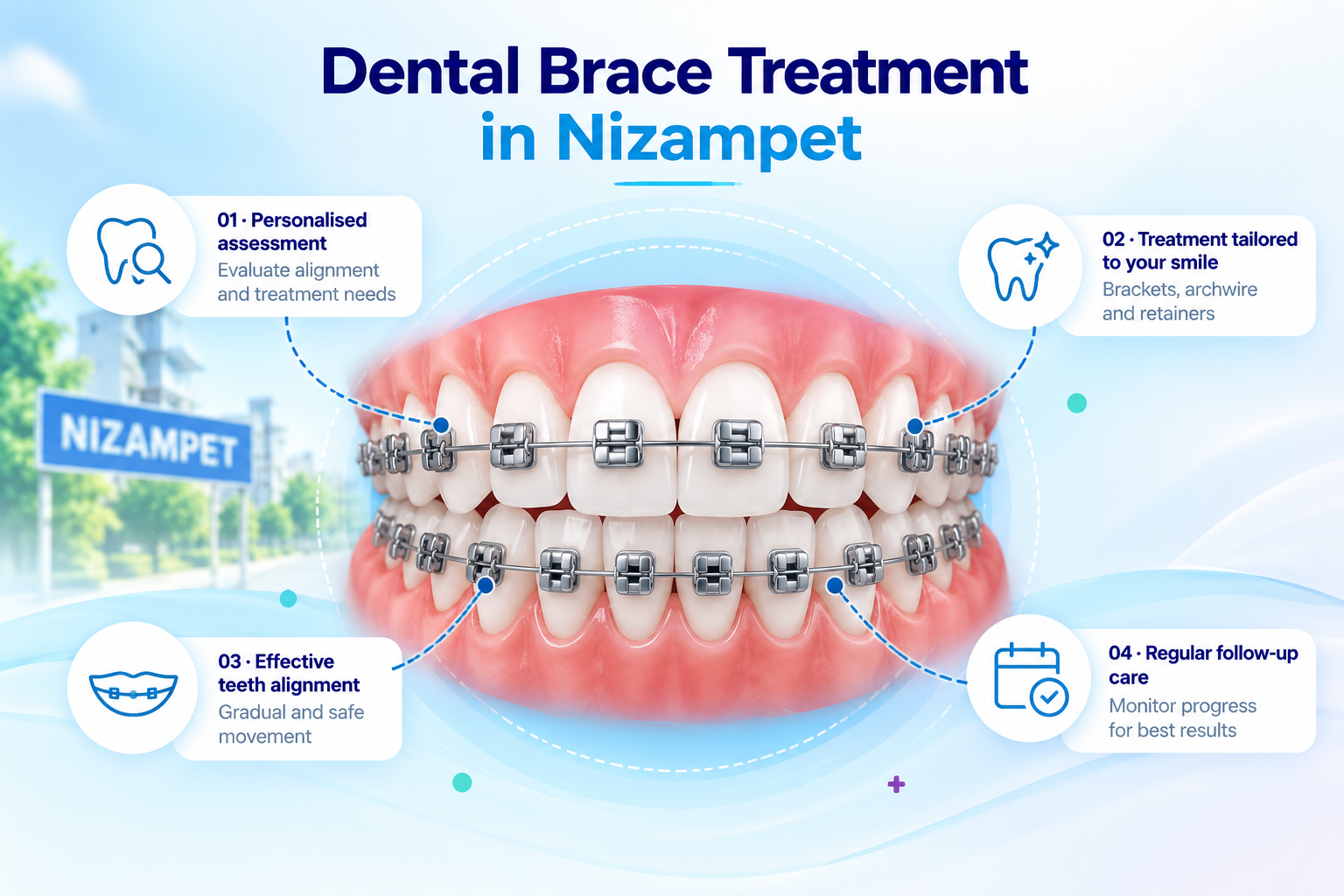
Educational illustration · not a patient photograph
Nizampet, Hyderabad
Opposite Balaji Park Town
Orthodontic team
Call to check consultation days
10 AM – 9 PM
Open every day
98480 85789
Call or request an appointment
What Are Dental Braces?
Understand what is attached to the teeth, and how treatment differs from a cosmetic cover-up.
Dental braces are orthodontic appliances that use controlled forces to move teeth gradually. Fixed braces typically have brackets bonded to teeth and an archwire linking them. They may correct crowding, gaps, rotation or certain bite problems.
Braces change tooth position over time. They do not simply mask crooked teeth, and treatment needs ongoing reviews and long-term retention.
What orthodontic care includes
Diagnosis
Examination of teeth, gums, bite and growth where relevant.
Planning
Radiographs, photographs and scans when clinically indicated.
Monitoring
Orthodontic adjustments and cleaning advice throughout treatment.
Retention
A retainer plan after braces are removed.
The science in plain language
How Do Dental Braces Work?
Slow, controlled tooth movement depends on the appliance, biological response and regular clinical monitoring.
Bracket
A small attachment is bonded to a tooth. It holds the orthodontic wire or other prescribed components.
Archwire
The orthodontist selects and adjusts the wire to guide tooth movements over time.
Biological response
Supporting tissues remodel gradually while forces are applied. This cannot be rushed safely.
Review & retention
Appointments track progress; a retainer helps reduce movement after active treatment.
Braces do not straighten all teeth in one appointment. Treatment progresses through planned stages, and the final bite must be assessed as well as appearance.
Who may benefit
Who May Need Dental Braces?
An orthodontic assessment is helpful for alignment and bite concerns, not only for the appearance of a smile.
Crowded teeth
Teeth overlap or twist because there is insufficient room in the dental arch.
Gaps and spacing
Spaces between teeth may be treated depending on their cause and the bite.
Protruding teeth
Prominent front teeth can sometimes be repositioned following a full assessment.
Overbite or deep bite
The upper and lower teeth overlap more than expected; treatment varies by the underlying problem.
Crossbite or underbite
Upper and lower teeth may meet incorrectly, requiring careful diagnosis and sometimes coordinated care.
Bite-related cleaning concerns
Some teeth positions make daily hygiene harder or affect comfortable biting.
Not sure whether braces are necessary?
An examination can help distinguish dental alignment concerns from jaw growth or other conditions.
Children, teens & adults
What Age Is Suitable for Orthodontic Treatment?
Timing depends on growth, dental development and the nature of the concern.
Around age seven
The American Association of Orthodontists advises an initial orthodontic assessment by age seven. That does not mean every seven-year-old needs braces.
Teenage years
Many teenagers start treatment after their permanent teeth have erupted. Growth and bite changes may influence the plan.
Adulthood
Adults may be suitable for orthodontic treatment if gums, teeth and supporting structures are healthy enough. Previous restorations require planning.
If gum disease or untreated cavities are present, these may need attention before braces start. A dentist should explain any reasons to delay treatment.
Understand the options
Types of Dental Braces You Can Discuss
Your orthodontist will recommend the appliance that suits your bite after an assessment.
Fixed appliance
Conventional metal braces
Metal brackets and archwires are fixed to teeth. They are commonly used for a wide range of tooth and bite movements.
Fixed appliance
Ceramic braces
Tooth-coloured brackets are less noticeable than metal ones, but still use wires and need careful cleaning.
Ask about availability
Self-ligating systems
A bracket design using a built-in clip to hold the archwire. Suitability and promised advantages should be discussed rather than assumed.
Ask about availability
Lingual braces
Brackets attached behind teeth for a less visible appearance from the front; they are not appropriate for every case.
Alternative option
Clear aligners
Custom removable trays used for selected orthodontic cases. These are not fixed braces and require consistent wear.
After treatment
Retainers
Removable or bonded appliances that help preserve tooth positions after active treatment. They are part of long-term care.
At our clinic: Nizampet Dentist offers fixed braces and clear aligners, including Invisalign. Ask the Nizampet team which other brace systems are available for your case.
Brace materials
Metal vs Ceramic vs Lingual Braces
Different fixed braces can be clinically suitable for different needs. Appearance is only one deciding factor.
Feature
Metal braces
Ceramic braces
Lingual braces
Placement
Front of teeth
Front of teeth
Behind teeth
Visibility
Noticeable brackets
Less noticeable brackets
Less visible from the front
Removable by patient?
No
No
No
Cleaning
Requires extra care around wires
Requires extra care around brackets
Can be more difficult to access
Typical cost position
Often lower
Usually higher than metal
Often higher and case-dependent
Common concern
Visible metal brackets
Can chip or stain around elastics
Tongue irritation or speech adaptation
Best option?
Depends on orthodontic diagnosis
Depends on orthodontic diagnosis
Selected cases only
This is general guidance, not a guarantee of comfort or results. Your orthodontist recommends appliances after examining the bite.
A practical comparison
Fixed Braces vs Clear Aligners
Clear aligners are an alternative orthodontic appliance, not simply a different colour of braces.
Factor
Fixed braces
Clear aligners
How they work
Brackets and wires remain on the teeth
Sequential custom removable trays
Visibility
Varies with bracket type
Usually less noticeable
Eating
Avoid certain hard and sticky foods
Remove trays before eating; drink water while wearing
Cleaning
Brush around brackets and wires; floss carefully
Remove aligners to brush/floss and clean trays
Cooperation
Regular care and appointments
Requires prescribed daily wear and tray handling
Complex movements
Suitable for many complex cases
Suitability varies with case and system
Adjustments
Orthodontic wire/attachment reviews
Aligner progress checks and possible refinements
After treatment
Retainers still needed
Retainers still needed
Not the same thing: Dental braces are fixed appliances; clear aligners are removable. A clinician should assess the bite and dental health before recommending either.
Named professionals
Meet the Orthodontic Care Team
Orthodontic care is provided by the Dr. White Dental Care orthodontic team. Ask the clinic which orthodontist is consulting at the Nizampet branch.
NB
Dr. G. Nithin Bharat
Orthodontist & Invisalign Provider
Part of the Dr. White Dental Care orthodontic team, with braces, clear aligners and Invisalign as areas of care.
SK
Dr. K. Siva Kumar
Consultant Orthodontist
Part of the Dr. White Dental Care orthodontic team for braces and teeth-alignment care.
Clinic leadership: Dr. Sri Lakshmi Champati (BDS, Dental Surgeon & Implantologist) is the founder of Dr. White Dental Care. Before your visit, ask for the treating orthodontist’s name and the Nizampet consultation schedule.
From consultation to retainer
How Dental Braces Treatment in Nizampet Works
A typical journey of dental braces treatment in Nizampet involves diagnosis, regular monitoring and retention—not only fitting brackets.
01
Initial consultation
Discuss the alignment concern, medical and dental history, gum health and expectations.
02
Records & diagnosis
Clinical examination, photographs and X-rays or digital records when necessary.
03
Written plan & quotation
Review suitable appliance options, estimated duration, costs, alternatives and limitations.
04
Appliance fitting
The orthodontist fits brackets and wires, or issues aligners if a removable system is selected.
05
Progress appointments
Follow-up visits check tooth movement, appliance condition, oral hygiene and treatment response.
06
Finishing & retention
After active treatment, retainers are prescribed and longer-term monitoring is discussed.
Complex bite problems may need additional assessments or coordinated specialist treatment. Do not assume the same number of appointments is suitable for everyone.
Personalised timelines
How Long Does Braces Treatment Take?
Treatment duration depends on movement complexity, growth, oral health and attendance—not a standard fixed deadline.
Many orthodontic treatments are measured in months to years. NHS patient information describes a broad range of about 6–30 months for orthodontic treatment. Your specialist should estimate the schedule after examining your case.
This is a general reference, not a promised treatment duration.
What changes the schedule?
Type of movement
Crowding, space closure or bite correction.
Age and growth
Tooth development and jaw relationship.
Cooperation
Scheduled visits, elastic wear or aligner wear as instructed.
Oral health
Broken brackets, decay or gum inflammation may delay progress.
Visit frequency: many fixed-brace plans involve reviews every few weeks, but the specialist sets your actual interval based on treatment stage.
Transparent decision-making
Dental Braces Cost in Nizampet
Fees for dental braces treatment in Nizampet depend on your case. Here is what an accurate orthodontic estimate should contain.
Appliance type
Metal, ceramic, lingual or removable aligner systems may have different material and laboratory costs.
Treatment complexity
The teeth to be moved, bite correction needs and estimated stages influence treatment planning and fees.
Full treatment inclusions
Ask whether scans, records, fitting, scheduled visits, repairs, extractions and retainers are included.
What to ask for in your written orthodontic quote
Fee item
Question to confirm
Consultation and diagnosis
Are the first assessment, X-rays, scans and records included?
Braces or aligner appliance
Is the stated price for one arch or both arches?
Appointments
Are scheduled adjustments and progress reviews included?
Additional care
How are extractions, fillings, emergency repairs or refinements charged?
After treatment
Are retainers, replacement retainers and retention reviews included?
Payment terms
Is staged payment or EMI available for this particular plan, and on what terms?
Request a written, itemised estimate after your assessment so you know exactly what the fee includes.
Informed choices
Benefits, Limitations and Possible Risks of Braces
Balanced information helps patients choose care without promises of “painless” or permanently perfect results.
Potential benefits
✓ Improved tooth alignment and certain bite relationships.
✓ Easier cleaning in some areas after successful alignment.
✓ Possible improvement in chewing function and smile appearance.
✓ Better management of certain spacing or crowding concerns.
Risks and limitations
! Discomfort: soreness or pressure after fitting and some adjustments.
! Enamel changes: plaque can cause white-spot lesions or cavities around brackets if hygiene is poor.
! Gum inflammation: plaque or existing gum disease can worsen without suitable care.
! Root changes: minor root shortening may occur in some orthodontic cases.
! Relapse: teeth may move again without appropriate retention.
! Breakage: brackets or wires can break and require assessment.
Treatment risks vary by case. Discuss individual risk factors, existing restorations and gum health with the orthodontist before giving consent.
Practical patient support
Braces Cleaning, Food and Daily Care
Protecting enamel and gums during treatment matters as much as straightening teeth.
Brush thoroughly
Brush with fluoride toothpaste at least twice daily; clean around brackets after meals when possible.
Clean between teeth
Use floss threaders or suitable interdental brushes as the dentist recommends.
Be careful with food
Hard, sticky and very crunchy foods may damage fixed appliances. Cut suitable foods into smaller pieces.
Keep dental reviews
Continue regular check-ups and cleanings as advised, not only orthodontic visits.
Call the clinic if a wire injures your cheek, a bracket breaks, gums become very swollen or pain persists. Do not attempt major appliance repairs at home.
What happens after braces
Retainers After Braces Treatment
Straightening teeth is the active phase; keeping them in their new positions requires a retention plan.
Retainers help maintain alignment after braces. Teeth naturally continue to move during life, so a retainer is not an optional cosmetic accessory. Wear and care instructions must come from the treating orthodontist.
Retainers may be removable or bonded behind teeth. Neither type guarantees lifelong stability without care and review.
What to ask before removal
✓ Which retainer type is advised, and why?
✓ How many hours per day should it be worn?
✓ How should it be cleaned and stored?
✓ What should you do if it breaks or stops fitting?
✓ What retention reviews and replacement costs are expected?
Important: results are not permanent without care. Every patient should receive a realistic, individual retention plan.
Local, patient-first care
Why Consider Nizampet Dentist for Braces?
Practical reasons to plan your orthodontic care with the Nizampet branch.
Local branch access
A Nizampet clinic address, phone, daily hours and directions help patients plan repeat visits.
Specialist consultation
The Dr. White Dental Care team includes named orthodontists. Ask about consultation days at this branch.
Option explanations
Ask how fixed braces compare with clear aligners and whether each is appropriate for your bite.
Retention planning
A complete orthodontic plan includes finishing and ongoing retainer guidance.
Patient experiences
Braces Patient Experiences and Questions to Ask
Patient reviews can be useful when they are genuine, recent and about the treatment you are considering.
How to assess patient feedback
✓ Check whether a review actually concerns braces or clear aligners.
✓ Look for details about communication, appointments and retainer guidance—not only a star rating.
✓ Remember results, comfort and schedules vary between patients.
Read reviews of the Nizampet clinic
See current patient reviews on the clinic’s Google listing, and ask the team about orthodontic examples during your consultation.
Find the clinic on Google Maps ↗Frequently Asked Questions
Question 01
What are dental braces?
Dental braces are fixed orthodontic appliances that use brackets and wires to move teeth gradually. They may treat crowding, spacing and selected bite problems after a professional assessment.
Question 02
Are dental braces different from clear aligners?
Yes. Fixed braces stay attached to teeth; clear aligners are removable trays that require prescribed daily wear. Suitability depends on the tooth movements and your ability to follow instructions.
Question 03
What is the best age for braces?
There is no single best age. An initial orthodontic assessment is recommended by age seven, but braces may start later depending on growth and tooth development. Adults can also be assessed.
Question 04
How much does dental braces treatment in Nizampet cost?
The price depends on appliance type, complexity, required records, treatment duration, adjustments and retainers. Ask Nizampet Dentist for a written quote after an examination.
Question 05
How long does braces treatment usually take?
Treatment may take many months to a few years; NHS guidance gives a broad range of about 6–30 months. The orthodontist provides a more meaningful estimate after examining your bite.
Question 06
Are braces painful?
Teeth may feel sore or sensitive for a few days after fitting or adjustments. Serious or persistent pain should be assessed.
Question 07
Can I eat normally with braces?
You can eat a varied diet, but hard, sticky and very crunchy foods can damage brackets or wires. Your orthodontist will explain practical food precautions and how to cut foods safely.
Question 08
How should I clean my teeth with fixed braces?
Brush carefully with fluoride toothpaste and clean between teeth using floss threaders or interdental brushes. Continue regular dental reviews because plaque may accumulate around brackets.
Question 09
Will I need braces on both upper and lower teeth?
Not necessarily. The orthodontist evaluates how both arches fit together before choosing a plan. Treating one arch alone may not achieve an appropriate bite in some cases.
Question 10
Will I need tooth extractions before braces?
Only some cases require extractions. Decisions depend on available space, jaw relationship, bite, tooth health and alternative options. Ask the orthodontist to explain the reasons and risks.
Question 11
Do I need to wear a retainer after braces?
Yes, most patients need a prescribed retention plan after active orthodontic treatment. Without suitable retainer use, teeth can shift. Follow the orthodontist’s wear and review instructions.
Question 12
How can I book an orthodontic consultation in Nizampet?
Call +91 98480 85789 or send a WhatsApp appointment enquiry. Confirm which orthodontist is consulting at Nizampet, available timings and the date before travelling.
Local clinic details
Visit Our Dental Clinic in Nizampet
Call ahead to confirm which orthodontist is available for braces and aligner consultations at the Nizampet branch.
Nizampet Dentist
Nizampet Dentist is the information website for the Nizampet branch of Dr. White Dental Care.
Address
1st Floor, House No. 3, 10/2/A, Main Road, opposite Balaji Park Town, Nizampet, Hyderabad, Telangana 500090
Clinic hours
Monday–Sunday, 10:00 AM–9:00 PM
Phone
+91 98480 85789
Email
nizampet@dwdc.in
Nizampet Main Road
Opposite Balaji Park Town, Hyderabad. Open the map for live directions to the clinic.
Get directions on Google Maps ↗Booking enquiry
Book a Dental Braces Consultation
Ask about crowding, bite correction, fixed braces or clear aligners. The clinic team will confirm the orthodontist’s appointment availability.
✓ Confirm the available treating orthodontist
✓ Ask which brace types may suit your case
✓ Request an itemised quotation
✓ Discuss review visits and retainers
Clinical sources: General braces and retainer guidance is informed by patient resources from the NHS and the American Association of Orthodontists: NHS · Braces treatment and care ↗ · NHS · Orthodontic treatment and retainers ↗ · AAO · White spots and dental hygiene ↗
Medical disclaimer: This content is general patient education, not a diagnosis or an individual treatment recommendation. Orthodontic suitability, treatment times, costs, expected discomfort, risks and results differ by patient. An in-person assessment is required. Clinic hours may differ on holidays.