Root Canal Treatment Cost in Hyderabad (2026): Updated Prices, Factors
When a tooth that is very painful upon eating and drinking gives you very sharp teeth sensations, it usually constitutes a clear sign that things aren’t going right inside the tooth. Many people try to manage it with painkillers for a few days, hoping it would ease out, but when the pain comes back or starts waking them up at night, the question soon turns to: “Do I need root canal treatment, and if so, what would it cost me in Hyderabad, and which would be the best hospital offering affordable rates for root canal treatment in Hyderabad?”
What Root Canal Treatment Actually Is?
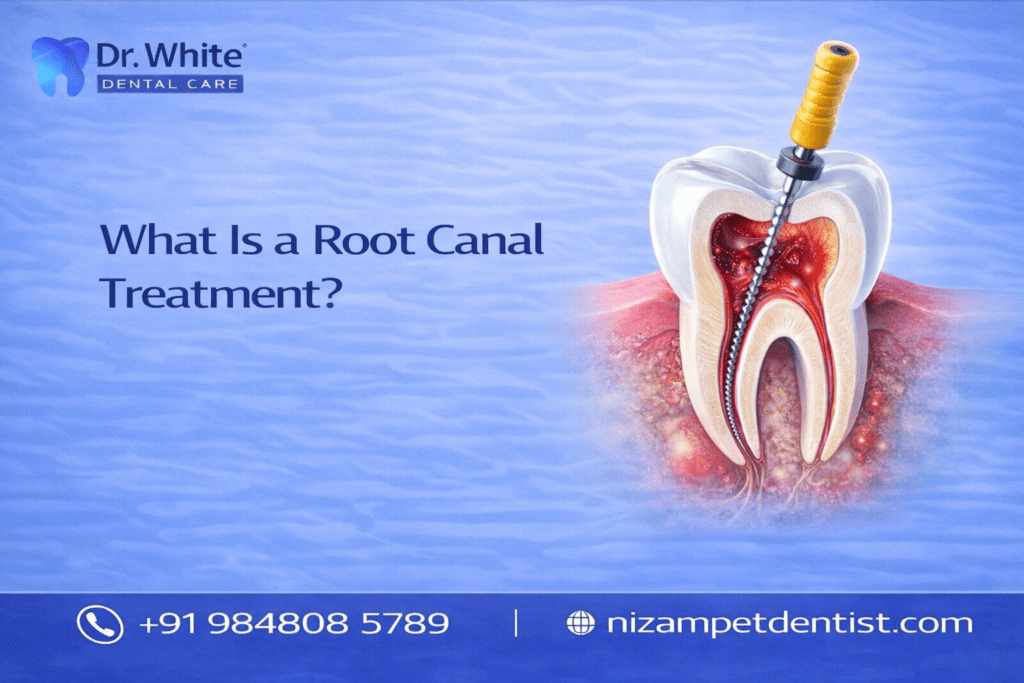
Root canal is a dental procedure done by a dentist, in which infected or damaged pulp nerve within a tooth is removed. The pulp contains the nerves, fine blood vessels, and connective tissue of a tooth.
When bacteria get into this area because of a deep cavity a cracked filling or some kind of injury the pulp can get irritated or infected. Each person has a different symptom like sensitivity of cold drinks, pain while chewing, swelling in the gums, or a dull ache that comes at night. If you notice these symptoms and do not do anything about it the bacteria can keep spreading it can go all the way to the root and cause a lot of damage.
Why Root Canal Treatment Is Needed?
Root canal treatment becomes a necessity when the infection or inflammation within the tooth has spread so far that it can no longer heal itself. When the bacteria reach the pulp and settle down there, spreading deeper through the root. A painkiller relieves discomfort for a while, but it doesn’t kill the bacteria, an antibiotic may be able to reduce swelling in surrounding tissues but, but they also can’t reach the inside of the pulp chamber. So, if the source of the infection is not cleaned out, the symptoms keep returning.
When a tooth reaches this stage, there are actually only two treatment alternatives. The first is to extract the tooth and be done with the infection. The second involves root canal treatment-the infected pulp is flushed out and the tooth is saved.
In general, dentists and endodontists say that saving the natural tooth whenever possible is always the best treatment option because nothing likes your natural tooth.
Root Canal Treatment Cost in Hyderabad?
What most of the patients want to know is how expensive a root canal treatment can be. Dental care always comes uninvited and some sense of cost will guide the patient.
As a general rule, root canal treatments for front teeth will be on the lower end of that spectrum because these teeth usually have only one canal. Premolars can be a bit higher for treatment, and molars typically will cost more because they have three or more canals, which also take longer to treat and are considered a skill event.
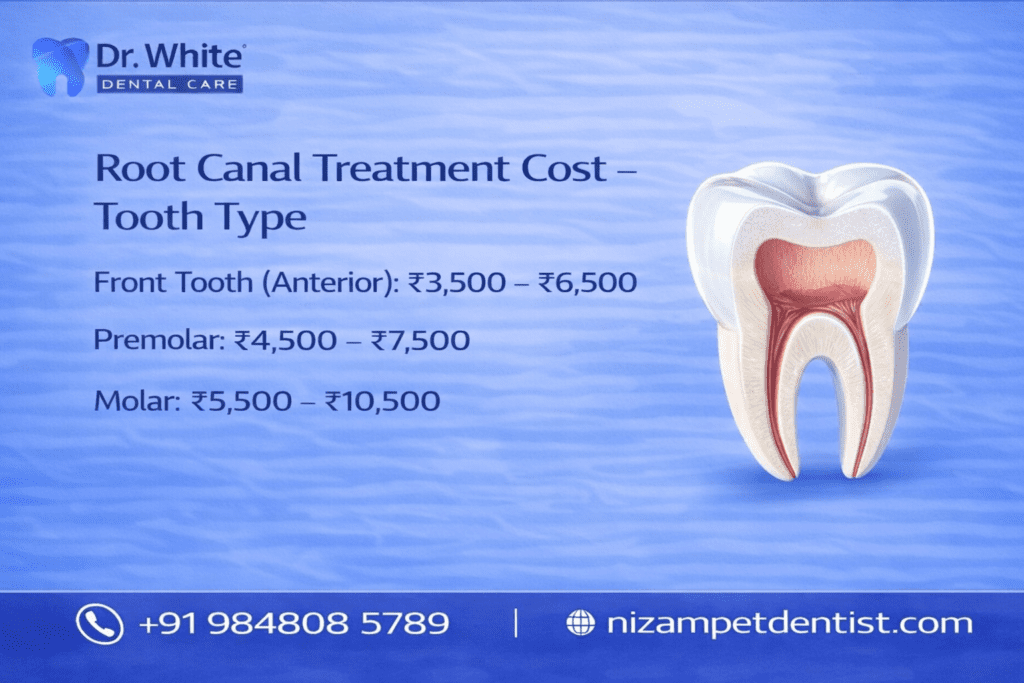
Here’s a generalized list of priced you see an affordable dental clinic Hyderabad:
- Front Tooth ( anterior ) : Approximately ₹3,500 to ₹6,500.
- Premolar : Approximately ₹4,500 to ₹7,500.
- Molar : Approximately ₹5,500 to ₹10,500.
Some clinics also provide single sitting root canal treatment, that may be priced a little more due to the equipment and scheduling expenses.
Disclaimer: Root canal treatment costs can vary between clinics depending on tooth type, infection severity, diagnostic requirements and the technologies used. The figures presented are intended for general guidance only and are not a substitute for a clinical quote. For detailed treatment information, visit our Root Canal Treatment page.
Factors Affecting Root Canal Treatment Cost?
Root canal treatment costs in Hyderabad are not the same for all patients, as several practical factors affect the final pricing. Below are some of the essential factors.
1. Type of Tooth & Number of Canals :
Different teeth have different canal anatomy through which the length of procedure and the amount of effort will change.
- Front Teeth (Anterior) : Generally have one canal, thus cleaning and shaping easier. By far, anterior teeth are the cheapest RCT cost.
- Premolars : Can be one or two canals. Treatment time is dependent on the angle and curvature of the canals, making premolar cases slightly more complicated.
- Molars : The most often have three or more canals. Being the most time-consuming and highest cost, molars usually bear most chewing forces and have deep anatomy.
- Curved or Narrow Canals : Sometimes narrow or curved, especially in elderly patients, thereby increasing procedure complexity and total pricing.
2. Stage of Infection & Case Complexity :
The treatment of an infection is earlier, and then the procedure is more straightforward.
- Early Pulp Irritation : Perhaps cleaning and sealing without heavy drainage, generally easier cases.
- Deep Pulp Infection : More canal preparation and irrigation must be done to remove bacteria.
- Abscess Formation : Gathered pus around the root may bring multiple sittings and will most likely add to expenses.
- Re-Root Canal Treatment (Retreatment) : Harder when the previous treatment failed since emptying old filling materials and relining canals need to be accomplished.
3. Used Technology & Equipment :
Some clinics have advanced tools that help improve the precision as well as reduce the time spent in the chair.
- Rotary Endodontics : This makes shaping canals more efficient and quicker than the old manual file methods.
- Apex Locators : These help to locate in how far the roots are, and eliminate the need for multiple x-rays in the procedure.
- CBCT Imaging : This is for people with more complicated and curved canals. The CBCT images help before the additional re-RCT.
4. Diagnostic & Additional Procedures :
In some cases, additional diagnostic steps may be required :
- X-Rays : Used before treatment and during treatment to analyze the requirement of canal cleaning.
- CBCT : Recommended for 3D clarity in complicated or re-treatment cases.
- Medication : When infected severely, a temporary medication may be placed in between sittings.
- Follow-Up Visits : In some circumstances, further visits may add to the total cost.
There are a few other factors that may affect the cost ranges, so if you need further assistance and want to take care of your treatment, please visit the nizampetdentist to discuss more regarding the RCT treatment.
Single Sitting Root Canal vs Multiple Sitting Root Canal
| Category | Single Sitting Root Canal | Multiple Sitting Root Canal |
| Total Visits | 1 visit. | 2–3 visits (sometimes more if infection is severe). |
| Procedure Duration | 45–90 minutes depending on tooth type. | 30–60 minutes per visit plus time between appointments. |
| Case Type Frequency | 60–70% of anterior teeth and some premolars are eligible. | 70–80% of molar infections and retreatment cases fall here. |
| Infection Severity | Works for mild to moderate pulp infections. | Used for moderate to severe infections, especially with dental abscess. |
| Tooth Type Suitability | Better for anterior (1 canal) and some premolars (1–2 canals). | More common for molars (3+ canals) or curved canal anatomy. |
| Medication Requirement | Usually no intra-canal medication required. | Often requires medication between visits to control infection. |
| Diagnostic Imaging | Routine X-rays; rotary endodontics helps finish in one go. | May need CBCT or extra X-rays in retreatment or complex molar cases. |
| Pain/Discomfort Pattern | Temporary soreness for 1–2 days is common. | Pain may reduce between visits as infection drains or settles. |
| Abscess Handling | Not ideal if pus formation is present. | Allows drainage and monitoring of abscess over 7–10 days if needed. |
| Cost Trend (Hyderabad) | Slightly higher per procedure, but fewer visits. | Lower per visit, but extra medication/CBCT can increase total. |
| Patient Convenience | High convenience (saves trips, time off work). | Medium convenience; requires scheduling across days. |
| Common Patient Profile | Busy professionals, students, travelers, patients from other Hyderabad areas. | Patients with swelling, severe pain, abscess, or complex canal anatomy. |
| Outcome Perspective | Works well when tooth is stable enough to seal same day. | Preferred when tooth needs time to heal before sealing. |
Do You Need a Crown After Root Canal Treatment?
A tooth becomes hollow on the inside after root canal treatment since the infected pulp is removed. This hollowed-out tooth may weaken over time. Whether or not a crown is required depends chiefly on the site of the tooth and its chewing load.
1. Molars-Almost Always Need A Crown :
Molars take up most of the chewing pressure. After R.C.T., if left without a crown, they may be more prone to cracks. For that reason, molars are recommended to be given a crown by dentists and endodontists as a long-term precaution.
2. Premolars - Usually Recommended:
Premolars also bear chewing pressure but not as much as molars. If a considerable amount of the premolar was taken away, then a crown from the crowns and bridges category is usually recommended.
3. Front Teeth - Case Dependent :
Anterior teeth don’t feel much chewing force, and may not require a crown at all. If the structure of teeth is intact, a filling can often work. If the tooth is fractured or esthetically compromised, choose a crown to restore and look nice, contributing to overall smile makeover goals
4. Retreatment - Crown Strongly Advised :
In re-root canal cases, the tooth structure may have already been compromised from earlier work. Crowns thus help in bringing strength and preventing future fractures.
Root Canal vs Extraction vs Implant
| Point | Root Canal (RCT) | Extraction | Implant |
| Goal | Save the natural tooth | Remove the tooth | Replace missing tooth |
| Tooth Left After? | Yes (kept) | No (gap) | Yes (artificial) |
| Chewing Function | Maintained | Reduced unless replaced | Restored |
| Bone Effect | Bone preserved | Bone shrinks over time | Bone maintained |
| Timeline | 1–3 visits | 1 visit | 2–4 months (with healing) |
| Upfront Cost (Hyderabad) | Moderate | Lowest | Highest |
| Long-Term Cost | Low if crowned | Replacement cost later | High upfront, low long-term |
| When Used | Tooth can be saved | Tooth beyond repair | Missing tooth needs replacement |
Root Canal Recovery & Aftercare
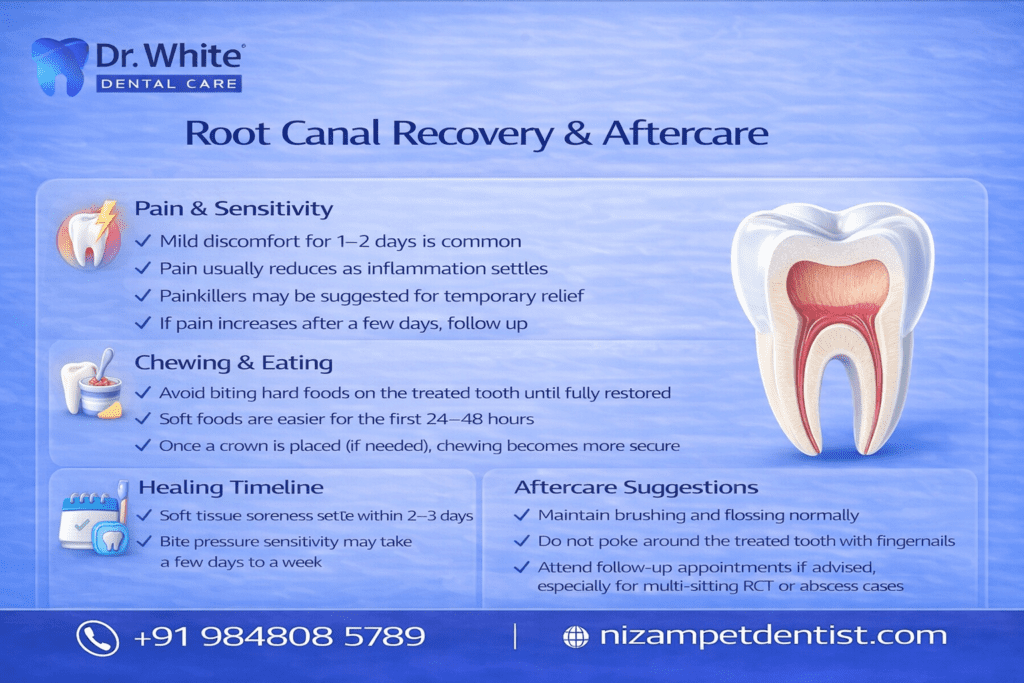
After root canal treatment, the tooth and surrounding tissues need some time to settle. The majority of individuals will be able to return to their usual activities the day of the procedure, although mild soreness in the jaw might persist for a few days, particularly when chewing.
1. Pain & Sensitivity :
- Mild discomfort for 1 – 2 days in common.
- Pain usually reduces as inflammation settles.
- Painkillers may be suggested for temporary relief.
- If pain increases after a few days, paitents should follow – up.
2. Chewing & Eating :
- Avoid biting hard foods on the treated tooth until fully restored.
- Soft foods are easier for the first 24 – 48 hours.
- Once a crown is placed ( if needed ), chewing becomes more secure.
3. Healing Timeline :
- Soft tissue soreness settles within 2 – 3 days.
- Bite pressure sensitivity may take a few days to a week.
- Complete healing around the root can take longer, but patients feel normal much earlier.
- This usually fades within a few hours to a couple of days.
4. After Case Suggestions :
- Maintain brushing and flossing normally.
- Do not poke around the treated tooth with fingernails or objects.
- Attend follow – up appointments if advised, especially for multi-sitting RCT or abscess cases.
Conclusion
If symptoms such as pain, sensitivity or swelling are present, it is better to get the tooth examined rather than wait, as delaying the treatment may increase the infection or lead to an abscess. If you need clarity about your tooth or want to explore treatment options, you can visit NizampetDentist for evaluation and guidance.
A simple consultation helps determine whether the tooth can be saved and what the most suitable next steps are.
Need Help?
If you’re considering root canal treatment or want clarity about your case, contact us today to schedule a consultation.
We are here
Enquire Now
FAQ
Local anesthesia is used during the procedure, so patients mostly feel pressure rather than sharp pain. Soreness may appear afterward for a couple of days as tissues settle.
Timing depends on the tooth. Front teeth may take under an hour. Molars can take longer because they have more canals. Some cases are finished in one sitting, others in two or three.
Yes, it is possible when there is no severe infection or abscess. Complex or retreatment cases usually need multiple sittings.
Molars and premolars generally need a crown due to chewing load. Front teeth may not always need a crown unless damaged or for cosmetic reasons.
With a proper crown and normal chewing habits, many root canal-treated teeth last for years. Longevity depends on maintenance.
Antibiotics may bring temporary relief for swelling but cannot reach the pulp space. If the tooth is infected internally, RCT is the treatment that removes the infection.
Extraction removes the tooth, but a gap remains which may later require a dental implant to restore function. If the gap is not replaced, chewing and alignment can be affected. Root canal treatment saves the natural tooth when possible.
Implants are used when the tooth is already missing or removed. If the natural tooth can be saved, RCT is usually the conservative option.
Costs vary by tooth type, infection severity, equipment used, and crown material. Molars tend to cost more due to complexity. Crowns are usually billed separately.
Deep decay, cracked fillings, trauma, or infection reaching the pulp can lead to pain, sensitivity, and sometimes swelling, requiring RCT to save the tooth.
Signs may include tooth pain, sensitivity to hot or cold, discomfort while chewing, or gum swelling. Dentists confirm using X-rays and examination.
Delays can increase infection and may lead to abscess formation. Pain may return or worsen once the infection spreads deeper.
Soft foods are easier for the first one or two days. If a crown is pending, avoid hard or sticky foods on that tooth until it is fully restored.
Root canal treatment can be done by general dentists. Complex cases or molars are often treated by endodontists who specialize in RCT.
Root canal treatment is a standard dental procedure performed to save natural teeth. With modern equipment and proper sealing, it is considered safe and predictable.