
Home › Dental Implant Treatment in Nizampet
Implant dentistry · Nizampet, Hyderabad
Dental Implant Treatment in Nizampet
Missing a tooth or struggling with several missing teeth? At Nizampet Dentist, implant consultations focus on your jawbone health, bite, medical history and tooth-replacement goals—not a one-size-fits-all procedure.
Explore single-tooth implants, implant-supported bridges and full-arch options. Understand the treatment stages, alternatives, approximate healing process, costs and maintenance before you make a decision.
✓ Individual assessment ✓ Implant alternatives explained ✓ Nizampet branch
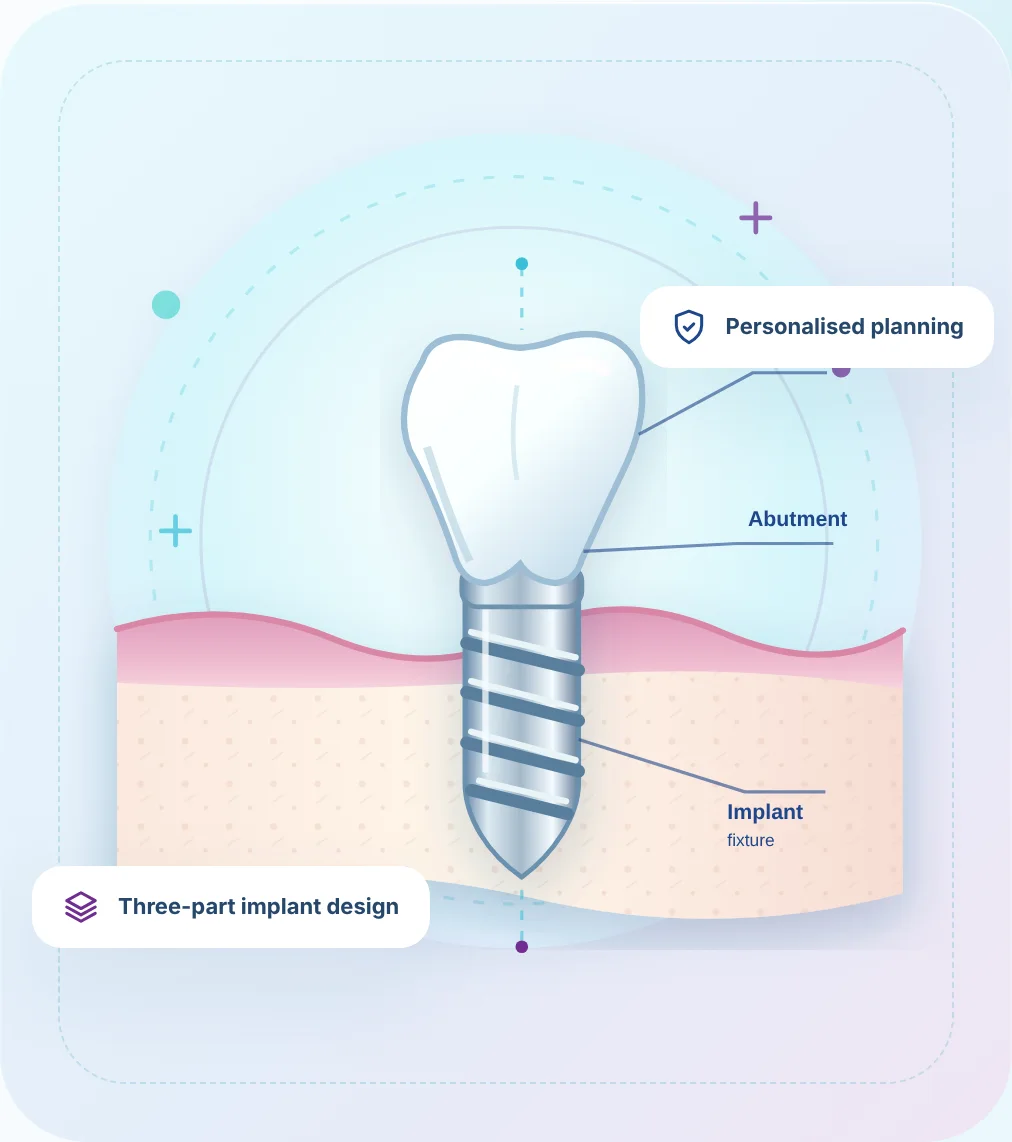
Educational illustration · not a clinical photograph
Nizampet, Hyderabad
Opposite Balaji Park Town
Dr. Sri Lakshmi Champati
BDS · Dental Surgeon & Implantologist
10 AM – 9 PM
Monday through Sunday
98480 85789
Call or request a consultation
The essentials
What Are Dental Implants?
A straightforward explanation of the treatment before you consider surgery.
Quick answer
A dental implant is a device surgically placed into the jawbone to support a replacement tooth or teeth. An implant fixture connects to an abutment and a restoration such as a crown, bridge or denture.
The implant is not the entire new tooth. The final restoration is a separate component. Healthy surrounding tissues, suitable bone and ongoing maintenance all matter.
Three important parts
Fixture
The implant body positioned in the jawbone.
Abutment
A connector between the fixture and restoration.
Restoration
The visible crown, bridge or denture supported by the implant.
Individual assessment
Who May Be Suitable for Dental Implants?
A safe recommendation depends on clinical findings, not just how many teeth are missing.
Factors that may support candidacy
✓ One or more missing teeth with a suitable replacement plan.
✓ Healthy or treated gums and adequate bone, or an appropriate grafting plan.
✓ A fully developed jaw and commitment to long-term oral hygiene.
✓ Medical conditions reviewed and reasonably controlled.
✓ Realistic expectations about surgical and restorative stages.
Factors requiring further evaluation
! Active gum infection or untreated periodontal disease.
! Smoking, uncontrolled diabetes or medications affecting bone healing.
! Limited bone volume or complex bite conditions.
! Ongoing jaw growth in younger patients.
! History of radiotherapy, certain bone medications or medical conditions.
Having one of these risk factors does not automatically rule out implants. The dentist considers individual risks, possible treatment before implants and nonsurgical alternatives.
Why patients ask
Common Problems Dental Implants Can Address
Tooth replacement is not only about appearance. Function and the health of adjacent teeth also matter.
One missing tooth
An implant-supported crown may restore a gap without preparing neighbouring teeth, if suitable.
Several missing teeth
Implant-supported bridges can sometimes restore multiple gaps with fewer implants than missing teeth.
Difficulty chewing
Stable replacement teeth may help with chewing, though adjustment and follow-up are still necessary.
Loose or uncomfortable dentures
Selected patients may benefit from implant-retained dentures after a full assessment.
Changes in smile confidence
Restorations can be designed to complement nearby teeth, but exact appearance cannot be promised.
Bone changes after tooth loss
Implant planning evaluates local bone; implants may help preserve bone support but cannot reverse all prior loss.
Restoration possibilities
Types of Dental Implant Treatment
The number and position of implants—and the type of replacement teeth—must be planned for each individual.
Single-tooth implant
A fixture and implant-supported crown may replace one missing tooth.
Multiple-tooth implants
Two or more implants may support individual crowns or a bridge, based on spacing and bone.
Full-arch rehabilitation
A complete upper or lower arch may be restored with a planned number of implants and a suitable prosthesis.
Implant-retained dentures
Implants can help retain some removable dentures. Fixed and removable options have different maintenance needs.
Important: Terms such as “All-on-4”, “All-on-6” and “same-day teeth” refer to specific treatment approaches, not a guarantee of eligibility or a universal timeline. The treating clinician must confirm availability and suitability.
Compare treatment plans
Single vs Multiple vs Full-Arch Dental Implants
An implant-supported restoration is designed for a specific number of missing teeth and anatomical conditions.
Feature
Single tooth
Several missing teeth
Full arch
Typical goal
Replace one missing tooth
Replace multiple missing teeth
Restore most or all teeth in one jaw
Possible restoration
Implant-supported crown
Separate crowns or implant-supported bridge
Fixed or removable full-arch prosthesis
Implant count
Often one
Based on tooth positions and support
Based on full-arch planning and bone
Planning priorities
Local bone, spacing and bite
Distribution, load and adjacent anatomy
Whole-jaw bite, hygiene, bone and prosthesis
Treatment stages
Placement, healing, final crown
Planning, placement, healing, prosthetics
Comprehensive phased treatment; temporary teeth in selected cases
Cost approach
Itemised tooth-specific quotation
Quotation per implant and restoration
Individual full-arch plan and quotation
Illustrative planning guidance. Not a treatment recommendation or price quotation for an individual patient.
Know the alternatives
Dental Implants vs Bridges vs Dentures
Every tooth-replacement choice has benefits, limitations, maintenance needs and costs. Your dentist should explain all reasonable options.
Comparison point
Dental implant
Dental bridge
Removable denture
How it is supported
Fixture in jawbone
Usually nearby prepared teeth, or implants
Gum and sometimes remaining teeth
Surgery
Usually required
Not for tooth-supported bridge
Usually no surgery
Adjacent teeth
Usually no preparation of neighbouring teeth
Traditional bridge often involves adjacent teeth
May rely on natural teeth for retention
Maintenance
Clean implant, crown and gums; reviews
Clean around and beneath bridge
Remove and clean as advised
Main consideration
Bone, surgery, healing and expense
Condition of supporting teeth
Comfort, fit, stability and adaptation
Best option?
Based on individual assessment
Based on individual assessment
Based on individual assessment
A dental bridge replaces missing teeth; braces and aligners principally reposition existing teeth. They are not interchangeable tooth-replacement options.
Who plans your treatment
Meet Your Dental Implant Dentist in Nizampet
Clinical decisions should be attributable to a named, qualified professional—not anonymous marketing claims.
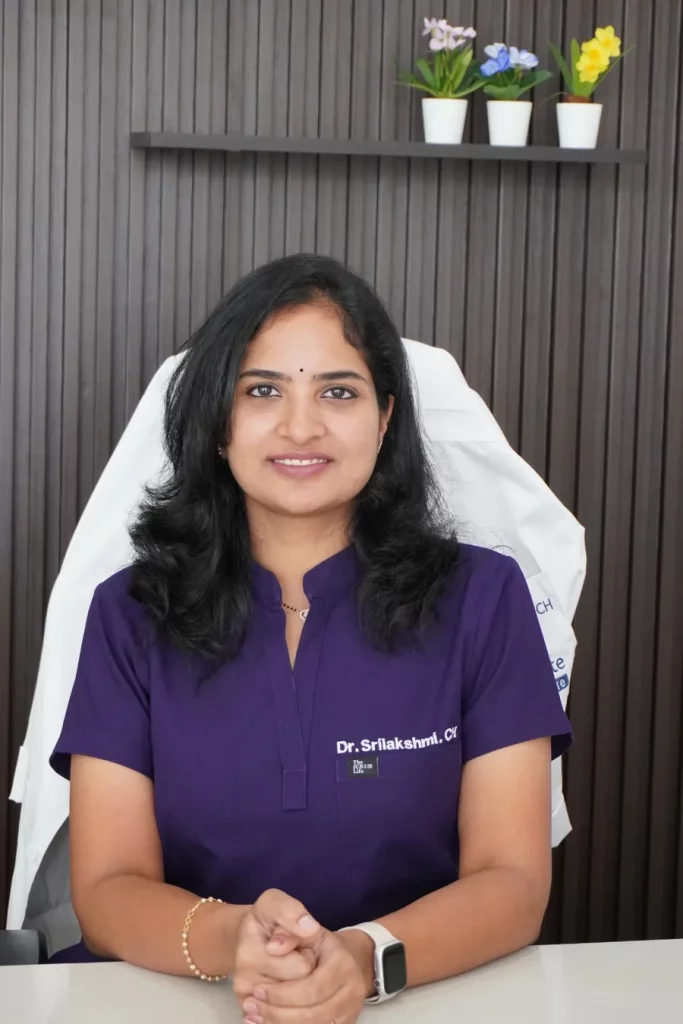
Clinic lead
Dr. Sri Lakshmi Champati
BDS · Dental Surgeon & Implantologist · Founder, Dr. White Dental Care
Dr. Sri Lakshmi Champati has 13+ years of clinical experience, with a focus including implant, restorative and cosmetic dental care.
Implant planning should cover the condition of the supporting bone, gum health, adjacent teeth, bite forces, treatment alternatives, likely stages and the proposed restoration. Depending on complexity, other qualified clinicians may participate in surgical or prosthetic care.
✓ Individual consultation ✓ Treatment planning ✓ Aftercare discussions
View clinic & dentist informationClinical assessment first
Dental Implant Imaging & Treatment Planning
The right diagnostic pathway depends on the clinical question and the anatomy of the proposed implant site.
Clinical examination
The dentist checks the mouth, gum condition, adjacent teeth, bite and missing-tooth region.
X-rays and 3D imaging
Dental radiographs are selected as needed. CBCT imaging may be arranged through an external diagnostic facility when indicated.
Implant and restoration plan
Bone availability, implant position, prosthetic design and any grafting requirements are assessed.
Written treatment estimate
Discuss the proposed implant system, surgical stage, abutment, crown or bridge and any additional procedures.
Health and risk review
Medical history, medicines, smoking, oral hygiene and informed consent are part of safe planning.
Questions before treatment
Ask about alternatives, visit count, healing, aftercare, total fees, risks and who provides each stage.
Imaging note: CBCT and complex diagnostics are coordinated with external imaging centres when clinically needed.
Your treatment journey
Dental Implant Procedure — Step by Step
An implant is usually a staged treatment rather than a one-visit cosmetic service.
01
Consultation
Discuss missing teeth, medical conditions and your treatment goals.
02
Examination & imaging
Assess gums, bite and available bone; arrange scans when required.
03
Plan & consent
Explain alternatives, risks, staged timeline and a written cost estimate.
04
Implant placement
A suitable fixture is surgically inserted under appropriate anaesthesia.
05
Healing
Bone integrates with the implant over time; reviews may be required.
06
Restoration
Fit the abutment and final crown, bridge or denture as planned.
07
Bite & hygiene checks
Assess function, contact points and home-care technique.
08
Maintenance
Attend follow-up visits and report any looseness, inflammation or pain.
Not every patient needs bone grafting or a separate uncovering surgery. The number of steps and visits is determined after clinical assessment.
Realistic healing time
How Long Does Dental Implant Treatment Take?
Treatment may take several months because bone needs time to heal around an implant. Additional procedures can extend the timeline.
What determines the timeline?
✓ Bone quality, position and need for grafting.
✓ Healing after extraction or implant surgery.
✓ Number of implants and restorative components.
✓ General health, smoking and gum condition.
✓ Whether a temporary restoration is possible.
Quick answer
Bone integration often takes several months. NHS patient guidance describes waits of at least around three months in many cases before a final restoration, with longer periods when grafting is needed.
Your dentist should give you a case-specific schedule, not promise completion by an arbitrary date.
Immediate implant placement
The implant may be placed at the same visit as an extraction in selected cases. This describes when the fixture is inserted.
Immediate loading
A temporary restoration may be attached soon after placement when primary stability and other conditions permit. This describes when the implant supports a tooth. These are not the same thing.
Transparent cost guidance
Dental Implant Cost in Nizampet
A reliable quote separates the implant surgery from the restoration and any additional clinical requirements.
Implant fixture
Brand, design and number of implants required.
Surgical care
Placement complexity and any staged procedures.
Abutment & crown
Connector, crown material and laboratory work.
Imaging & tests
X-rays, external CBCT if indicated and diagnostic work.
Additional procedures
Bone grafting or sinus-related procedures only if clinically needed.
Follow-up and taxes
Clarify included reviews, replacements, taxes and exclusions.
Ask for an itemised written estimate showing fixture + abutment + crown/bridge + surgery + scans + any grafting + follow-up, so you know exactly what the fee includes.
Read implant cost guidanceBalanced information
Benefits, Limitations and Potential Risks
Implant treatment may support chewing and appearance, but every surgical procedure carries risks and requires maintenance.
Potential benefits
✓ May support a stable replacement tooth or denture.
✓ May restore chewing function and appearance.
✓ Often avoids preparing neighbouring teeth for a conventional bridge.
✓ Can support bone around the implant site when integrated.
✓ Fixed and removable prosthetic options may be available.
Possible limitations and risks
! Swelling, bruising, bleeding, discomfort or infection.
! Delayed healing or failure to integrate with bone.
! Damage to nearby structures, including nerves or sinus.
! Peri-implant inflammation or disease over time.
! Additional surgery or restoration repair may be necessary.
Important: Neither “painless” surgery nor lifetime success can be guaranteed. Your dentist should explain your specific risks and alternatives, and obtain informed consent before treatment.
Protect your implant
Dental Implant Recovery and Long-Term Aftercare
Aftercare starts immediately after surgery and continues long after the final replacement tooth is fitted.
First days
Follow the surgical team’s instructions for rest, food, cleaning and any prescribed medicines. Some swelling and discomfort can occur.
Avoid smoking
Smoking can impair healing and increase the chance of complications; discuss cessation support before surgery.
Keep the area clean
Follow the dentist’s instructions for cleaning around the surgical site, and later clean around implants and restorations daily.
Attend follow-ups
Regular checks assess soft tissues, bite, restoration integrity and implant condition.
Report new symptoms
Contact the clinic promptly for worsening pain, abnormal discharge, increasing swelling or a loose-feeling implant.
Medical emergencies
Breathing or swallowing difficulty, or uncontrollable bleeding, requires immediate emergency medical care.
Do not begin antibiotics or medicated mouthwash unless advised by your clinician. Postoperative instructions differ depending on the surgery.
Our service approach
Why Consider Nizampet Dentist for Implant Care?
What patients should be able to expect from a consultation and a clearly explained care plan.
Named dental leadership
Dr. Sri Lakshmi Champati, BDS, is the clinic founder and an implant-focused dental surgeon.
Nizampet accessibility
The clinic is located on Nizampet Main Road, opposite Balaji Park Town, and is open daily.
Discussed options
Request an explanation of implants, tooth-supported bridges and dentures before consent.
Imaging when indicated
Dental imaging is selected to clarify the implant site; external CBCT may be coordinated.
Risks made clear
Understand possible complications, recovery needs and long-term maintenance.
Direct enquiry channel
Call or WhatsApp the Nizampet branch to request a consultation and confirm availability.
Independent patient feedback
Patient Experiences and Reviews
Reviews can help you learn about clinic communication and service, but each treatment result varies by patient. Read current, first-hand reviews of the Nizampet clinic on Google.
Read reviews on Google Maps ↗Answers, always visible
Dental Implant Treatment FAQs
Clear answers to the questions patients ask most about dental implants in Nizampet.
Question 01
What is a dental implant?
A dental implant is a device placed into the jawbone to support a replacement crown, bridge or denture. The implant fixture and the visible artificial tooth are separate components.
Question 02
How do I know if dental implants are suitable for me?
A dentist assesses gum health, bone volume, bite, medical history, medicines, oral hygiene and expectations. Some conditions need treatment or additional imaging before a decision.
Question 03
Is dental implant surgery painful?
Local anaesthesia is commonly used to reduce pain during implant placement. Pressure may be felt, and temporary swelling or discomfort can occur afterward. The experience varies.
Question 04
How long does dental implant treatment take?
Treatment often requires multiple appointments over several months to allow healing and integration with bone. Bone grafting, infection management and the restoration type can extend the timeline.
Question 05
Can I get an implant and a tooth on the same day?
In selected cases, immediate placement or a temporary restoration may be possible. These are different procedures. Your dentist must confirm bone support, implant stability and bite conditions.
Question 06
What is the difference between an implant and a bridge?
An implant supports a replacement tooth using a fixture in bone. A conventional bridge usually relies on neighbouring teeth for support and may require their preparation. Both need examination and maintenance.
Question 07
Are dental implants better than dentures?
Not for everyone. Implants may offer greater stability in appropriate cases, while removable dentures avoid implant surgery and can be a suitable choice. Medical factors, hygiene, comfort and cost influence the decision.
Question 08
Can dental implants be placed if I have bone loss?
Sometimes additional procedures such as grafting may be considered, but not every case is suitable. Clinical examination and imaging help determine whether there is adequate bone and what alternatives are available.
Question 09
How much do dental implants cost in Nizampet?
Costs vary with the implant system, number of fixtures, surgery, abutments, crowns or bridges, imaging and any bone grafting. Request a written itemised quotation; do not assume advertised starting prices include a final tooth.
Question 10
Do dental implants last a lifetime?
Implants may function for many years, but lifetime success cannot be promised. Gum health, cleaning, smoking, bite forces, medical conditions and follow-up affect durability; restorations may need repairs.
Question 11
How should I clean around a dental implant?
Follow your clinician’s postoperative instructions first. Long term, brush and clean around implant-supported restorations using suitable tools, and attend regular professional checks.
Question 12
Can someone with diabetes get a dental implant?
Some people with diabetes can receive implants, especially when the condition is well controlled. Uncontrolled diabetes may increase healing risks, so medical and dental assessment is important.
Question 13
What are the risks of dental implant treatment?
Possible risks include infection, bleeding, swelling, nerve or sinus injury, poor integration, implant loosening and peri-implant disease. The clinician should explain your individual risks before treatment.
Question 14
Does the Nizampet clinic have its own CBCT machine?
Three-dimensional CBCT scans may be arranged through external diagnostic facilities when clinically needed. Confirm the diagnostic pathway with the clinic during your consultation.
Visit our clinic
Visit Our Dental Clinic in Nizampet
Find us on Nizampet Main Road, opposite Balaji Park Town. Call ahead to confirm your appointment time.
Dr. White Dental Care – Nizampet
Nizampet Dentist is the information website for the Nizampet branch of Dr. White Dental Care.
Address
1st Floor, House No. 3, 10/2/A, Main Road, opposite Balaji Park Town, Nizampet, Hyderabad, Telangana 500090
Opening hours
Monday–Sunday, 10:00 AM–9:00 PM
Phone
+91 98480 85789
Email
nizampet@dwdc.in
Nizampet Main Road
Opposite Balaji Park Town, Nizampet, Hyderabad. Open the map for live directions to the clinic.
View on Google Maps ↗Request an appointment
Book Your Implant Consultation
Discuss tooth-replacement options with the Nizampet team. Send an enquiry and the clinic will contact you to confirm availability.
✓ Ask about single or multiple missing teeth
✓ Request treatment stages and cost details
✓ Confirm dentist and specialist availability
✓ Receive a reply from the clinic directly
Clinical references: General educational descriptions draw on patient guidance from established health bodies: US FDA · Dental implants ↗ · NHS · Implant treatment stages ↗ · NHS · Implant aftercare ↗
Medical disclaimer: Information on this page is for general education and cannot diagnose, guarantee treatment suitability, predict a result, or replace an in-person dental consultation. Actual procedures, fees, materials, imaging requirements, clinician involvement, healing time and follow-up depend on examination and a confirmed treatment plan.