Home › Blog › How to Permanently Get Rid of Bad Breath

Clinical review
Reviewed by Dr. Srilakshmi Champati
BDS · Dental Surgeon · Implantologist · Nizampet Dentist, Hyderabad
This article provides general education about halitosis (bad breath). Individual causes and treatment require a clinical assessment.
Oral health guide · Nizampet, Hyderabad
How to Permanently Get Rid of Bad Breath
Long-lasting relief from bad breath starts with finding its cause. Cleaning your tongue, brushing with fluoride toothpaste and cleaning between your teeth can help, but persistent halitosis may also need treatment for gum disease, tooth decay, dry mouth or another health condition.
Mouthwash and mints may temporarily mask an odour. If the problem keeps returning, the useful next step is to identify what is causing it rather than repeatedly covering it up.
No treatment can guarantee that bad breath will never return. Long-term control depends on the cause and consistent follow-up.
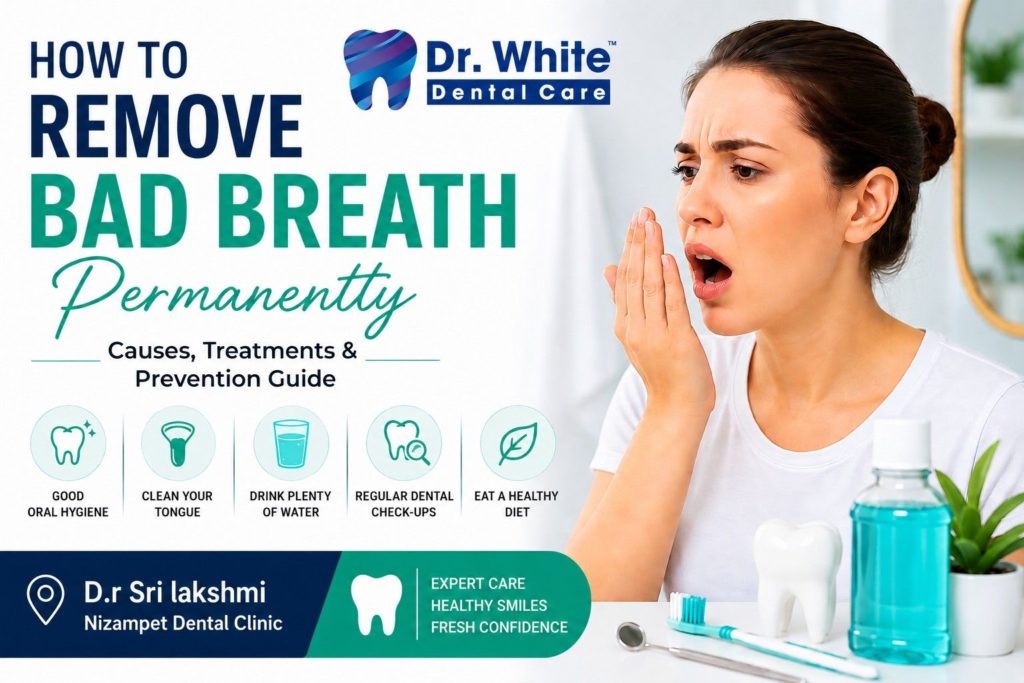
Bad breath care begins with daily oral hygiene and checking for treatable causes.
Start with the basics
Brush twice daily, clean between teeth and gently clean your tongue once a day.
Look for the cause
Gum disease, cavities, infections and dry mouth can keep bad breath returning.
Know when to get help
If bad breath persists for a few weeks despite good care, book a dental assessment.
The quick answer
Quick Answer: How Do You Get Rid of Bad Breath for Good?
To manage persistent bad breath, brush your teeth twice a day for two minutes with fluoride toothpaste, clean between your teeth daily, gently clean your tongue, drink water regularly and avoid tobacco. If the smell continues, see a dentist to check for gum disease, cavities, infection or dry mouth. If no dental cause is found, your dentist may recommend medical assessment. Long-term relief comes from treating the cause—not just masking the smell.
Important: Occasional morning breath or odour after garlic or onions is common. Breath that remains unpleasant despite consistent oral care deserves an assessment, especially if you also have pain, bleeding gums, swelling or a persistent bad taste.
Key takeaways
Key Takeaways
Clean your tongue
The tongue's surface can hold bacteria and debris that contribute to odour.
Clean between teeth
Floss or use a suitable interdental cleaner every day.
Do not rely on mouthwash alone
Many rinses freshen breath temporarily but do not treat the underlying cause.
Get persistent symptoms checked
Dental and medical causes need different approaches.
Understanding halitosis
What Is Bad Breath (Halitosis)?
Bad breath, also called halitosis, is an unpleasant smell from the mouth or breath. It may happen temporarily after eating strong-smelling foods, after waking up, while fasting or when the mouth is dry. Persistent bad breath is different: it may be linked to plaque, a coated tongue, gum disease, tooth decay, infection or reduced saliva.
Bacteria in the mouth can break down proteins and debris, releasing odorous compounds, including volatile sulfur compounds. The goal of treatment is to reduce the source of the odour and address any underlying condition.
What Causes Bad Breath That Keeps Coming Back?
Many cases start inside the mouth, but not every case has the same cause. Identifying the likely source helps determine which treatment is appropriate.
1. Bacteria and coating on the tongue
The textured surface of the tongue can collect bacteria, food debris and dead cells. A persistent coating—particularly toward the back of the tongue—may contribute to unpleasant breath.
2. Gum disease
Gingivitis and periodontitis can cause bleeding, swollen gums, a bad taste and persistent odour. Periodontitis may also damage the tissues and bone supporting the teeth. Signs such as recurring bleeding or loose teeth need a dental examination.
3. Tooth decay, trapped food or dental infection
Cavities, food trapped around teeth or dental restorations, and some infections can produce unpleasant smells. A dental examination can identify problems that brushing alone will not resolve.
4. Dry mouth
Saliva helps clear debris and maintain the mouth's natural balance. Dehydration, mouth breathing, some medicines, tobacco and certain health conditions can reduce saliva and contribute to bad breath. Do not stop prescribed medicines yourself; ask your doctor or pharmacist if you suspect a side effect.
5. Food, drinks and fasting
Garlic, onions, some spices, coffee, alcohol and long periods without eating may affect breath temporarily. Food-related odour often improves with time and routine oral care, while persistent odour may have another cause.
6. Smoking, chewing tobacco and vaping
Tobacco can leave a strong smell, contribute to dry mouth and increase gum-disease risk. Quitting supports oral and general health.
7. Tonsil, sinus or other medical conditions
Tonsil stones, sinus or throat infections, post-nasal drip and reflux can contribute in some people. Less commonly, a systemic condition may be involved. If a dentist does not find an oral cause, a medical professional can help assess other possibilities.
What helps
How to Get Rid of Bad Breath: A Practical Daily Plan
01
Brush for two minutes, twice a day
Use a soft-bristled toothbrush and fluoride toothpaste. Clean all surfaces and along the gumline without scrubbing aggressively.
02
Clean between your teeth daily
Use floss or an appropriately sized interdental brush to remove plaque and food debris that a toothbrush cannot reach.
03
Gently clean your tongue
Use a tongue scraper or toothbrush once daily, moving gently from the back toward the front. Do not scrape so hard that the tongue hurts or bleeds.
04
Keep your mouth hydrated
Drink water regularly. Sugar-free gum may help stimulate saliva for some people. Persistent dry mouth should be discussed with a dentist or doctor.
05
Clean dentures and appliances
If you wear removable dentures, clean them as instructed and remove them at night unless your dental professional gives different advice. Keep retainers and other appliances clean, too.
06
Limit triggers and avoid tobacco
Notice whether particular foods, alcohol or tobacco worsen your breath. Reduce triggers where practical and seek help to stop tobacco use.
These steps can improve breath when oral hygiene or dryness is contributing. They do not replace treatment for cavities, gum disease, infection or another underlying condition.
Does Mouthwash Permanently Cure Bad Breath?
Usually, mouthwash alone is not a permanent solution. Some products temporarily mask odour, while therapeutic rinses may help with specific oral-health needs. The right choice depends on the cause of the problem and the product's ingredients.
Approach
What it can do
Important limitation
Mints or chewing gum
May temporarily freshen breath; sugar-free gum may stimulate saliva.
Does not treat gum disease, decay or infection.
Cosmetic mouthwash
Can temporarily reduce or cover odour.
May not address the source of persistent halitosis.
Therapeutic mouthwash
Some formulas can help control plaque, gingivitis or other specific problems.
Choose with dental guidance; it does not replace brushing and interdental cleaning.
Cause-specific dental treatment
Addresses issues such as tartar, gum disease, cavities or dental infection.
The treatment and maintenance plan depend on examination findings.
After brushing, spit out excess toothpaste rather than rinsing vigorously with water. If you use a mouthwash, follow the product instructions and your dentist's advice about timing and suitability.
Diagnosis
How Does a Dentist Find the Cause of Bad Breath?
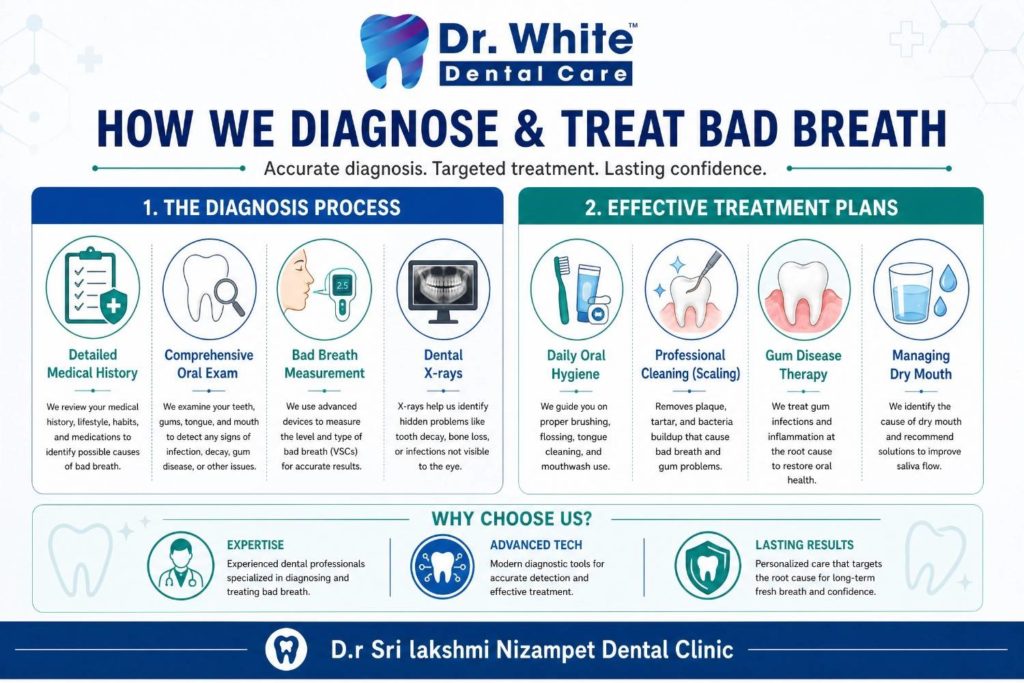
A dental assessment usually starts with your symptoms and medical history, followed by an examination of the mouth. The dentist may check the tongue, gums, teeth, existing fillings or crowns, dentures and signs of dry mouth. Gum measurements or dental X-rays may be appropriate when the examination suggests gum disease, hidden decay or another problem.
Tell the dentist how long the breath problem has lasted, what you have tried, whether you have a dry mouth, and which medicines or tobacco products you use. If the mouth appears healthy and no dental cause is identified, referral to a doctor or an appropriate specialist may be recommended.
Which Treatments May Help Persistent Bad Breath?
Treatment depends on what the examination finds. There is no single treatment that works for every person.
Professional cleaning
Removes plaque and hardened tartar that cannot be brushed away at home.
Gum treatment
Gingivitis or periodontitis may require tailored cleaning, periodontal treatment and maintenance.
Tooth repair or infection treatment
Cavities, damaged restorations or dental infections may need appropriate restorative care or other treatment.
Dry-mouth management
Hydration, saliva-supporting products and review of possible causes may help. Do not change prescription medication without medical advice.
Medical or ENT assessment
If the dentist suspects tonsil, sinus, throat, reflux or another medical cause, the next step may be care from a relevant clinician.
When to seek help
When Should You See a Dentist or Doctor?
Arrange a dental appointment if bad breath does not improve after a few weeks of consistent oral care, or if it returns frequently without an obvious food-related reason. Book sooner if you also have:
! Bleeding, red, swollen or tender gums.
! Toothache, pain when biting or a persistent bad taste.
! Loose adult teeth or visible gum recession.
! Problems with dentures or food repeatedly getting trapped.
! Ongoing dry mouth or mouth sores that concern you.
Get urgent medical or dental help for facial swelling that is spreading, fever with dental swelling, or severe worsening pain. Difficulty breathing or swallowing is an emergency.
Clinical insight
Treat the Cause, Not Just the Smell
If you find yourself using mouthwash, mints or gum repeatedly throughout the day, consider whether they are only giving short-lived relief. A more useful plan is to check whether plaque, tongue coating, gum inflammation, tooth decay or dry mouth is contributing. When dental causes have been ruled out, a dentist can advise whether medical evaluation is appropriate.
Persistent bad breath is common and can feel embarrassing, but it is a health concern—not a personal failing. A respectful assessment can help you understand the cause and decide on reasonable next steps.
Near you
Bad Breath Assessment in Nizampet, Hyderabad
Nizampet Dentist is located on Main Road, opposite Balaji Park Town, in Nizampet, Hyderabad. If you have persistent bad breath, recurring gum bleeding or a constant bad taste, a dental assessment can help check for oral causes and discuss appropriate care.
Bring a list of medicines and mention any dry-mouth symptoms, medical conditions, tobacco use or recent dental treatment. These details may help the clinician plan the examination.
Common questions
Frequently Asked Questions About Bad Breath
01 Can bad breath be permanently cured?
Long-term relief is often possible when the cause is identified and treated, but no one can guarantee that bad breath will never return. Maintenance depends on the underlying cause and daily care.
02 What is the most common cause of persistent bad breath?
Many cases are linked to conditions inside the mouth, including tongue coating, plaque, gum disease, tooth decay or dry mouth. A dental examination can help identify the cause.
03 Does bad breath come from the stomach?
Some digestive or reflux conditions can contribute, but oral causes are common. If a dental assessment does not identify a cause, a dentist may suggest medical evaluation.
04 Does tongue scraping help bad breath?
Gently cleaning the tongue once daily can reduce coating and debris that contribute to odour. Avoid scraping aggressively, and seek advice if the tongue is painful, bleeding or persistently coated.
05 Why do I have bad breath even after brushing?
Brushing may miss the tongue and spaces between teeth, and it cannot remove hardened tartar or treat gum disease, cavities or infection. Dry mouth and some medical conditions can also contribute.
06 Can mouthwash get rid of bad breath?
Mouthwash may temporarily freshen breath, and some therapeutic products help with specific oral conditions. It does not replace brushing, interdental cleaning or treatment of the underlying cause.
07 Can dry mouth cause bad breath?
Yes. Saliva helps clear food debris and maintain the mouth's natural balance. Dehydration, mouth breathing, some medicines and certain health conditions can reduce saliva.
08 Can gum disease cause a bad smell?
Yes. Gum inflammation and periodontitis can contribute to persistent odour or a bad taste. Bleeding or swollen gums should be assessed by a dental professional.
09 How long should I wait before seeing a dentist?
If bad breath continues for a few weeks despite good daily care, arrange a dental appointment. Seek care sooner if you have toothache, bleeding or swollen gums, a loose adult tooth or facial swelling.
10 Can tonsil stones cause bad breath?
Yes. Tonsil stones can trap debris and bacteria and may cause an unpleasant smell. If you suspect tonsil stones or have recurring throat symptoms, ask a healthcare professional about appropriate assessment.
11 What should I do if I have bad breath and bleeding gums?
Continue gentle brushing and daily interdental cleaning, and book a dental examination. Repeated bleeding may indicate gum inflammation and should not be ignored or treated only with mouthwash.
12 Can children have bad breath?
Yes. Possible causes include oral hygiene difficulties, tooth decay, dry mouth, mouth breathing or throat problems. Persistent bad breath in a child should be discussed with a dentist or paediatric healthcare professional.
Get in touch
Need Help With Persistent Bad Breath?
If the problem keeps returning, ask for a dental assessment to check for treatable oral causes and discuss what to do next.
Nizampet Dentist
Address
1st Floor, House No. 3, 10/2/A, Main Road, opposite Balaji Park Town, Nizampet, Hyderabad, Telangana 500090.
Phone
+91 98480 85789
Email
nizampet@dwdc.in
Hours
Monday–Sunday, 10:00 AM–9:00 PM. Call ahead to confirm appointment availability.
Trusted References and Further Reading
The following health organisations provide patient guidance on bad breath, dry mouth and oral hygiene. These sources are for general education and do not replace an individual assessment.
NHS — Bad Breath ↗
American Dental Association / MouthHealthy — Bad Breath ↗
American Dental Association / MouthHealthy — Mouthwash ↗
NHS — Dry Mouth ↗
Indian Dental Association — Bad Breath ↗
Mayo Clinic — Bad Breath: Diagnosis and Treatment ↗
Medical disclaimer: This article is for general education and does not diagnose a condition or replace advice from a qualified dentist or doctor. Causes and treatment differ between people. Seek individual assessment for persistent symptoms or before starting treatment.
Book a consultation
Fresh Breath Starts With Finding the Cause
If breath odour keeps returning despite daily cleaning, professional advice can help identify the next appropriate step.
Clinic location
Visit Nizampet Dentist
Address: 1st Floor, House No. 3, 10/2/A, Main Road, opposite Balaji Park Town, Nizampet, Hyderabad, Telangana 500090.
Phone: +91 98480 85789
Hours: Monday–Sunday, 10:00 AM–9:00 PM. Call before visiting to confirm availability.
Opposite Balaji Park Town
Nizampet Main Road, Hyderabad. Open Google Maps for live directions to the clinic.
Open Google Maps ↗