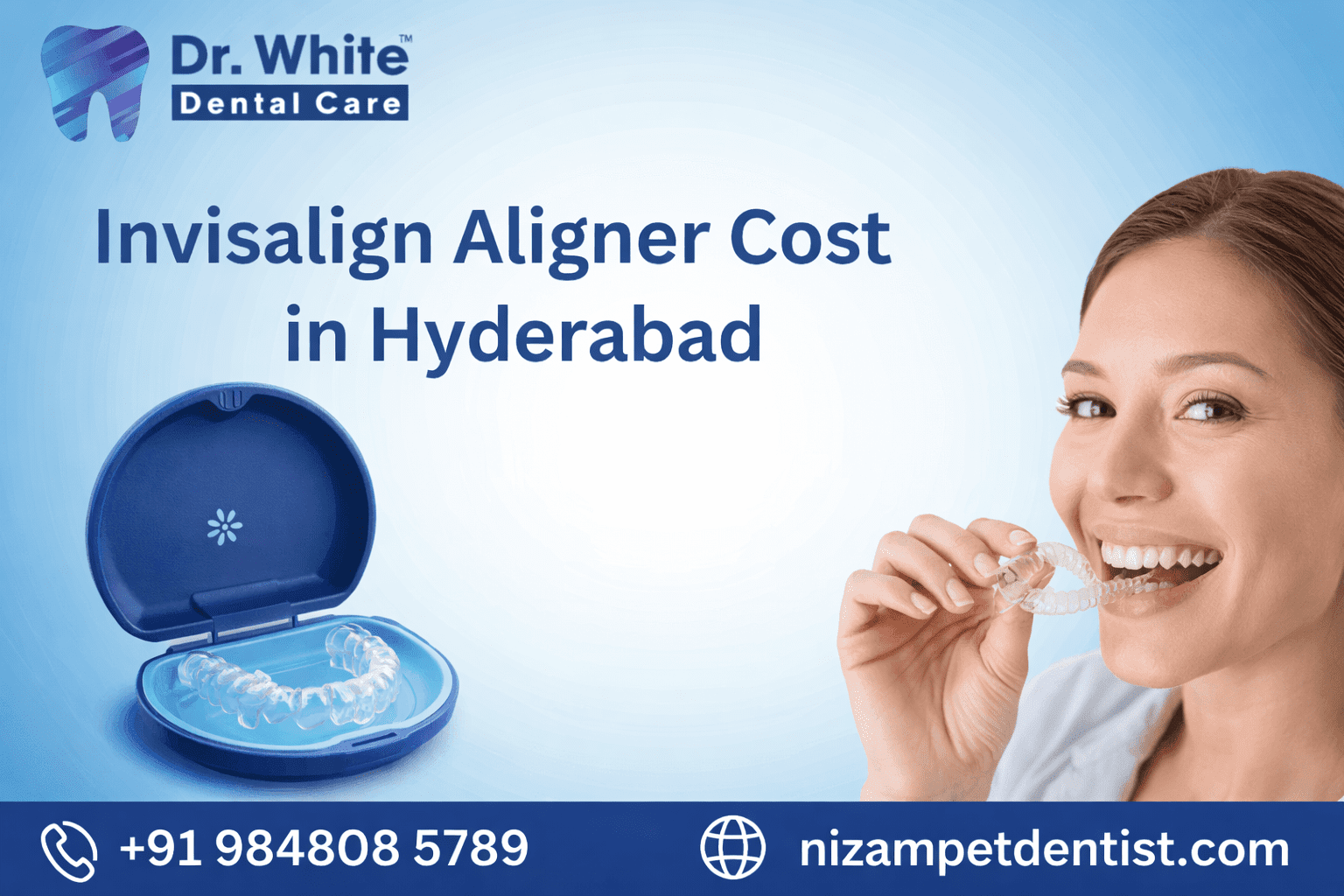
Invisalign Aligner Cost in Hyderabad - 2026 Price Guide
Understanding Invisalign Aligner Cost in Hyderabad
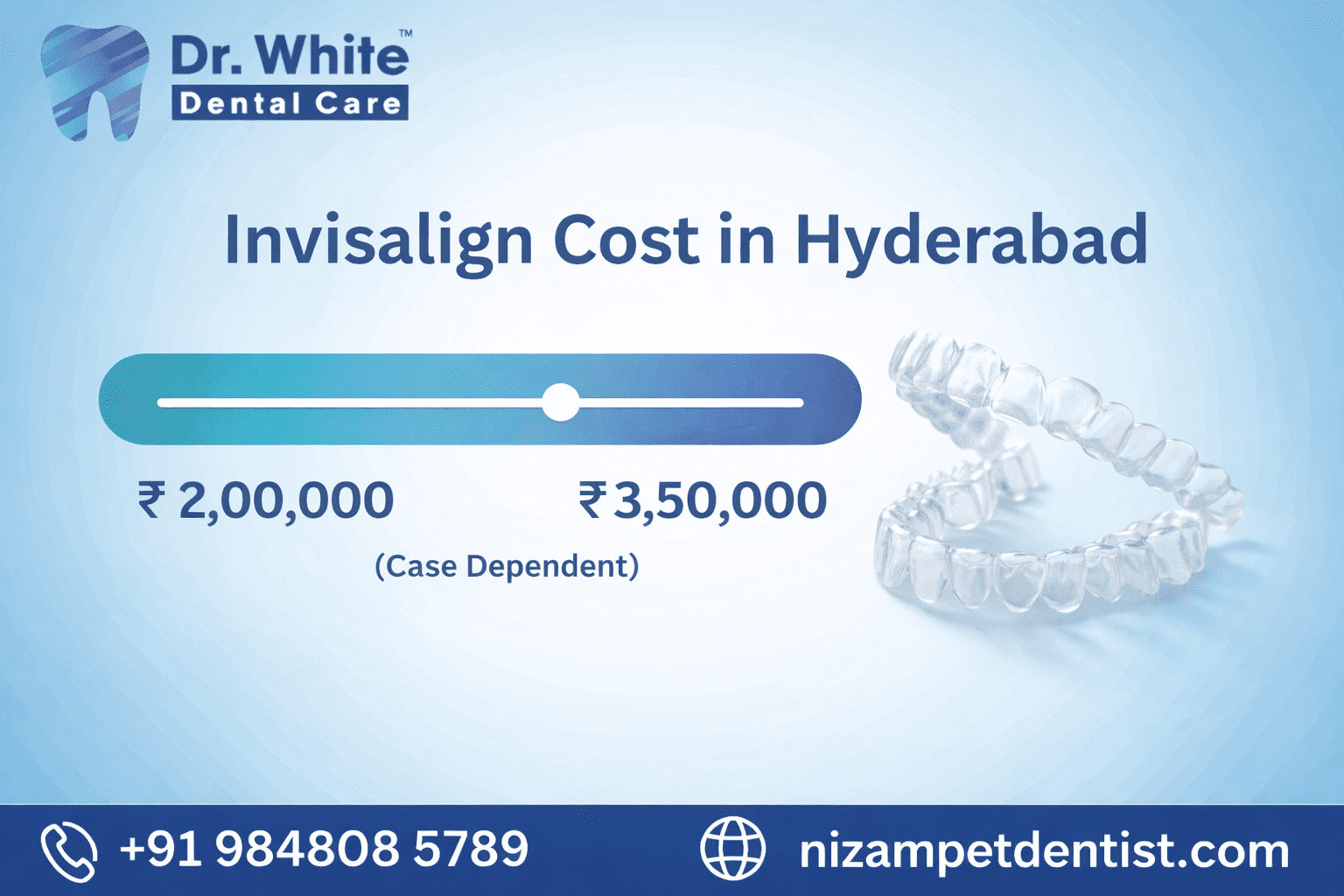
In Hyderabad, the cost of Invisalign aligners is not fixed and should never be viewed as a one-size-fits-all figure. Most patients encounter pricing that generally falls between ₹2,00,000 and ₹3,50,000. This wide range exists because Invisalign is a customized orthodontic treatment rather than a standardized appliance. Every aspect of pricing is linked to clinical requirements, including the number of aligners needed, the duration of treatment, and the level of professional monitoring involved throughout the process.
Patients with minor alignment irregularities often require fewer aligners and shorter treatment timelines. In contrast, individuals with bite discrepancies, crowding, or complex tooth movement needs require a more detailed treatment plan. As a result, costs increase accordingly. Only a comprehensive orthodontic evaluation can accurately determine where an individual case fits within this range.
Invisalign Cost Based on Case Complexity
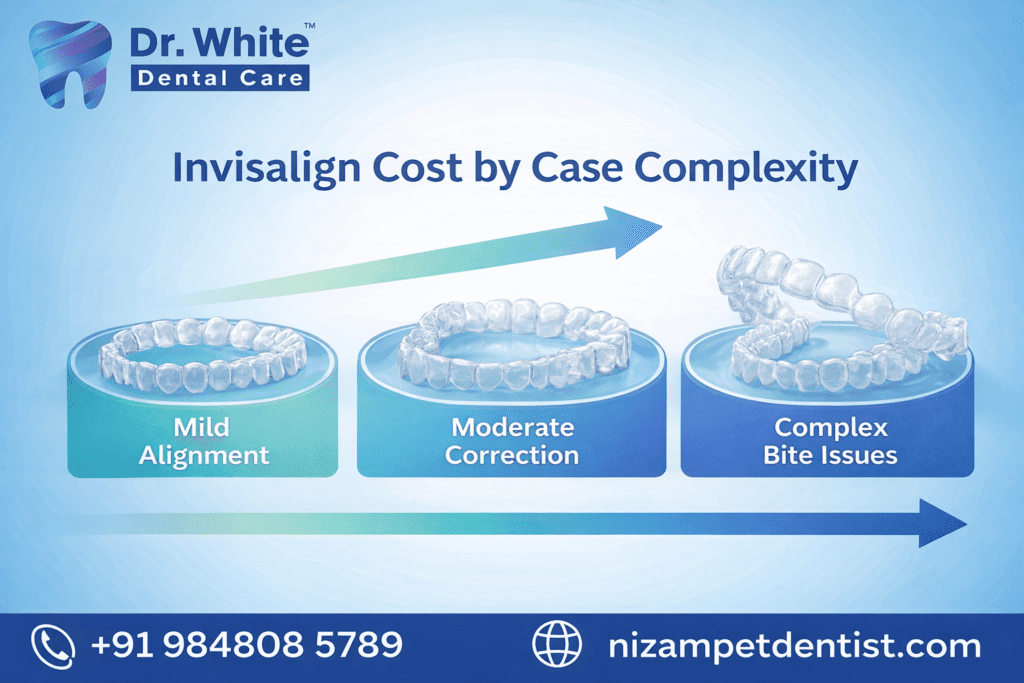
1. Mild Alignment Corrections
Mild orthodontic cases typically involve small gaps, minimal crowding, or slight tooth rotations. These issues are often cosmetic in nature and do not significantly affect bite function. Treatment for such cases usually requires fewer aligners and a shorter overall timeline.
In clinical practice, patients with mild alignment concerns often remain at the lower end of Invisalign pricing. Good compliance plays a crucial role here. When aligners are worn consistently and instructions are followed carefully, treatment progresses smoothly without the need for multiple refinements, helping keep costs controlled.
2. Moderate Orthodontic Needs
Moderate cases include visible crowding, spacing problems, or bite-related concerns that affect both appearance and function. Treatment planning becomes more detailed, requiring additional aligner stages and closer monitoring.
These cases often take longer to complete, and the orthodontist must carefully guide tooth movement to ensure stability and comfort. As treatment complexity increases, so does the overall cost. The additional investment reflects the time, planning precision, and professional supervision required for predictable results.
3. Complex Bite and Jaw-Related Issues
Complex orthodontic cases may involve significant bite imbalance, coordinated movement of multiple teeth, or jaw-related discrepancies. Invisalign can still be an effective solution, but only when supported by advanced digital planning and ongoing refinements.
Such cases demand a high level of clinical expertise and careful monitoring. Multiple refinement phases may be required to achieve optimal alignment and bite stability. Pricing reflects the additional aligners, advanced planning, and extended treatment duration necessary to manage these cases safely and effectively.
Key Factors That Influence Invisalign Cost
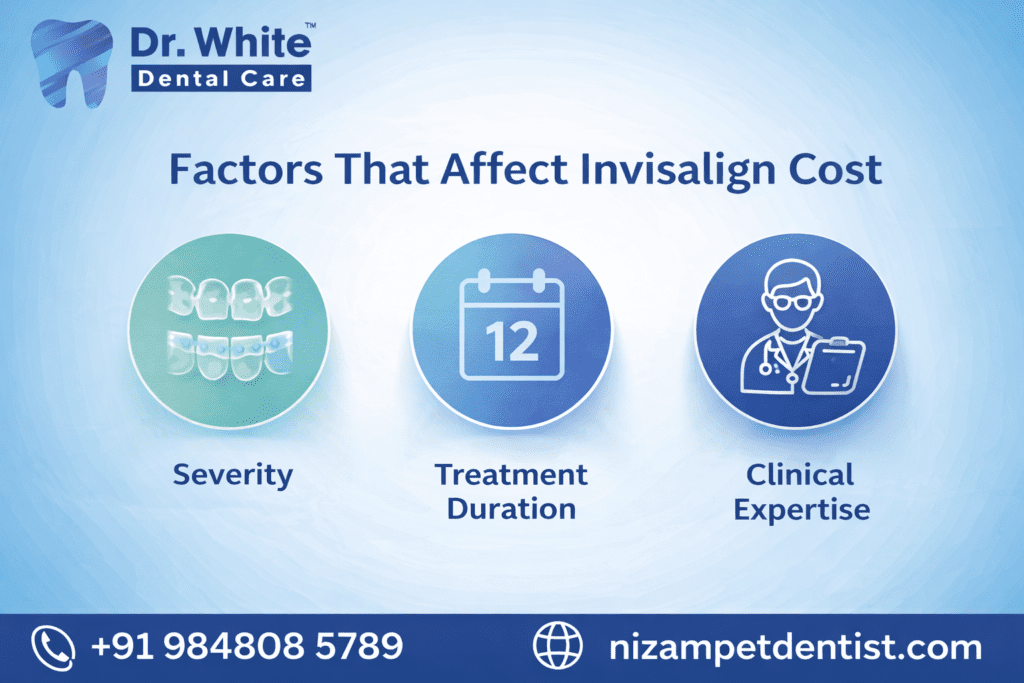
1. Severity of Tooth Misalignment
Tooth movement is influenced by several biological factors, including root shape, bone density, and gum health. Teeth do not always respond uniformly to orthodontic forces. Complex movements require additional aligners and precise staging to avoid unwanted side effects.
As the severity of misalignment increases, so does the need for detailed planning and extended treatment, directly influencing cost.
2. Length of Treatment
Invisalign treatment typically ranges from 6 to 18 months, depending on the case. Shorter treatments require fewer aligners and follow-up visits. Longer treatments involve more aligners, additional check-ups, and sometimes refinements.
Extended treatment timelines naturally increase costs due to the resources and professional oversight involved.
3. Orthodontist’s Experience and Technology
Experienced orthodontists use advanced digital planning tools to guide tooth movement accurately. Their expertise improves predictability, reduces complications, and minimizes unnecessary refinements.
Clinics that invest in advanced diagnostic and planning systems often reflect these operational costs in their pricing. However, this investment also contributes to safer treatment and more stable long-term outcomes.
Invisalign Cost Compared to Other Clear Aligner Systems
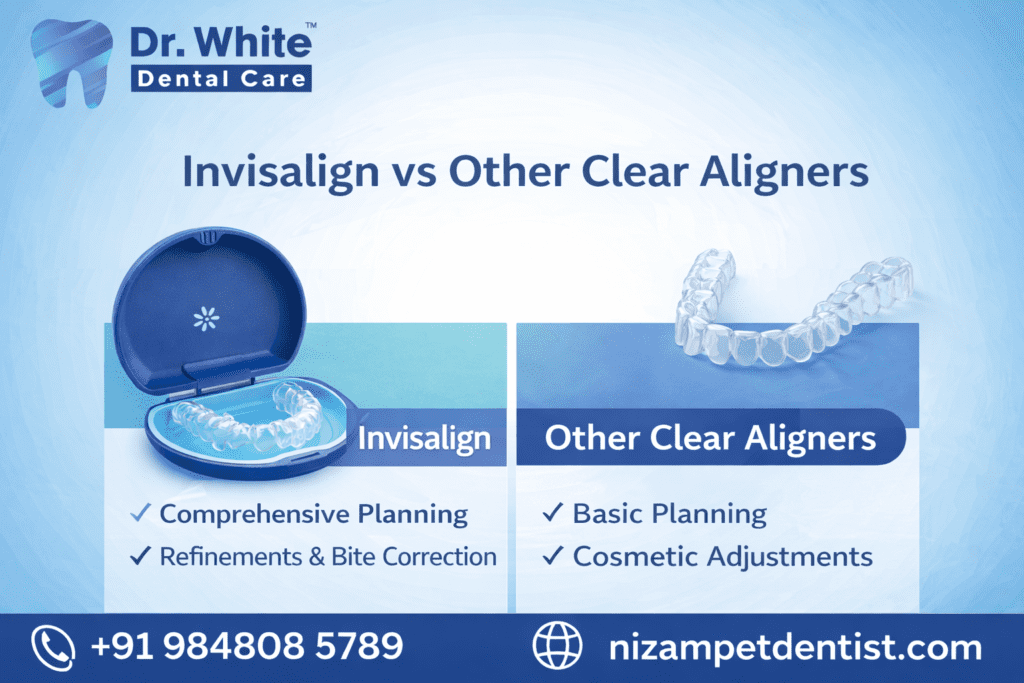
Other clear aligner brands may be available at lower price points and can be effective for simple cosmetic corrections when properly supervised. However, Invisalign is often preferred for its ability to manage staged movements, refinements, and bite-related corrections.
From a clinical perspective, the difference lies not in appearance but in planning flexibility and long-term stability. Invisalign’s structured approach allows orthodontists to adapt treatment as biological response varies, which is particularly important in moderate to complex cases.
Invisalign vs Metal and Ceramic Braces: A Cost Perspective
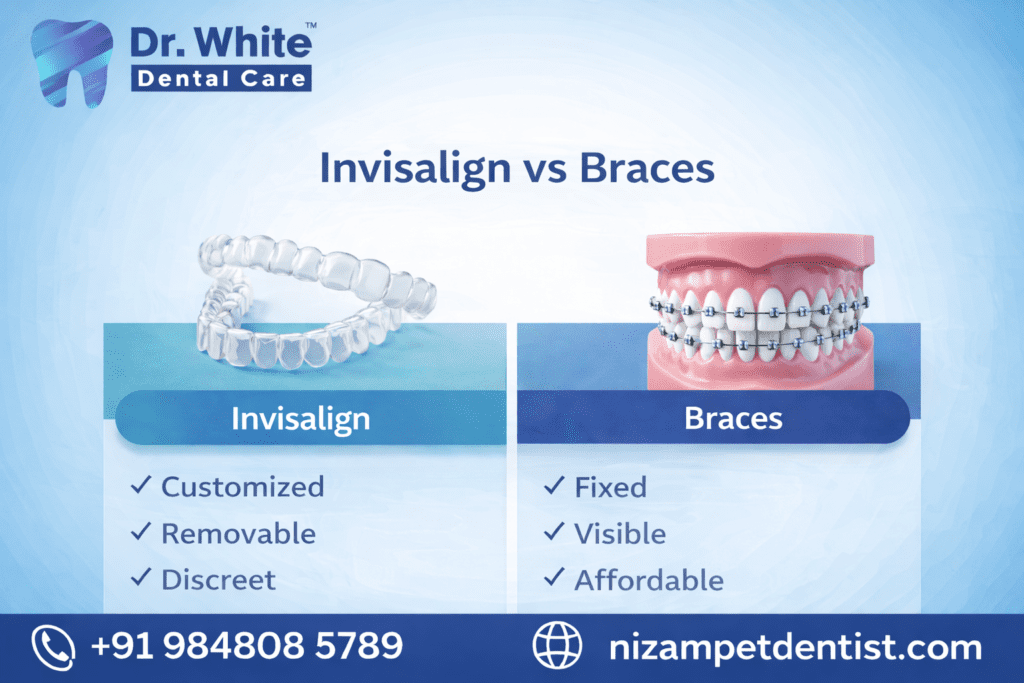
Metal braces remain the most economical orthodontic option and are effective across a wide range of conditions. Ceramic braces offer a less visible alternative but still function as fixed appliances.
Invisalign typically costs more than traditional braces due to its customization, advanced planning, and removability. Many patients, particularly working professionals and adults, value the comfort, discreet appearance, and flexibility Invisalign provides. For these individuals, the additional cost is often justified by lifestyle compatibility.
What Is Typically Included in Invisalign Aligner Treatment Cost
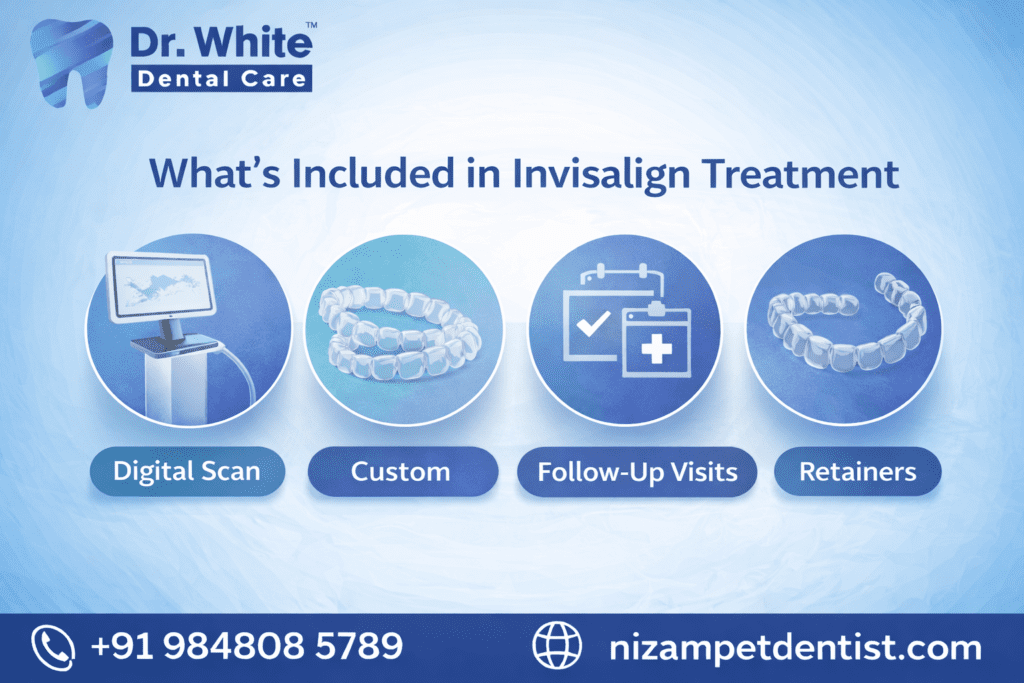
Most Invisalign treatment plans include digital scans, aligner fabrication, comprehensive treatment planning, and periodic progress evaluations. These elements are essential for predictable and safe orthodontic care.
Some clinics also include refinement aligners and retainers within the overall package, while others may charge separately. Understanding exactly what is included helps patients compare treatment plans accurately and avoid unexpected expenses later.
Additional or Hidden Costs to Consider
Certain Invisalign treatment plans may charge separately for replacement aligners, extended treatment time, or post-treatment retainers. These costs are not always clearly outlined at the beginning.
Discussing potential additional expenses during the consultation phase allows patients to plan responsibly and make informed financial decisions. Transparency at this stage reduces stress and builds trust throughout treatment.
Ways to Manage Invisalign Treatment Expenses
Starting orthodontic treatment early can prevent alignment issues from worsening, which often increases complexity and cost. Consistent aligner wear is equally important. Poor compliance frequently leads to refinements, extended treatment time, and higher expenses.
Many clinics offer structured payment plans or EMI options, allowing patients to manage treatment costs gradually without compromising care quality or clinical outcomes.
What Are Invisalign Aligners?
Invisalign aligners are clear, removable orthodontic trays designed to straighten teeth gradually. They apply gentle, controlled pressure to guide teeth into predetermined positions over time.
Each aligner set is custom-made using digital scans, ensuring a precise fit. Every aligner represents a small, planned step in the overall treatment sequence. This staged approach supports comfort while maintaining predictable tooth movement. For adults and older teenagers seeking discretion, Invisalign offers an effective balance between orthodontic correction and daily convenience.
How Invisalign Treatment Works in Real Practice
In professional orthodontic care, Invisalign treatment begins with a detailed evaluation. Digital scans, clinical photographs, and bite analysis are used to assess tooth position and jaw relationships.
Once the treatment plan is finalized, a series of aligners is fabricated. Each aligner is worn for approximately one to two weeks before progressing to the next set. Patients are advised to wear aligners for most of the day, removing them only for meals and oral hygiene.
Regular follow-up visits are essential. These appointments allow the orthodontist to confirm that teeth are moving as expected and to adjust the plan if biological response varies. Continuous monitoring is a critical safety component of aligner therapy.
Invisalign vs Traditional Braces: A Practical Comparison
Traditional braces rely on brackets and wires that remain fixed throughout treatment. While effective, they are visible and can complicate eating habits and oral hygiene routines.
Invisalign aligners are removable and nearly invisible. This makes daily brushing easier and reduces irritation to the lips and cheeks. Many adults prefer aligners because they integrate seamlessly into professional and social environments. However, braces may still be recommended for certain complex cases where fixed mechanics are more predictable. The final decision depends on clinical needs rather than preference alone.
Conclusion
Clinics such as Nizampet Dentist emphasize structured evaluations, transparent communication, and patient-centered care. With proper guidance, realistic expectations, and consistent commitment, Invisalign can provide a reliable and discreet path toward improved alignment, oral health, and long-term confidence.
We are here
Enquire Now
FAQ
Invisalign treatment is available at dental clinics equipped with trained orthodontists and advanced digital diagnostic systems. Not all clinics are suitable for aligner therapy, as proper planning and monitoring are essential. A professional evaluation ensures that Invisalign is both appropriate and safe for the individual’s dental condition.
The average cost typically ranges from ₹2,00,000 to ₹3,50,000. This variation depends on case complexity, treatment duration, and the number of aligners required. Factors such as refinements and follow-up frequency also influence the final price.
Full treatment cost is determined by the complete scope of orthodontic correction needed. This includes initial aligners, possible refinements, and professional monitoring throughout treatment. Exact pricing is established only after a thorough clinical assessment.
Invisalign generally costs more than metal or ceramic braces due to customization, digital planning, and removability. Many patients find the added comfort, discretion, and convenience valuable enough to justify the higher investment.
Toothsi aligner pricing varies based on the type of case and the level of professional supervision provided. While pricing may be lower in some situations, clinical planning and monitoring remain critical for safe and effective outcomes.
Age alone does not determine Invisalign cost. The complexity of alignment issues and the biological response of teeth are far more influential factors. Adults with mild cases may have similar costs to younger patients.
Invisalign can be suitable for teenagers when recommended and supervised by an orthodontist. Compliance is particularly important, as consistent wear directly affects treatment success and duration.
Some Invisalign treatment plans include retainers as part of the package, while others charge separately. Clarifying this detail before starting treatment helps avoid confusion after alignment is completed.
Refinements may or may not be included, depending on the treatment package offered by the clinic. Patients should discuss this explicitly during consultation to understand potential additional costs.
Invisalign is generally associated with mild pressure rather than pain. This sensation is most noticeable when switching to a new aligner and usually subsides within a few days as teeth adapt.
Certain bite issues can be addressed with Invisalign, depending on severity and treatment planning. Complex bite corrections require careful evaluation to determine whether aligners or fixed appliances are more suitable.
Treatment duration typically ranges from 6 to 18 months. The exact timeline depends on alignment complexity, patient compliance, and biological response to tooth movement.
Many clinics offer flexible payment or EMI options to make treatment more accessible. Payment terms vary by provider and should be discussed during the initial consultation.
Invisalign can be integrated with cosmetic or restorative procedures when planned carefully. Coordination between treatments ensures both functional and aesthetic goals are achieved safely.
A professional orthodontic consultation is the only reliable way to determine Invisalign suitability. Clinical evaluation ensures that the chosen treatment aligns with dental health, alignment goals, and long-term stability.