Wisdom Teeth Removal Cost in Hyderabad: A Clear 2026 Price Guide
You are suddenly woken up from deep sleep in the middle of the night by the sensation of fireworks going off in your jaw. It very well might be your wisdom tooth that is giving you some trouble. In a rush, you are searching for “wisdom tooth extraction” a common scenario that often leads patients to seek emergency dental care. The good thing is that you came to the right place to find the information. We are going to discuss about how you can handle your irritated molars and the process of getting your wisdom teeth removed. Besides that, we will also touch on the possible expenses of tooth extraction.
What Is a Wisdom Tooth — Friend or Foe?
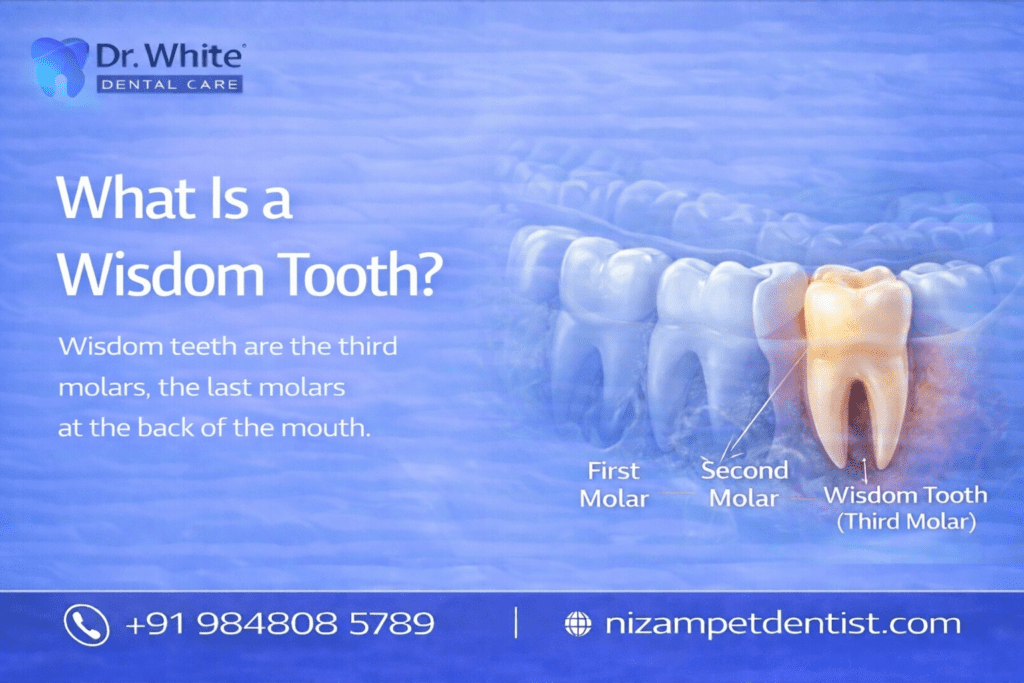
Wisdom teeth refer to the third molars and the last set of molars that typically come out between 17 and 25 years of age. They grow at the upper back of your mouth. A long time ago, these teeth had value because they helped people chew harder foods. Today, however, many people do not have enough space to have their wisdom teeth grow correctly and as a result, they will either become trapped under their gums or bones, or cause pain from infection or pressure due to being too close to other teeth.
Do You Really Need Your Wisdom Teeth Removed?
Not all wisdom teeth require removal. There are cases where, for some patients, these teeth emerge completely, fit well, and can remain healthy for a long time. Still, often the majority of third molars develop in a manner that leads to patients experiencing pain, swelling, and difficulties with their daily activities.
Dentists recommend tooth extraction for multiple reasons, which include impaction when a tooth remains embedded below the surface of gum tissue and bone structure, patients experiencing infection recurrence around the eruption area, and adjacent teeth experiencing excessive pressure which may later require dental braces to correct minor alignment issues.
Additionally, patients may develop dental decay because they cannot maintain proper cleaning access, and their back mouth area experiences gum problems. The medical team usually recommends extraction because it protects against the development of upcoming health concerns.
Types of Wisdom Tooth Extractions Explained: From Simple to Surgical?
Not all tooth removals of wisdom are similar. The kind of extraction that is suggested depends on the development of the tooth and how much of it can be seen on the gum line.
1. Simple Extraction :
This method applies when a wisdom tooth has completely came out through the gum line and can be taken out by the dental professionals without cutting the gum or bone.
2. Surgical Extraction :
When the tooth is partially or fully covered by the gum or bone, and a small surgical operation is necessary for the removal, this method is used.
3. Impacted Extraction :
When there isn’t enough space for a tooth to properly come out, or it grows in at an angle, it is considered to be impacted. In cases of impacted tooth removal, advanced techniques are usually necessary, and the tooth may be divided into smaller parts for extraction. Because of the greater complexity, this technique is usually carried out by an oral surgeon trained in oral surgery.
Knowing what kind of extraction it is matters since the degree of difficulty of the operation has a direct effect on the cost, the healing time, and the medical procedure.
What Influences Wisdom Tooth Removal Cost — A Patient-Friendly Guide?
The price for a wisdom tooth removal procedure varies because several clinical and operational factors determine how complex the procedure will be and the resources required. The main factors impacting the price:
1. Type of Extraction :
A typical simple extraction is less difficult and requires less chair time than an impacted or surgical extraction.
2. Number of Teeth Removed :
Multiple extractions can be performed in during one appointment and sometimes this can lower the total cost per tooth.
3. Imaging Requirements (OPG/CBCT) :
To ensure a safe and effective procedure, the oral surgeon uses a imaging techniques such as orthopantomograms (OPG) and cone beam computed tomography (CBCT), to thoroughly evaluate the patient’s anatomy and develop a precise treatment plan for doing the procedure safely.
4. Specialty of the Surgeon :
Routine extractions done by general dentists are usually more affordable, whereas surgical removal by an oral surgeon can cost more because of the specialist skills and training required.
5. Options for Sedation or Anesthesia :
The standard procedure is using Local anesthesia. But sedation may be recommended by the expert dentist because if the extraction is complicated, or if the patient is anxious, or wishes to undergo surgery under sedation.
6. Clinic Setup & Sterilization Standards :
Clinics that follow surgical-grade sterilization protocols and use state-of-the-art technology will likely charge higher procedural costs.
7. Insurance & EMI Options :
Flexibility of insurance coverage and payment options may affect the patient’s financial obligation.
8. Location :
Different areas could have varying price levels depending on factors such as demand, availability of clinics, and running costs.
How Much Does Wisdom Teeth Removal Cost in Hyderabad in 2026?
The price of wisdom tooth extractions in Hyderabad depends on two factors which are the complexity of the extraction work and the choice of either a general dentist or an oral surgeon for the procedure. The city clinics typically charge between the price ranges which clients may find in the following list:
| Type of Procedure | Typical Price Range (Per Tooth) |
| Simple Extraction | ₹2,000 – ₹5,000 |
| Surgical Extraction | ₹4,000 – ₹10,000 |
| Impacted Extraction | ₹6,000 – ₹15,000 |
| Full Set Removal (All 4) | ₹18,000 – ₹25,000 (Varies by complexity) |
Simple extractions cost less because the tooth has already erupted and can be removed without cutting the gum or bone. Surgical extractions and impacted extractions cost more expensive because they require additional procedures which include both tooth sectioning and access through bone and gum tissue.
Some clinics provide a financial benefit to patients who require multiple wisdom tooth extractions during a single visit because they charge less per tooth for this procedure compared to the costs of separate visits.
The total cost needs a clinical examination together with radiographic imaging which includes OPG or CBCT to confirm the dental position and surgical difficulty level.
Cost Breakdown — What Are You Actually Paying For?
When patients inquire about the cost of having their wisdom teeth removed, they are frequently referring to the final cost. However, many items go into determining the total costs associated with diagnosing the situation, performing surgery, and providing after-surgery care. The following are some of the costs that may be involved when having your wisdom teeth removed in Hyderabad.
1. Consultation Fees :
Most clinics have a consultation charge for the consult/assessment, which ranges between ₹300 – ₹1,000. If you receive treatment from the same clinic, you may not be charged for the consultation fee.
2. Diagnostic Imaging (OPG/CBCT) :
X-rays or CBCT scans help the surgeon evaluate the tooth position nerves and bone structure. The cost of imaging procedures ranges from ₹800 to ₹2,500 based on the applied technological system.
3. Procedure Fee ( Extraction ) :
The main extraction cost varies according to which method is used for extraction procedures.
- Simple Extraction : ₹2,000 – ₹5,000 per tooth.
- Surgical Extraction : ₹4,000 – ₹10,000 per tooth.
- Impacted Extraction : ₹6,000 – ₹15,000 per tooth.
4. Surgeon Free ( If Applicable ):
If you have an oral surgeon perform your surgery the fee charged for the surgery might be different than if you had had your regular dentist do the surgery. The surgeon’s fee will likely start at ₹2,000 and reach a maximum of ₹5,000 depending on how complex your medical situation is.
5. Sedation & Anesthesia :
Most clinics will provide local anesthesia for your procedure at no extra charge. However, if you elect to receive sedation or the doctor recommends sedation, then that will be an additional charge, typically between ₹1,000 to ₹3,000.
6. Clinic Setup:
Some clinics will charge a sterilization or surgical setup fees in order to keep the standards of infection control in place. These fees usually range from ₹500 to ₹1,500.
7. Medications & Follow - up Care After Surgery :
The total costs for surgical medications and post-operative treatment will include expenses for antibiotics and pain relief medications and follow-up visits which range from ₹500 to ₹1,200 depending on prescription and pharmacy purchasing prices.
The overall fee for a tooth extraction procedure is based on the combination of these elements, as well as the amount of complexity reflected in the patient’s exam and imaging.
Risks or Complications: What Every Patient Should Know?
Wisdom teeth extraction is one of the most common oral surgeries and generally most patients recover without significant difficulties. However, as a dental professional, I always inform my patients that, as with any surgical procedure, there are risks.”I always tell patients the same thing before we start: “If something doesn’t feel right after the procedure, let me know sooner rather than later.”
1. Pain & Swelling :
- In the first few days after treatment, people will experience mild to moderate symptoms. As an experienced dentist, I see many people become tense due to this situation.
- I suggest that they calm down first, and then, based on the treatment, I recommend that it can be resolved with prescribed medications and ice packs.
2. Infection :
- Many people who undergo wisdom tooth removal worry about developing an infection afterward. The spot where the tooth was taken out will take time to heal, and if you don’t take proper care of it, it can have an infection.
Usually, the signs I mention to my patients include unrelenting swelling, fever, pus and unpleasant taste in the mouth. In such a case, this infection needs to have a check-up at your dental clinic.
3. Bleeding :
Bleeding is usually normal for 1 to 24 hours after extraction. If bleeding continues beyond 24 hours or becomes excessive, as an expert, I suggest you contact your dentist to have the area evaluated.
4. Numbness or Tingling :
Some patients experience tightness or stiffness in their jaw muscles which is known as trismus after they undergo surgery. The condition usually lasts only for a short period until the body achieves its normal state of function through decreasing inflammation.
5. Difficulty Opening the Mouth :
- Some patients experience tightness or stiffness in their jaw muscles which is known as trismus after they undergo surgery.
- The condition usually lasts only for a short period until the body achieves its normal state of function through decreasing inflammation.
The above complications do not occur in all patients and the chances of complications depend on the 3 factors like 1) type of extraction (simple, surgical, or impacted), 2) the general health condition of the patient, and 3) the extent to which the patient follows the dentist’s instructions for after, care.
Should any symptoms look off or if the condition doesn’t get better in the expected time, it’s a good idea to go back to the dental clinic for a checkup.
Recovery Timeline: How Long Does Healing Take After Wisdom Tooth Removal?
When I talk with patients about wisdom tooth removal, one of the first things they’ll ask is how long the healing will take. There’s not a single answer to that question for everybody because recovery depends on how deeply the tooth was positioned, whether it was impacted, and how your body responds after surgery.
At the clinic, we observe that most patients start feeling better within a few days, although the deeper healing inside the socket takes a longer time. Understanding what usually happens at each stage of the healing process can ease patients’ minds while providing them additional peace of mind in knowing what they can expect as a normal part of recovery.
Here is a general timeline that corresponds with what we typically observe after a wisdom tooth extraction in oral surgery:
| Recovery Phase | What Patients Commonly Notice | Healing Explanation |
| Day 1 | Pressure and numbness decrease; minor bleeding may occur and swelling begins. | A blood clot forms inside the socket to seal and protect the bone and nerves underneath. |
| Days 2–3 | Cheek swelling reaches its highest point; soreness during chewing or talking. | Inflammation peaks as the immune system clears the area and repairs damaged tissues. |
| Days 4–6 | Swelling reduces, jaw movement improves, and eating becomes more comfortable. | Soft tissues start to close over the socket, reducing exposure and sensitivity. |
| Week 1–2 | Most daily activities resume; mild tenderness may remain during yawning or chewing. | Gum tissue repairs the outer surface while deeper healing continues internally. |
| Week 3–4 | Chewing and talking feel normal; no major symptoms for most patients. | Underlying tissues stabilize and the socket becomes more structurally secure. |
| Several Weeks to Months | No functional issues; occasional mild sensitivity may be noticed. | Bone remodels slowly and fills the socket; full bone healing takes longer than gum healing. |
Why Patients Trust NizampetDentist for Wisdom Tooth Removal?
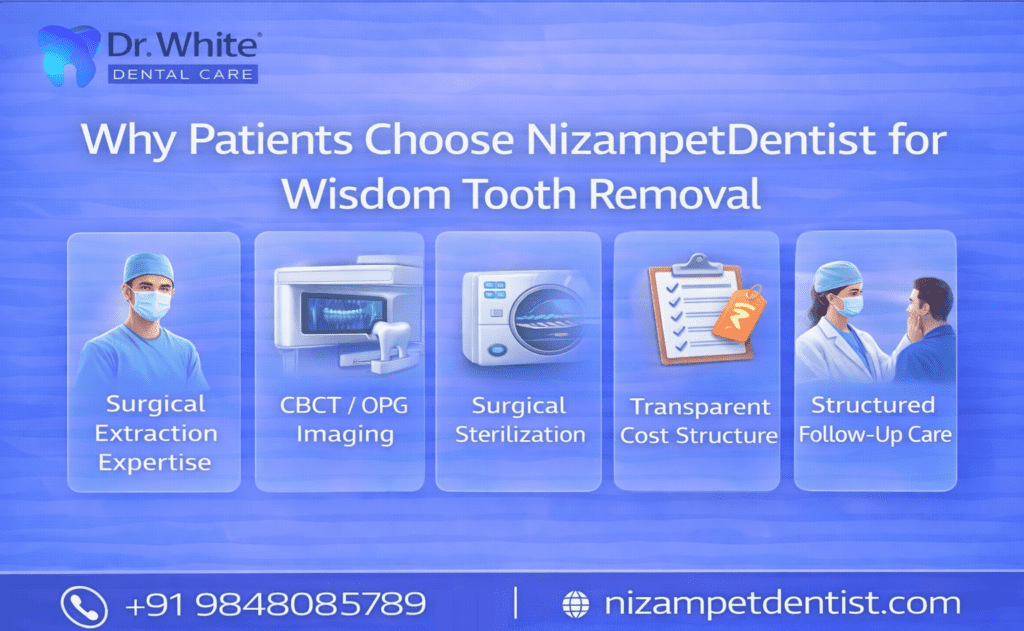
Nowadays, Patients tend to review clinics with a lot more awareness and knowledge than they used to before. For a common surgical procedure like wisdom tooth removal, they look at and compare different aspects such as the surgical skill of the dentist, the availability of the imaging facility, the implementation of the sterilization practice, the post, operative care, and the transparency of the cost.
Here can be few examples of the areas where the services at NizampetDentist are in a good match with what patients most commonly look for in Hyderabad:
1. Dentists working with the Surgical Extraction :
Impacted wisdom teeth are most of the time, treated by the dentists who are trained in oral surgery.
2. OPG / CBCT Imaging for Surgical Planning :
- Digital panoramic (OPG) and CBCT imaging give an accurate demonstration of the teeth roots, nerve locations, and the maxillary sinus.
- This is a very beneficial tool and patients from all over Hyderabad are looking forward to the clinics having it, because it gives them a sense of security before the surgery.
3. Surgical Sterilization & Infection Control :
- Surgical procedures like minor oral surgery require even stricter sterilization methods than regular dental care.
- The clinic observes these standards through @ autoclaving, barrier techniques, and controlled instrument cycles, a very crucial safety aspect that patients are judging nowadays.
4. Crystal, clear and Transparent Pricing :
The clinic does not just throw a random figure at you, but instead comes with a detailed pricing structure that covers:
- Imaging ( OPG / CBCT ).
- Surgical Removal.
- Anesthesia / Sedation ( If Applicable ).
- Medications.
- Follow – Up Reviews.
5. Structured Follow-Up and Healing Support :
The clinic insists on follow-up appointments for checking the healing of wounds and detecting infection, dry socket, or nerve irritation at the earliest. This continuous care is important for the patient’s healing and helps build the patient’s confidence.
6. Local Accessibility :
The clinic can be reached easily from Nizampet, KPHB, Miyapur, Bachupally, Pragathi Nagar, and other areas, which means that the travel time during both the episode of pain and the postoperative recovery is minimized.
Any Dental Questions ? We're here to help!
Disclaimer – Actual treatment needs and costs can only be confirmed after dental examination and imaging. Prices and recovery details in this guide are approximate and may vary between patients.
We are here
Enquire Now
FAQ
The wisdom tooth extraction price in Hyderabad depends on how difficult the extraction process is and which tooth extraction method is used for simple teeth and surgical teeth and impacted teeth. The typical price range for dental procedures starts at ₹2,000 and goes up to ₹15,000 for each extracted tooth. Different clinical difficulties lead to different prices for full-mouth removal packages which include all four teeth.
Do I need to remove all four wisdom teeth at once?
The medical facility prices differ because of multiple factors which include:
- Types of extraction (simple vs surgical vs impacted).
- Needed imaging tests (OPG/CBCT).
- The medical facility requirements for their actual clinic design and their sterilization processes.
- The choice of an oral surgeon or a general practitioner for the dental procedure.
- The available methods of anesthesia or sedation.
- The required medicines and the follow-up treatment of patients.
The final cost estimate from each clinic includes specific elements which cause variations in total expenses.
Patients remain pain-free throughout the operation because the medical team applies local anesthesia while providing sedation to patients with anxiety or complex medical conditions. Patients can expect normal post-surgery symptoms which include mild to moderate pain and swelling during the first few days after surgery, but they can control these symptoms with the prescribed medication and cold compress treatment.
Patients experience their most significant recovery progress during the first 3 to 7 days of healing, but their socket area will take several additional weeks to heal completely. Recovery duration needs to be assessed based on whether the tooth was impacted and the amount of bone that needed to be extracted and how the patient heals.
Not all cases require this procedure. Certain patients remove only their dental problem tooth while others choose to remove all four teeth to stop upcoming dental issues from occurring. The decision between multiple tooth removal at once or single tooth removal should be made based on the clinical imaging results and the patient’s symptoms.
The complete cost breakdown of a medical facility may include all treatment costs together with:
- Consultation and clinical examination.
- OPG/CBCT imaging.
- Anesthesia or sedation.
- Surgical removal.
- Sterilization and surgical kit charges.
- Medications and mouthwash
- Follow-up reviews for healing assessment.
Different clinics may choose to include or exclude particular items from their basic cost estimate.
The extraction medical necessity determines whether insurance will pay for the dental procedure. Certain insurance policies provide partial benefits for procedures which involve an infection or an impacted tooth or a swelling or a potential nerve hazard. Cosmetic or elective extractions are less likely to be covered.
Hyderabad clinics provide EMI payment plans that customers can use for full dental procedures or surgical treatments. Patients should inquire about the payment methods available to them during their consultation period.
Most surgical or impacted cases require imaging. OPG scans provide general information about tooth positions while CBCT scans create a three-dimensional model of dental roots and nerves and bone structures. Imaging data enables surgeons to design their operations in a secure manner.
A general dentist can complete the extraction of simple erupted teeth. Dentists who have received training in oral surgery should handle impacted teeth and complex tooth cases because they can perform better surgical procedures while reducing the risk of problems.
The majority of cases begin with local anesthesia as their standard treatment method. Sedation may become necessary for patients who experience anxiety or who need multiple teeth extractions. The clinics provide different options for sedation which can include nitrous oxide and oral or intravenous sedation.
Patients who have undergone surgery experience typical post-surgical problems which include swelling and bleeding and discomfort and restricted mouth movement. The proximity of lower molars to nerves can lead to temporary loss of feeling in the lip or chin or tongue as a rarer side effect. The risk of infection increases when patients do not adhere to aftercare instructions.
Patients should select soft foods that contain no bacteria and can be chewed easily during the first days of recovery. Patients should avoid hot, spicy, crunchy, and hard foods to prevent irritation of the socket. The body requires hydration but straw usage should be avoided because it creates suction which harms the healing process.
Patients should contact the clinic if they notice persistent swelling, worsening pain after day 3, fever, pus discharge, foul taste, excessive bleeding, or numbness that does not improve. The review process at an early stage prevents both infection problems and dry socket complications from occurring.
Most patients return to their daily routines within 2 to 3 days following a basic dental extraction. Patients who need surgical or impacted tooth extractions will need 3 to 7 days to recover based on their pain and swelling levels. The body requires rest from physical activity during the first part of the healing process.