
Home › Dental Treatments › Root Canal Treatment in Nizampet
Tooth-preservation consultations · Nizampet, Hyderabad
Root Canal Treatment in Nizampet
Persistent tooth pain, prolonged sensitivity or swelling may signal a problem inside a tooth. At Nizampet Dentist, an examination helps determine whether root canal treatment (RCT), a filling or another option is appropriate. Understand the procedure, restoration, costs and recovery before deciding on care.
Tooth-first approach
Assess whether a tooth can be saved
Clear options
RCT, filling or extraction as appropriate
Local access
Nizampet Main Road · 7 days
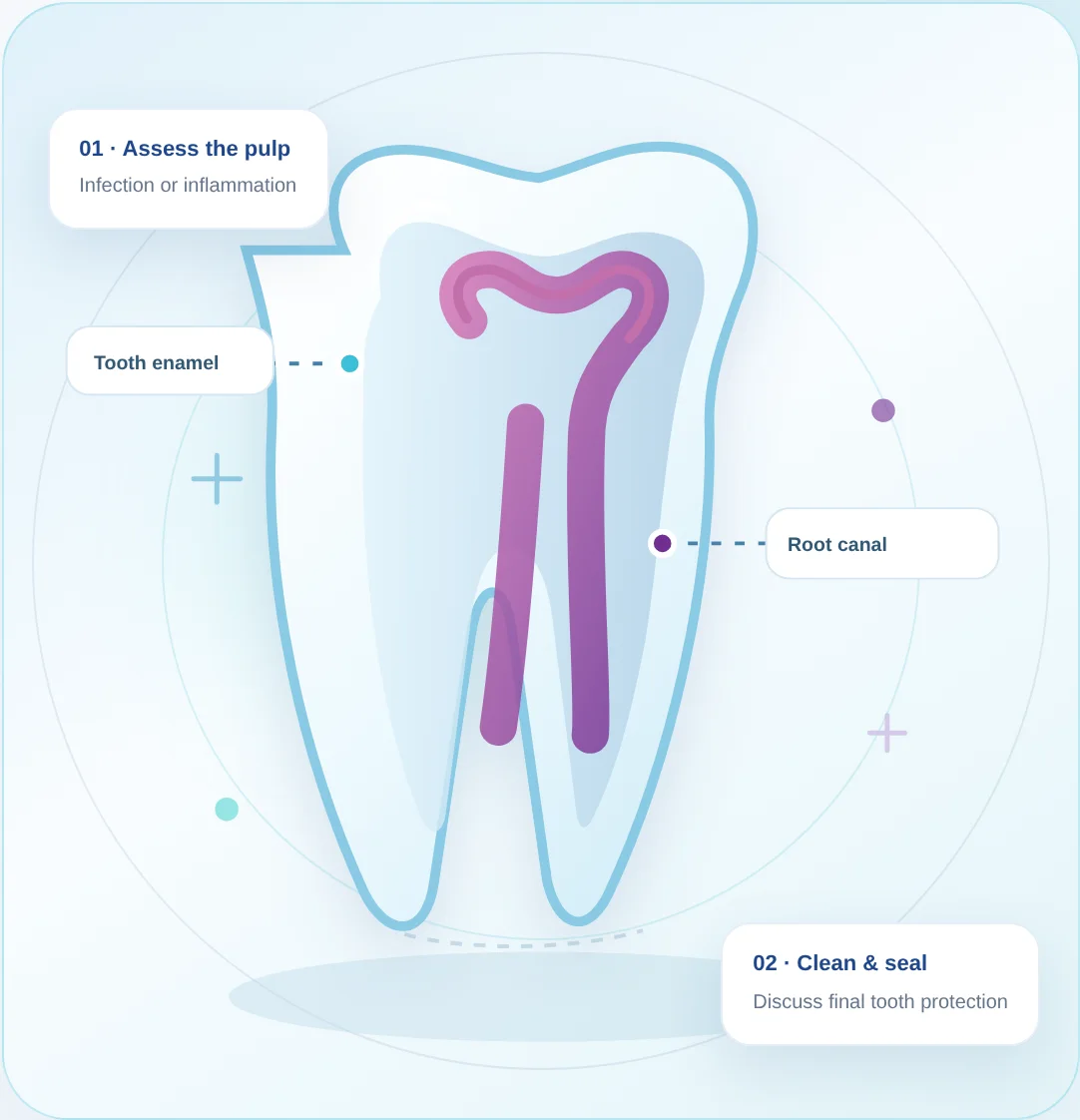
Educational illustration · not a diagnostic image
Nizampet clinic
Opp. Balaji Park Town, Main Road
Dr. Sri Lakshmi Champati
BDS · Dental Surgeon · 13+ years
Open all 7 days
10 AM – 9 PM; confirm slot first
Appointment enquiries
+91 98480 85789
A direct answer
What Is Root Canal Treatment?
A clear explanation of root canal therapy (RCT), with the information patients need before choosing a treatment.
Quick answer
Root canal treatment is a procedure that removes inflamed or infected soft tissue (pulp) from inside a tooth. The dentist cleans, shapes and disinfects the root canals, then fills and seals them. A filling or crown is used when appropriate to restore the tooth. The goal is to retain a natural tooth that can be predictably restored.
Three things to remember
✓ Tooth pain alone does not establish whether RCT is needed.
✓ The tooth must be examined and judged restorable before treatment.
✓ A durable final restoration and long-term oral care matter after RCT.
Know the warning signs
What Are the Signs You May Need a Root Canal?
Symptoms can have more than one cause. Use them as a reason to arrange a dental assessment, not as a self-diagnosis.
Toothache that persists
An ongoing or throbbing ache can have several causes. Pulp inflammation is one possibility.
Hot or cold sensitivity
Sensitivity that lingers after a temperature change may need a pulp assessment.
Pain when biting
Tenderness on chewing can occur with cracks, inflammation or problems around a tooth root.
Swollen gums or a gum bump
Swelling or a small pimple-like area on the gums may indicate infection requiring prompt evaluation.
Darkened tooth
Discolouration following injury can be a reason to investigate pulp health.
A deep cavity or damaged tooth
Extensive decay, trauma or cracks may reach the pulp even when pain is mild or absent.
Seek help promptly: A rapidly worsening dental infection, increasing facial swelling or fever needs urgent evaluation. Difficulty breathing or swallowing is a medical emergency—seek emergency hospital care immediately.
Understand the cause
Why Might a Tooth Need Root Canal Treatment?
Root canal care is considered when the pulp becomes irreversibly inflamed, infected or damaged and the tooth can still be restored.
Deep decay
Bacteria from an untreated or extensive cavity can reach the dental pulp.
Cracks and fractures
A crack may affect the pulp or permit bacteria to enter the tooth.
Injury or repeated dental work
Trauma or other damage can affect pulp health; diagnosis guides the next step.
Does every deep cavity require an RCT? No. The decision depends on whether the pulp is still healthy, can recover, or has irreversible disease, and whether the tooth is restorable.
Diagnosis before treatment
How Is Root Canal Treatment Diagnosed?
Treatment planning should combine your symptoms with the dentist’s clinical findings—not rely on one symptom or an X-ray alone.
What the assessment may include
✓ Pain history and relevant medical history
✓ Examination for decay, cracks, swelling and gum health
✓ Tenderness, bite and cold-sensitivity tests as indicated
✓ Dental radiographs where clinically needed
✓ Assessment of whether the tooth can be restored
A key treatment question
Can this tooth be saved predictably?
Before choosing root canal treatment, a dentist considers remaining healthy tooth structure, periodontal support, a possible crack and whether a final restoration can protect the tooth. If the tooth cannot be predictably restored, alternatives must be discussed.
Treatment choice comparison
Root Canal vs Filling vs Tooth Extraction
The most appropriate option depends on the condition of the pulp, surrounding tissues and remaining tooth structure.
Feature
Dental filling
Root canal treatment
Tooth extraction
Main purpose
Restore suitable tooth damage or decay.
Treat affected pulp while retaining a restorable tooth.
Remove a tooth that cannot or should not be retained.
Is natural tooth kept?
Yes.
Yes, when treatment is suitable and successful.
No.
Is the pulp treated?
Usually not.
Yes—the canals are cleaned and sealed.
Not applicable after removal.
Follow-up restoration
A suitable filling.
A filling or crown as clinically indicated.
Replacement may be considered after healing.
Key consideration
Depth of decay and tooth strength.
Pulp diagnosis and restorability.
Loss of tooth and possible replacement needs.
Decision note: A root canal is not always preferable to extraction, and a filling is not appropriate for every painful tooth. The clinical findings determine the options.
Why tooth type matters
Front Tooth vs Premolar vs Molar Root Canal
Teeth differ in their root canal anatomy, which can affect the difficulty of cleaning and sealing.
Tooth type
Common anatomy consideration
What this may mean for treatment
Front tooth
Often a comparatively simpler canal system.
May involve fewer canals, but complexity still varies.
Premolar
One or more canals with variable shape.
Extra anatomy may require additional cleaning time.
Molar
Often multiple roots and canals.
Access, anatomy and posterior chewing forces can increase complexity.
Retreatment tooth
Previously filled canals; possible new infection or anatomy challenges.
Additional evaluation, time or specialist care may be necessary.
Professional identity and care
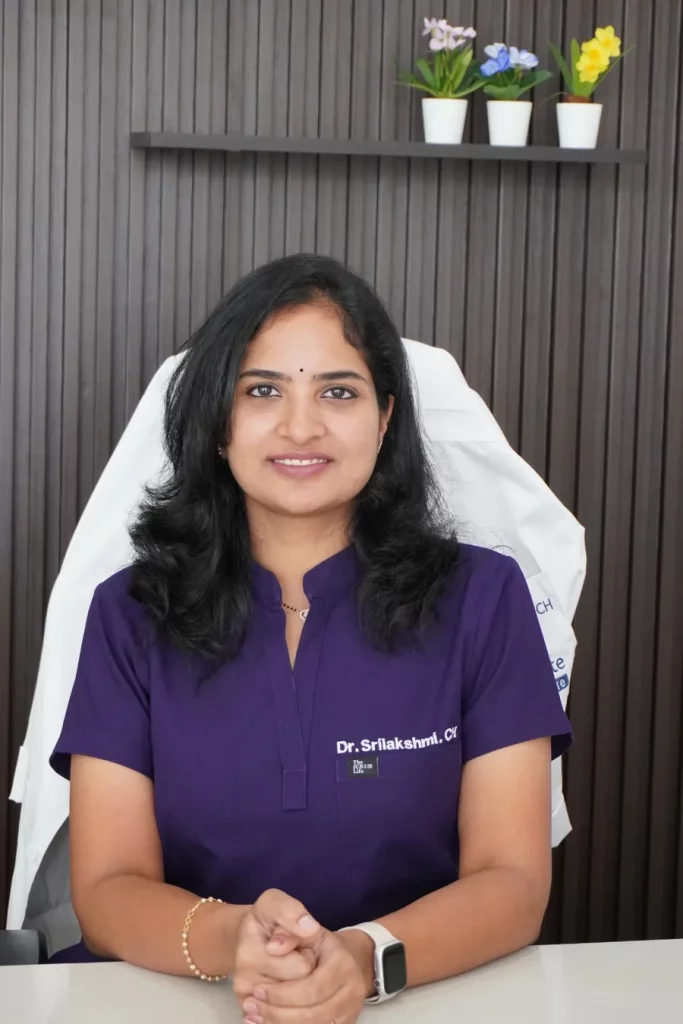
Meet Your Root Canal Dentist in Nizampet
Dr. Sri Lakshmi Champati
BDS · Dental Surgeon & Implantologist · Founder, Dr. White Dental Care
✓ 13+ years of clinical experience ✓ AP Dental Council A13928 ✓ Telugu · Hindi · English
Dr. Sri Lakshmi Champati provides dental assessment and root canal treatment, with consultations at the Nizampet and Madinaguda branches. Her care approach includes examining the tooth, discussing treatment options and deciding on an appropriate final restoration. Complex cases may be referred for specialist consultation.
View Clinical Profile ↗Your treatment journey
Root Canal Procedure — Step by Step
Individual steps and visit counts may change with the tooth anatomy, infection and clinical requirements.
01
Assessment and tests
We discuss pain history, evaluate the tooth and gums, check the bite and use indicated imaging or pulp tests to guide diagnosis.
02
Comfort and isolation
Local anaesthesia is used as appropriate. The tooth is isolated, typically with a dental dam, to keep the treatment field clean.
03
Cleaning and shaping
The dentist accesses the pulp chamber, removes inflamed or infected tissue, and cleans and shapes the root canals.
04
Filling and sealing
The canals are disinfected and sealed with suitable materials. A temporary or permanent top restoration may be placed.
05
Final restoration and follow-up
A filling or crown is planned according to remaining tooth structure. Follow-up helps monitor symptoms and healing.
Some treatments are completed in one visit, while others need additional appointments. Your dentist will explain the actual workflow and final restoration required for your case.
Appointment planning
Single-Visit vs Multiple-Visit Root Canal Treatment
A shorter appointment schedule is not always the right clinical goal; the treatment should suit the condition of the tooth.
One visit, when suitable
Single-visit RCT
May be appropriate for a straightforward tooth when canal cleaning and sealing can be completed safely during one appointment.
✓ Suitability is established after assessment.
✓ Final filling or crown planning may be separate.
More than one visit, when needed
Staged RCT
Can be appropriate for complex anatomy, retreatment, persistent symptoms or cases requiring an additional clinical step.
✓ Interim protection of the tooth may be necessary.
✓ Follow-up is planned according to findings.
Protecting your tooth
Does Every Root Canal Tooth Need a Crown?
Not necessarily. The decision depends on the tooth position, remaining structure, bite and expected long-term forces.
Back teeth
Molars and premolars handle greater chewing forces and often benefit from cuspal coverage or a protective crown, particularly when significant tooth structure is missing.
Front teeth
Some front teeth with sufficient sound structure may be restored with a bonded filling or another conservative restoration. Each case needs a clinical assessment.
Questions to ask before leaving
✓ Is this a temporary or permanent filling?
✓ Do I need a crown or another protective restoration?
✓ When should the restoration be placed?
✓ What foods or biting pressure should I avoid until then?
Transparent cost guidance
Root Canal Treatment Cost in Nizampet
Dental costs should be clear about the tooth treated and whether a crown or other restoration is included.
What affects an RCT quote?
✓ Front tooth, premolar or molar anatomy
✓ Degree of infection or complexity
✓ First treatment versus retreatment
✓ Necessary diagnostic imaging or tests
✓ Temporary filling, permanent filling or crown
✓ Follow-up or specialist consultation when required
Your estimate
Request an itemised estimate
Ask the Nizampet clinic for current pricing after your examination, so you know exactly what the fee includes.
Before treatment, ask for: the tooth involved, proposed care, restoration cost, any additional procedure and payment terms in writing.
Request a Cost AssessmentInformed treatment choice
Root Canal Benefits, Limitations and Possible Risks
Balanced information matters in health decisions—no procedure can be promised risk-free.
Potential benefits
✓ May retain a restorable natural tooth.
✓ Can address diseased pulp and related symptoms.
✓ May help preserve chewing and bite function with suitable restoration.
✓ Can avoid extraction in appropriate cases.
Limitations and risks
! Temporary soreness or pressure after treatment.
! Persistent infection or need for retreatment.
! Complex or missed canal anatomy.
! Tooth fracture or failure of the final restoration.
! Extraction may still be required if a tooth is not restorable.
Aftercare that matters
Root Canal Recovery and Home Care
Follow the instructions given for your own tooth. The points below are general educational guidance.
Step 1
First day
Wait for numbness to wear off before chewing. Avoid biting your cheek or tongue; choose foods that do not stress the treated tooth.
Step 2
Until final restoration
If the tooth has a temporary filling, avoid hard or sticky chewing on that side and arrange the permanent restoration promptly as advised.
Step 3
Long-term maintenance
Continue twice-daily brushing, interdental cleaning and regular check-ups. Report persistent pain, swelling or a loose restoration.
Call your dentist: Increasing swelling, fever, an uneven bite, a lost temporary filling, or severe/persistent pain needs review. Trouble breathing or swallowing requires emergency hospital care.
When symptoms return
Can a Root Canal Need Retreatment?
Sometimes a previously treated tooth requires another assessment if it does not heal or develops new symptoms later.
Possible reinfection
New decay, leakage or a defective restoration can expose the canal system to bacteria again.
Cracks or complex anatomy
A fracture or a difficult canal system may affect the tooth’s long-term outlook.
Next-step choices
Depending on the findings, your dentist may discuss retreatment, endodontic surgery or extraction.
An endodontist is a dentist with specialist training in root canal and related procedures. Specialist referral may be appropriate for complex cases.
Decision support
A Realistic Root Canal Decision Path
How a dentist might organise the conversation when a patient says: “My back tooth hurts when I chew.”
Educational example only — your own plan depends on your examination.
1 · Identify the source
Examine for cracks, tooth decay, bite issues and pulp or gum problems. Consider imaging or tests where needed.
2 · Check restorability
Evaluate remaining structure, root and gum support before recommending RCT or another treatment.
3 · Explain the plan
Discuss treatment choice, alternatives, restoration, estimated visits, costs and follow-up.
Local care with clear information
Why Consider Nizampet Dentist for Root Canal Care?
Practical reasons to plan your root canal consultation with the Nizampet clinic.
A Nizampet address
The clinic is located opposite Balaji Park Town on Nizampet Main Road, open every day.
Named dental clinician
Dr. Sri Lakshmi Champati, BDS, with 13+ years of clinical experience.
Consultation first
We examine your symptoms and tooth condition, then explain suitable treatment and restoration options.
Patient feedback
Where Can You Read Genuine Patient Experiences?
Visit the Nizampet branch’s Google Maps listing to read patient experiences in their original context.
View Clinic on Google Maps ↗Answers, always visible
Root Canal Treatment FAQs
Clear answers to the questions patients ask most about root canal treatment.
01 What is root canal treatment?
Root canal treatment removes inflamed or infected pulp from inside a tooth. The dentist cleans, shapes and disinfects the canals, fills and seals them, and arranges a protective final restoration when needed. Its aim is to preserve a tooth that can still be restored.
02 Does every toothache mean I need an RCT?
No. Tooth pain may come from a cavity, a cracked tooth, gum disease, grinding or other causes. An examination, appropriate tests and X-rays when needed are used to establish whether root canal treatment is indicated.
03 Is a root canal painful?
Local anaesthesia usually reduces discomfort during the procedure. You may notice pressure during treatment or mild tenderness afterward. Severe or increasing discomfort should be reported to your dentist.
04 How many appointments are needed for root canal treatment?
Some straightforward cases may be completed in one visit; others need more than one appointment because of canal anatomy, infection or retreatment. A separate visit may be needed for a permanent restoration or crown.
05 Does every root canal tooth need a crown?
Not always. The need for a crown depends on which tooth is treated, how much sound tooth remains and the forces it handles. Back teeth often benefit from additional protection; some front teeth can be restored differently.
06 How much does root canal treatment cost in Nizampet?
Cost depends on the tooth, canal complexity, infection, previous treatment and whether a filling or crown is needed afterward. Request a written, itemised estimate after a dental examination.
07 Can I eat after root canal treatment?
Wait until numbness wears off to avoid accidentally biting your lip, tongue or cheek. Follow your dentist’s advice about eating and avoid hard chewing on a temporarily restored tooth until it is permanently restored.
08 Can root canal treatment be performed during pregnancy?
Necessary dental treatment, including root canal treatment and local anaesthesia, can generally be provided during pregnancy when clinically indicated. Tell the dentist you are pregnant and share relevant medical information so care can be planned appropriately.
09 Do antibiotics replace a root canal?
No. Antibiotics do not clean and seal an infected tooth’s root canal system. They may be prescribed for certain spreading infections or systemic symptoms, but the tooth usually still needs appropriate definitive dental care.
10 Can a root canal-treated tooth get infected again?
Yes. New decay, leakage around a restoration, a fracture or complicated canal anatomy can contribute to later problems. A dentist may recommend reassessment, retreatment, surgery or extraction depending on the tooth.
11 How long can a root canal-treated tooth last?
Many root canal-treated teeth remain functional for years. The outlook depends on the remaining tooth structure, final restoration, gum health, oral hygiene and regular review. No lifetime outcome can be guaranteed.
12 What symptoms need urgent dental attention?
Seek prompt assessment for increasing tooth or facial swelling, fever, persistent severe pain or a rapidly worsening dental infection. Difficulty breathing or swallowing is a medical emergency requiring immediate emergency hospital care.
13 Where can I request root canal treatment in Nizampet?
Nizampet Dentist is on the first floor at House No. 3, 10/2/A, Main Road, opposite Balaji Park Town, Nizampet, Hyderabad 500090. Call +91 98480 85789 to request appointment availability.
14 Is root canal treatment better than extraction?
If a tooth is restorable, root canal treatment may allow it to be retained. Extraction may be appropriate when a tooth cannot be predictably restored or when other clinical conditions make retention unsuitable. Your dentist should discuss the options and trade-offs.
Visit the clinic
Nizampet Dentist — Address, Timings and Directions
A local clinic location for patients near Nizampet, Miyapur, Bachupally and Pragathi Nagar.
Nizampet Dentist
Dr. White Dental Care · Nizampet branch
Address
1st Floor, House No. 3, 10/2/A, Main Road, opposite Balaji Park Town, Nizampet, Hyderabad, Telangana 500090
Clinic hours
Monday–Sunday: 10:00 AM – 9:00 PM
Call
+91 98480 85789
Email
nizampet@dwdc.in
Opposite Balaji Park Town
Nizampet Main Road · Hyderabad 500090. Open the map for live directions to the clinic.
Get Directions on Google Maps ↗Let’s discuss your tooth concern
Book a Root Canal Consultation in Nizampet
Tell the clinic what you need help with and your preferred visit date. The clinic team will confirm the appointment slot.
✓ Consultation for toothache, prolonged sensitivity or suspected infection
✓ Review of treatment suitability, restoration options and estimated fees
✓ Appointments coordinated by phone or WhatsApp
Medical disclaimer: This page provides general patient education; it is not a diagnosis or a substitute for examination by a qualified dentist. Treatment suitability, costs, appointment availability and recovery vary. Educational information is informed by the American Association of Endodontists and American Dental Association. Seek emergency hospital care for difficulty breathing or swallowing.