
Home › Blog › Tooth Infection Symptoms and Treatments

Clinical review
Reviewed by Dr. Srilakshmi Champati
BDS · Dental Surgeon · Implantologist · Nizampet Dentist, Hyderabad
This is general patient education about tooth infection and dental abscesses. Diagnosis and treatment require a clinical examination.
Dental health guide · Nizampet, Hyderabad
Tooth Infection Symptoms and Treatments
A tooth infection may cause throbbing pain, gum or facial swelling, a bad taste, pain when biting or fever. A suspected dental abscess needs urgent dental assessment because it will not reliably clear up on its own.
The right treatment depends on where the infection starts and whether the tooth can be saved. A dentist may need to drain an abscess, perform root canal treatment, treat gum disease or remove a tooth that cannot be restored.
Do not try to pop an abscess or take leftover antibiotics. If swelling affects breathing or swallowing, seek emergency hospital care immediately.
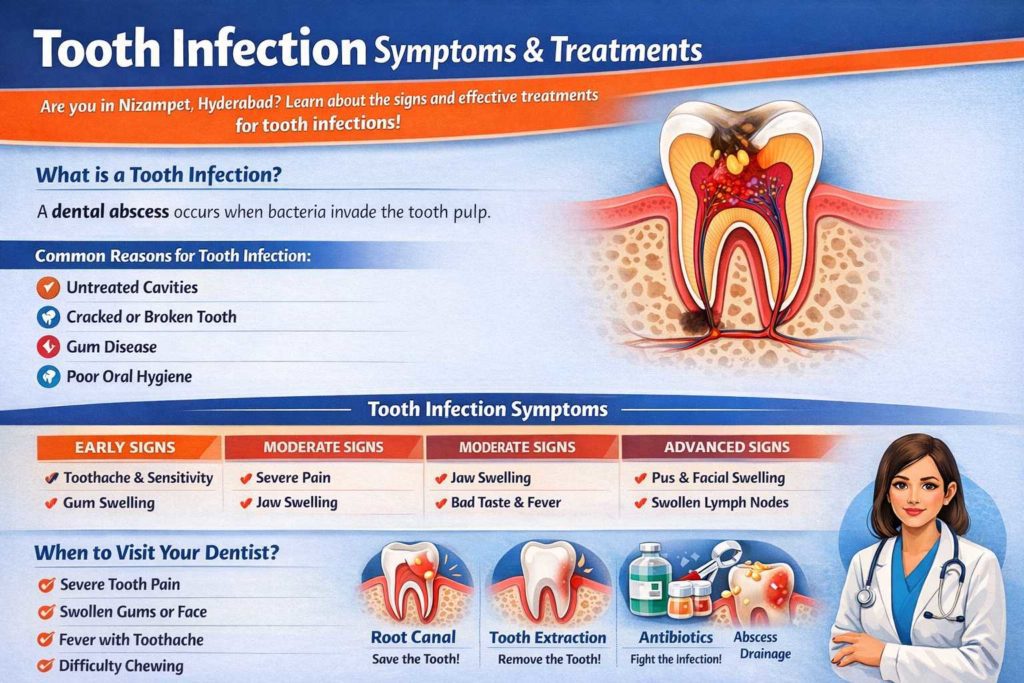
Educational illustration of a tooth infection. A dentist must examine the tooth to confirm the diagnosis and treatment.
Urgent warning signs: when to get help now
Seek urgent dental care for suspected abscess, increasing tooth or gum swelling, facial swelling, fever with dental pain or difficulty opening your mouth. Go to an emergency department immediately if you have difficulty breathing or swallowing, swelling around the eye or neck, major swelling inside the mouth, or sudden vision changes.
Common symptoms
Persistent toothache, pain on biting, gum swelling, pus or a bad taste, and sometimes fever.
Definitive treatment
May include drainage, root canal treatment, gum treatment or extraction, depending on the source.
Antibiotics are not enough
When indicated, antibiotics support care; they do not replace treatment of the infected tooth or abscess.
The quick answer
Quick Answer: What Are Tooth Infection Symptoms and Treatments?
Tooth infection symptoms can include persistent or throbbing pain, sensitivity to hot or cold, pain when chewing, swollen or red gums, a bad taste or pus, facial swelling and fever. A dentist diagnoses the cause and may treat it with drainage, root canal treatment, gum treatment or extraction. Antibiotics are used only when clinically indicated and do not replace definitive dental treatment. A suspected abscess needs urgent dental care.
Do not wait for severe pain. Some dental infections cause limited pain at first, and symptoms alone cannot show how far an infection has spread. Arrange an assessment if you suspect an infection.
Key takeaways
Key Takeaways
Recognise the signs
Toothache, swelling, pain on biting, pus, bad taste or fever may indicate infection.
Get a dental assessment
A clinical examination and, when needed, dental X-rays help identify the source.
Treat the source
Drainage, root canal treatment, gum treatment or extraction may be required.
Know emergency symptoms
Breathing or swallowing difficulty and swelling around the eye or neck require emergency care.
The basics
What Is a Tooth Infection?
A tooth infection occurs when bacteria infect the dental pulp, the soft tissue inside a tooth, or the surrounding gum and supporting tissues. When pus collects in or around the tooth, it can form a dental abscess. An abscess can cause pressure, pain and swelling, but the amount of pain does not reliably indicate how serious the infection is.
Not every toothache is an infection. Cavities, a cracked tooth, gum inflammation, sensitivity and bite problems can cause similar symptoms. A dentist needs to assess the tooth and nearby tissues before recommending treatment.
Common Tooth Infection Symptoms
Symptoms vary depending on the location and extent of the infection. One or more of the following may occur:
1. Persistent or throbbing toothache
Pain may feel sharp, deep or pulsating. It may become worse when lying down, chewing or applying pressure, but pain patterns differ between people.
2. Pain when biting or chewing
Tenderness when biting can occur with infection around a root, a crack or other dental problems. It needs assessment rather than self-diagnosis.
3. Sensitivity to hot or cold
Lingering sensitivity may indicate irritation or damage to the pulp. Brief sensitivity can have other causes, so the duration and clinical findings matter.
4. Swollen, red or tender gums
Swelling may develop near the affected tooth. A small pimple-like bump on the gum can be a drainage point from an abscess and should be checked by a dentist.
5. Pus, a bad taste or bad breath
A draining abscess may produce pus or an unpleasant taste or smell. Do not squeeze, puncture or attempt to drain the area yourself.
6. Swelling of the cheek, jaw or face
Facial swelling can mean the infection is affecting surrounding tissues. Contact a dentist urgently, particularly if swelling is increasing or accompanied by fever.
7. Fever or feeling unwell
Fever, fatigue or swollen glands alongside tooth pain may suggest a more extensive infection and needs urgent clinical assessment.
8. Difficulty opening the mouth
Increasing difficulty opening your mouth, swallowing or speaking can be a warning sign of spreading infection. Difficulty swallowing or breathing is an emergency.
Important: A tooth infection can sometimes have few obvious symptoms. Do not rely on a symptom checklist to rule out an infection.
What Causes a Tooth Infection?
Untreated tooth decay
As decay progresses, bacteria can reach the pulp inside the tooth and cause inflammation or infection.
A cracked, chipped or injured tooth
Damage may allow bacteria to enter the inner tooth, sometimes even when the crack is not easy to see.
Gum disease or a periodontal abscess
Infection can develop in the tissues around a tooth, including a deep gum pocket. This may need periodontal treatment rather than root canal treatment alone.
Problems after previous dental treatment
In some cases, new decay, a damaged restoration or persistent infection around a previously treated tooth can require reassessment.
Factors that may increase risk
Inadequate plaque control and delayed dental care can allow oral problems to progress. Some medical conditions or treatments that affect immune function may also change infection risk. Share relevant health information with your dentist.
How Is a Tooth Infection Diagnosed?
A dentist asks about your symptoms and medical history, examines the tooth and gums, and may use dental X-rays or other tests when indicated. The aim is to identify where the infection started, whether an abscess is present, and whether the tooth can be predictably restored.
✓ Review of pain, swelling, fever and symptom duration.
✓ Examination for cavities, cracks, gum pockets, pus and facial swelling.
✓ Tests of the tooth's response and tenderness where appropriate.
✓ Dental radiographs when needed to assess roots and surrounding bone.
✓ Assessment of the tooth's restorability and the patient's general health.
These steps help distinguish a problem inside the tooth from a gum infection or another cause of pain.
Treatment options
Tooth Infection Treatments
The correct treatment depends on the cause, severity and condition of the tooth. Treatment is directed at controlling the infection and addressing its source.
1. Root canal treatment
If the pulp inside a tooth is infected or irreversibly damaged and the tooth can be restored, root canal treatment may remove the affected tissue, clean and disinfect the canals, and seal them. The tooth then needs an appropriate restoration.
2. Drainage of an abscess
A dentist may drain pus when needed to relieve pressure and help control the infection. Drainage alone may not resolve the underlying cause, so additional treatment may be necessary.
3. Tooth extraction
If a tooth is too damaged or cannot be predictably restored, extraction may be recommended. The dentist should explain the reason, alternatives and whether tooth replacement should be considered after healing.
4. Treatment for a gum or periodontal abscess
If the infection begins in the gum tissues, treatment may involve cleaning and treating the affected periodontal area. The plan depends on gum health and the extent of the infection.
5. Antibiotics, when clinically indicated
Antibiotics may be prescribed when there are signs of spreading infection or systemic involvement, or when the dentist determines they are appropriate. They are not routinely a substitute for drainage, root canal treatment, gum treatment or extraction. Do not take leftover antibiotics or someone else's prescription.
Treatment
When it may be considered
Key point
Root canal treatment
Infection or irreversible damage inside a tooth that can be restored.
Can help retain the natural tooth; a suitable final restoration is important.
Abscess drainage
When pus needs to be drained.
The underlying source may also need treatment.
Gum/periodontal treatment
When infection originates in gum tissues.
The plan depends on periodontal findings.
Tooth extraction
When the tooth cannot be predictably restored or retention is unsuitable.
Discuss healing and replacement options if relevant.
Antibiotics
For selected cases based on clinical assessment.
Not a stand-alone cure for most dental sources of infection.
What Can You Do While Waiting for Dental Care?
Home care may help you stay more comfortable, but it cannot cure a dental abscess. Contact a dentist promptly if you suspect infection.
✓ Use a soft toothbrush to clean gently around the area.
✓ Choose soft foods and avoid chewing on the affected side.
✓ Avoid foods and drinks that trigger pain, especially very hot or cold items.
✓ If suitable for you, use an over-the-counter pain reliever only according to its label or advice from a pharmacist or clinician.
✓ Drink water and rest as needed.
Avoid: popping or cutting the swelling, placing aspirin directly on the tooth or gum, taking excess pain medicine, or using leftover antibiotics. Do not delay dental care because pain temporarily improves.
Emergency signs
When Is a Tooth Infection an Emergency?
Get urgent dental advice if you suspect a dental abscess, especially with facial swelling, fever, pus, worsening pain or difficulty opening your mouth.
Go to an emergency department immediately if you have difficulty breathing or swallowing, swelling that affects your neck or the area around an eye, sudden vision problems, or severe swelling inside the mouth. These symptoms can signal a serious spreading infection and should not wait for a routine dental appointment.
Serious complications from dental infections are uncommon, but they can occur. It is more useful to respond promptly to warning signs than to assume that a specific timeline predicts whether an infection will spread.
Prevention
How Can You Reduce the Risk of Tooth Infection?
✓ Brush twice daily with fluoride toothpaste and use a soft-bristled toothbrush.
✓ Clean between teeth daily with floss or suitable interdental brushes.
✓ Limit frequent sugary snacks and drinks.
✓ Arrange regular dental check-ups based on your oral-health needs.
✓ Have cavities, broken fillings, cracks or tooth injuries assessed promptly.
✓ Follow through with recommended treatment and attend review appointments.
Daily cleaning helps reduce decay and gum disease risk, but it cannot repair a tooth that already has an infection inside it.
Clinical insight
Pain Relief Is Not the Same as Infection Treatment
One important distinction is that the intensity of tooth pain does not reliably show the extent of infection. Pain may fluctuate, and an abscess may drain and feel less painful even though the source remains. That is why a suspected abscess should still be assessed by a dentist.
The appropriate plan may be different for an infection inside the tooth and one that starts in the gum. Examination and indicated imaging help determine which treatment is needed, while antibiotics are reserved for situations where they are clinically appropriate.
Near you
Tooth Infection Assessment in Nizampet, Hyderabad
Nizampet Dentist is located on Main Road, opposite Balaji Park Town, in Nizampet, Hyderabad. If you have tooth pain, gum swelling, a bad taste or a suspected dental abscess, contact the clinic to ask about an assessment. If you have emergency warning signs such as difficulty breathing or swallowing, go to an emergency department rather than waiting for a routine appointment.
When contacting the clinic, mention your symptoms, how long they have been present, whether swelling or fever is occurring, and any relevant medical conditions or medicines.
Common questions
Frequently Asked Questions About Tooth Infection Symptoms and Treatments
01 What are the first signs of a tooth infection?
Early symptoms can include toothache, sensitivity that lingers, pain when biting, gum tenderness or a bad taste. Symptoms vary, and a dental examination is needed to confirm the cause.
02 Can a tooth infection go away on its own?
A dental abscess needs dental treatment and should not be expected to clear up on its own. Pain may improve temporarily, but the source can remain and the infection may worsen.
03 Can antibiotics cure a tooth infection?
Antibiotics may be needed in selected cases, such as spreading infection or systemic symptoms, but they do not replace treatment of the infected tooth or abscess. A dentist should decide whether they are appropriate.
04 Does every tooth infection need a root canal?
No. Root canal treatment may be appropriate when the pulp is infected and the tooth can be restored. A gum abscess may need periodontal treatment, while a tooth that cannot be restored may need extraction.
05 Is facial swelling from a tooth infection dangerous?
Facial swelling needs urgent dental assessment, especially if it is increasing or occurs with fever. Difficulty breathing or swallowing, swelling around the eye or neck, or severe mouth swelling requires emergency hospital care.
06 Can a tooth infection cause fever?
Yes. Fever can occur with a dental infection and may suggest the body is responding beyond a local toothache. Seek urgent dental assessment if fever accompanies tooth pain or swelling.
07 What should I do if pus comes from my gum?
Do not squeeze or puncture the area. Pus may indicate an abscess or draining infection, so arrange urgent dental assessment even if the pain reduces afterward.
08 How does a dentist confirm a tooth abscess?
The dentist reviews symptoms, examines the tooth and gums, and may use dental X-rays or other tests to identify the source and assess nearby tissues.
09 Can a tooth infection spread to other parts of the body?
In uncommon but serious cases, a dental infection can spread beyond the tooth and nearby tissues. Prompt assessment and treatment reduce the risk of complications. Emergency symptoms should be acted on immediately.
10 Can I treat a tooth infection at home?
Home care may help with comfort while waiting for care, but it cannot reliably cure an abscess. Do not try to drain it yourself or use leftover antibiotics; contact a dentist.
11 What can I eat if I have a tooth infection?
Choose soft foods that are comfortable to chew and avoid very hot or cold items if they trigger pain. Avoid chewing on the affected side and seek dental treatment promptly.
12 When should I go to the hospital instead of a dentist?
Go to an emergency department immediately if you have difficulty breathing or swallowing, swelling around the eye or neck, sudden vision changes, or severe swelling inside the mouth. Other suspected abscess symptoms need urgent dental assessment.
Get in touch
Need Help With a Suspected Tooth Infection?
Contact Nizampet Dentist to ask about an urgent dental assessment. The clinic team can confirm appointment availability and explain the next steps.
Nizampet Dentist
Address
1st Floor, House No. 3, 10/2/A, Main Road, opposite Balaji Park Town, Nizampet, Hyderabad, Telangana 500090.
Phone
+91 98480 85789
Email
nizampet@dwdc.in
Hours
Monday–Sunday, 10:00 AM–9:00 PM. Call ahead to confirm appointment availability.
Trusted References
This guide draws on patient information and clinical guidance from recognised health organisations. These references support general education and do not replace an individual examination.
NHS — Dental Abscess ↗
American Dental Association / MouthHealthy — Abscess ↗
US Centers for Disease Control and Prevention — Antibiotic Prescribing and Use ↗
National Centre for Disease Control, Ministry of Health and Family Welfare, India ↗
Medical disclaimer: This article is for general education and does not diagnose a condition or replace advice from a qualified dentist or doctor. Treatment depends on the individual examination. Seek emergency hospital care for difficulty breathing or swallowing.
Book an assessment
Suspect a Tooth Infection? Do Not Delay Care.
A dental examination can help identify the source and the appropriate treatment. If you have trouble breathing or swallowing, seek emergency hospital care immediately.
Clinic location
Visit Nizampet Dentist
Address: 1st Floor, House No. 3, 10/2/A, Main Road, opposite Balaji Park Town, Nizampet, Hyderabad, Telangana 500090.
Phone: +91 98480 85789
Hours: Monday–Sunday, 10:00 AM–9:00 PM. Call before visiting to confirm availability.
Opposite Balaji Park Town
Nizampet Main Road, Hyderabad. Open Google Maps for live directions to the clinic.
Open Google Maps ↗