Home › Blog › 10 Best Tips for Healthy Teeth and Gums

Dental review
Reviewed by Dr. Srilakshmi Champati
BDS · Dental Surgeon · Nizampet Dentist, Hyderabad
This patient education article provides general guidance on daily oral care. Your dentist may recommend a routine suited to your individual needs.
Everyday oral care · Nizampet, Hyderabad
10 Best Tips for Healthy Teeth and Gums
Healthy teeth and gums start with small habits repeated every day. A consistent brushing and cleaning routine, sensible food choices and timely dental care can help reduce the risk of tooth decay and gum disease.
This guide explains ten practical steps you can follow at home, what to avoid, and when a dental symptom needs professional attention.
General oral-health education only. Your dentist may recommend a different routine based on your age, dental history and individual needs.
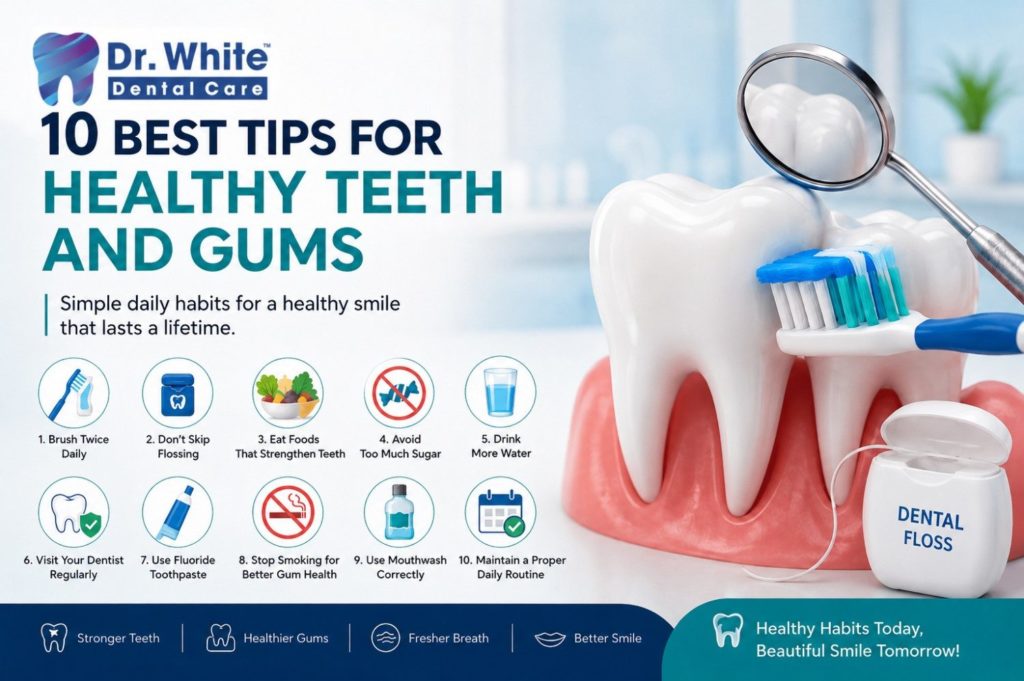
Daily care makes a difference.
Brush twice a day
Use fluoride toothpaste for two minutes, including before bed.
Clean between teeth
Use floss or an appropriate interdental cleaner every day.
Do not ignore symptoms
Bleeding gums, persistent pain or swelling deserve dental assessment.
The quick answer
Quick Answer: How Can You Keep Teeth and Gums Healthy?
To keep teeth and gums healthy, brush twice daily for two minutes with fluoride toothpaste, clean between your teeth every day, limit frequent sugary snacks and drinks, drink water regularly, avoid tobacco, and attend dental check-ups at the interval recommended for you. Replace a worn toothbrush and seek professional advice for ongoing bleeding gums, tooth pain, sensitivity or swelling.
Remember: Home care helps prevent many oral-health problems, but it cannot remove every hardened deposit or diagnose a dental condition. Professional assessment is important when symptoms persist.
Key takeaways
Key Takeaways
Fluoride matters
Fluoride toothpaste helps strengthen enamel and prevent decay.
Technique matters
Brush gently along the gumline and clean all tooth surfaces.
Frequency matters
Repeated sugar exposure can increase the risk of tooth decay.
Prevention is personal
Your check-up interval depends on your oral health and risk factors.
Healthy habits
10 Tips for Healthy Teeth and Gums
01
Brush twice a day for two minutes
Brush in the morning and before going to bed. Use a soft-bristled toothbrush and gentle, short strokes. Clean the outer, inner and chewing surfaces of every tooth, and angle the bristles toward the gumline without scrubbing hard.
Brushing too aggressively can irritate gums and contribute to tooth wear. If you are unsure about your technique, ask your dentist to demonstrate it.
02
Choose fluoride toothpaste
Fluoride helps make tooth enamel more resistant to acid attacks caused by plaque bacteria and sugars. Use a toothpaste suitable for your age and follow its label. After brushing, spit out the excess toothpaste rather than rinsing vigorously with water, so less fluoride is washed away.
For young children, use an age-appropriate amount and supervise brushing to reduce swallowing. Ask a dental professional for individual advice if you have a high risk of decay or special needs.
03
Clean between your teeth every day
A toothbrush cannot fully reach the tight spaces between teeth. Use dental floss, interdental brushes or another cleaner recommended for your tooth spacing. Move gently to avoid snapping floss into the gums.
If you have braces, bridges, implants or limited hand movement, a dentist or hygienist can help you choose a suitable tool.
04
Reduce frequent sugary snacks and drinks
How often your teeth are exposed to sugar matters as well as the total amount. Keep sweets, biscuits, sweetened tea or coffee, soft drinks and packaged juices as occasional choices rather than constant snacks throughout the day.
When you do have sugary foods, having them with a meal instead of repeatedly between meals can reduce the number of acid attacks on your teeth. Water is a better everyday drink.
05
Eat a balanced diet
Include a variety of vegetables, fruit, whole grains, protein sources and calcium-containing foods such as milk, curd or suitable alternatives. These support general health and provide nutrients involved in maintaining teeth and the tissues around them.
No single food can replace brushing, interdental cleaning or professional care. Be mindful that dried fruit, sweetened yoghurt and some packaged snacks can contain sugars that contribute to decay.
06
Drink water regularly
Water helps rinse away food particles and supports saliva, which naturally helps neutralise acids in the mouth. If your local water supply contains fluoride, it may also contribute to cavity prevention; fluoride levels vary by source.
If your mouth often feels dry, mention it to your dentist or doctor. Dry mouth can be associated with medicines and health conditions and may increase the risk of tooth decay.
07
Replace a worn toothbrush
Replace your toothbrush or electric brush head about every three to four months, or sooner if the bristles become frayed. Rinse it after use, store it upright and let it air-dry. Do not routinely share toothbrushes.
Choose a brush that feels comfortable and lets you reach the back teeth. An electric toothbrush can be useful for some people, but good technique and regular use remain important.
08
Use mouthwash only when it suits your needs
A mouthwash can be an additional step for some people, but it does not replace brushing or cleaning between teeth. Different rinses have different purposes, and some are intended for short-term use under dental guidance.
Avoid using mouthwash immediately after brushing if it would wash away the concentrated fluoride from your toothpaste; if you use a fluoride rinse, follow its directions and your dentist's advice.
09
Avoid tobacco and do not use your teeth as tools
Smoking and smokeless tobacco increase oral-health risks, including gum disease and oral cancer. Ask a healthcare professional for support if you want to stop using tobacco. Avoid biting hard objects, opening packages with your teeth or chewing ice, as these habits can chip or crack teeth.
If you play contact sports, ask about a suitable mouthguard to help protect your teeth from injury.
10
Keep up with dental check-ups
Regular dental visits can help identify early tooth decay, gum inflammation, worn fillings and other issues before they become more complicated. Your ideal visit interval depends on your oral health, history and risk factors; not everyone needs the same schedule.
Tell your dentist about bleeding gums, bad breath that persists, sensitivity, dry mouth, tobacco use, diabetes, pregnancy or medicines that affect your mouth. Share changes in your health and ask which preventive steps are most relevant to you.
Daily routine
A Simple Daily Oral-Care Routine
Use this as a starting point, then adjust it to any instructions from your dentist.
Morning
Brush and clean
Brush for two minutes with fluoride toothpaste. Clean your tongue gently if desired.
During the day
Smart choices
Choose water often, limit sugary snacking and avoid using teeth to bite hard objects.
Before bed
Most important clean
Clean between teeth, brush for two minutes and spit out excess toothpaste without vigorous rinsing.
If you have braces, dentures, dental implants, gum disease or a high cavity risk, you may need additional tools or a personalised routine.
Healthy Habit vs Common Mistake
Healthy habit
Common mistake
Why it matters
Brush gently for two minutes
Scrubbing hard or stopping too soon
Gentle, thorough brushing cleans more consistently while reducing irritation.
Clean between teeth daily
Only brushing visible surfaces
Food debris and plaque can remain between teeth.
Choose water most often
Sipping sweet drinks throughout the day
Frequent sugar exposure increases decay risk.
Get symptoms checked
Waiting for pain to become severe
Some dental problems progress before causing obvious pain.
Follow personalised recall advice
Assuming everyone needs the same visit schedule
Check-up needs vary with oral health and risk.
Warning signs
When Should You See a Dentist?
Arrange a dental appointment if you notice any of the following:
! Gums that bleed repeatedly when brushing or cleaning between teeth.
! Persistent bad breath, gum tenderness or gums that appear to be pulling away from teeth.
! Toothache, sensitivity that does not settle, a chipped tooth or pain when biting.
! A loose adult tooth, swelling, pus or a change in how your teeth fit together.
! A sore, lump, red or white patch in the mouth that does not heal within two weeks.
Seek urgent care for facial swelling that is spreading, fever with dental swelling, or difficulty swallowing or breathing. Difficulty breathing or swallowing is an emergency.
Dental insight
The Best Routine Is the One You Can Maintain
Effective prevention is usually not about buying the most products. It is about using the right basics consistently: fluoride toothpaste, gentle brushing, daily interdental cleaning, sensible food and drink choices, and dental advice suited to your risk.
If your gums bleed, do not simply brush less or avoid cleaning the area. Bleeding can have several causes, including gum inflammation, and persistent symptoms should be assessed. A dentist can check your technique, gum health and whether professional cleaning or other treatment is needed.
Near you
Oral Health Care in Nizampet, Hyderabad
If you are in Nizampet or nearby areas of Hyderabad and have concerns about tooth decay, gum bleeding, sensitivity or persistent bad breath, a dental assessment can help identify the cause and guide the next step. Nizampet Dentist is located on Main Road, opposite Balaji Park Town, Nizampet, Hyderabad.
Bring a list of medicines and mention any medical conditions when you attend. This information can help the dental team tailor advice to your needs.
Common questions
Frequently Asked Questions
01 What is the most important habit for healthy teeth?
Brush twice daily for two minutes with fluoride toothpaste and clean between teeth every day. A balanced diet and regular dental care support these habits.
02 How many times a day should I brush?
For most adults and children old enough to brush with supervision, brushing twice daily with fluoride toothpaste is recommended. Brush before bed and on one other occasion during the day.
03 Should I rinse my mouth after brushing?
After brushing, spit out excess toothpaste rather than rinsing vigorously with water. This helps leave fluoride on the teeth. Follow your dentist's advice if you use a prescribed product.
04 Is flossing necessary if I brush carefully?
Brushing alone does not fully clean the spaces between teeth. Daily flossing or another suitable interdental cleaner helps remove plaque and trapped food from these areas.
05 Why do my gums bleed when I brush?
Bleeding gums can be a sign of inflammation, often related to plaque, but there may be other causes. Clean gently and arrange a dental assessment if bleeding persists or recurs.
06 Which foods are good for teeth and gums?
A balanced diet with vegetables, fruit, whole grains, protein and calcium-containing foods supports general and oral health. Limit frequent sugary snacks and drinks; no particular food replaces oral hygiene.
07 How often should I visit the dentist?
The right interval depends on your dental history, current oral health and risk factors. Ask your dentist how often you should return rather than relying on a one-size-fits-all schedule.
08 Does mouthwash replace brushing?
No. Mouthwash may provide an additional benefit for certain needs, but it cannot replace brushing with fluoride toothpaste and daily cleaning between teeth.
09 How often should I replace my toothbrush?
Replace it about every three to four months, or earlier if the bristles are frayed. Follow the manufacturer's guidance for electric toothbrush heads.
10 Can gum disease be prevented?
Good daily plaque removal, avoiding tobacco and receiving appropriate professional care can lower risk. If gum disease is already present, a dentist may recommend specific treatment and maintenance.
11 Is tooth sensitivity always a cavity?
No. Sensitivity may have several causes, including enamel wear, gum recession, cracks or decay. A dentist can identify the cause, especially if it is new, persistent or worsening.
12 What should I do if I have a toothache?
Arrange a dental assessment, especially if pain persists, worsens or affects sleep or eating. Facial swelling, fever, or difficulty swallowing or breathing needs urgent attention.
Get in touch
Need Personalised Advice About Your Teeth or Gums?
Every mouth is different. If you have bleeding gums, tooth pain, sensitivity or questions about your daily oral-care routine, contact Nizampet Dentist to ask about an assessment.
Nizampet Dentist
Address
1st Floor, House No. 3, 10/2/A, Main Road, opposite Balaji Park Town, Nizampet, Hyderabad, Telangana 500090.
Phone
+91 98480 85789
Hours
10:00 AM–9:00 PM; call ahead to confirm appointment availability.
Trusted Oral-Health References
These public-health and professional resources provide further guidance on brushing, fluoride, interdental cleaning and preventive dental care.
American Dental Association — Home Oral Care ↗
US Centers for Disease Control and Prevention — Oral Health Tips ↗
NHS — Healthy Teeth and Gums ↗
National Institute of Dental and Craniofacial Research — Gum Disease ↗
Medical disclaimer: This article is general educational information and does not diagnose a condition or replace advice from a dental professional. Seek individual assessment for symptoms or treatment decisions.
Book a consultation
Small Daily Habits. Healthier Smiles.
Use these tips as a starting point, and ask a dental professional for advice that fits your oral health and medical history.
Clinic location
Visit Nizampet Dentist
Address: 1st Floor, House No. 3, 10/2/A, Main Road, opposite Balaji Park Town, Nizampet, Hyderabad, Telangana 500090.
Phone: +91 98480 85789
Hours: 10:00 AM–9:00 PM. Call before visiting to confirm availability.
Opposite Balaji Park Town
Nizampet Main Road, Hyderabad. Open Google Maps for live directions to the clinic.
Open Google Maps ↗