
Everyday nutrition · Updated October 2026
Best Foods for Healthy Teeth
The best foods for healthy teeth are nutrient-rich, low in added sugar and easy to fit into balanced meals. Milk, plain curd, paneer, cheese, leafy greens, eggs, beans, nuts, whole fruits and water can support oral health. They work alongside—not instead of—brushing with fluoride toothpaste, cleaning between teeth and regular dental check-ups.
For many households in Hyderabad, tooth-friendly choices can be simple everyday foods. The goal is not a special “dental diet”; it is a balanced eating pattern that supplies useful nutrients and reduces how often teeth are exposed to sugar and acid.
Food choices support prevention, but they cannot repair a cavity that has formed or treat gum disease on their own.
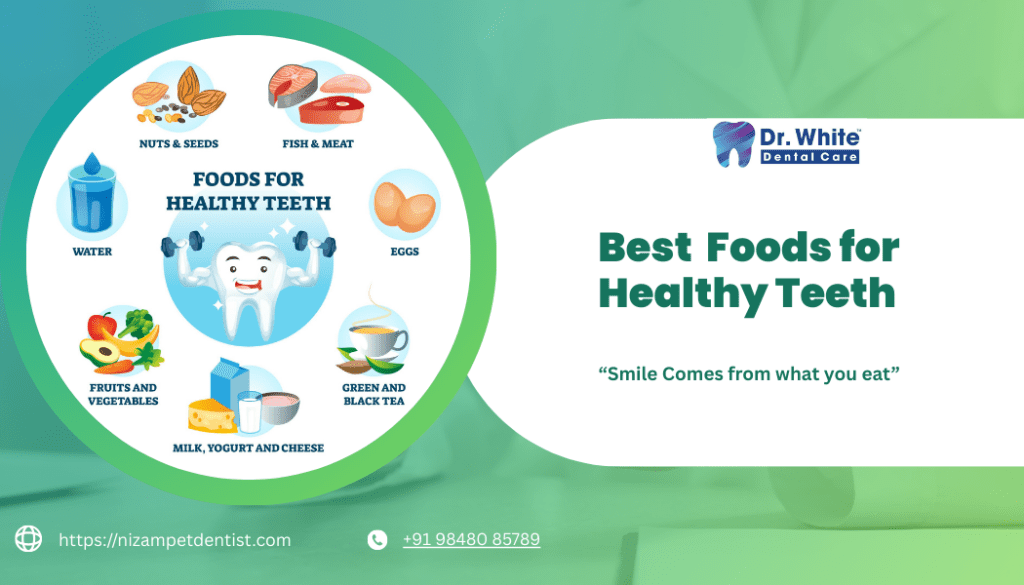
Everyday food choices can support dental health when combined with consistent oral hygiene.
The quick answer
Quick Answer
Choose calcium-rich foods such as milk, plain curd, paneer and cheese; vegetables and whole fruits; protein foods such as eggs, beans, fish or chicken; and unsalted nuts or seeds when suitable. Drink water regularly and limit frequent sugary snacks and acidic drinks. No single food prevents every dental problem, and a healthy diet does not replace fluoride toothpaste or professional dental care.
Build balanced meals
Include protein, vegetables or fruit, and a calcium source where suitable.
Reduce frequent sugar
Keep sweets and sugary drinks occasional and preferably with meals.
Make water your default
Water helps rinse away food debris and supports a moist mouth.
Key takeaways
Key Takeaways
Calcium and phosphorus
Milk, curd, cheese, paneer and some plant foods supply minerals involved in maintaining teeth.
Protein and variety
Eggs, fish, chicken, dal, beans, peas, tofu and nuts can contribute to a balanced diet.
Whole produce over juice
Whole fruits and vegetables provide fibre and usually take longer to eat than juice or smoothies.
Frequency matters
Repeated sugary snacks and drinks can expose teeth to acid-producing conditions throughout the day.
How food affects teeth
How Does Food Affect Teeth and Gums?
Dental plaque contains bacteria that use sugars from food and drink to produce acids. These acids can remove minerals from tooth enamel. Saliva helps neutralise acids and supports the natural remineralisation process, but repeated sugar exposure gives teeth less time to recover.
Nutrition also supplies the building blocks your body needs for normal tooth development and healthy oral tissues. A balanced diet is especially important for children, older adults and people whose medical conditions or medicines affect eating or saliva. However, gum disease is complex and cannot be prevented or treated through food alone.
The American Dental Association notes that free sugars are an important contributor to tooth decay and that frequent acidic food and drink intake is associated with erosive tooth wear. Read the ADA's nutrition and oral health guidance ↗
Foods to choose
Best Foods for Healthy Teeth and Gums
1. Milk, plain curd, paneer and cheese
Dairy foods provide calcium and protein; some also supply phosphorus. These nutrients help maintain normal tooth and bone structure. Cheese may also stimulate saliva and can help buffer acids after eating. Choose plain curd or yoghurt more often than varieties with added sugar.
Easy ideas: plain curd with lunch, paneer with vegetables, milk without added sugar, or a small portion of cheese as part of a meal.
2. Leafy green vegetables
Palak, methi, amaranth leaves and other greens contribute vitamins, minerals and fibre. They are versatile additions to dal, curries, soups, dosa batter or a balanced plate. Their role is to support overall nutrition—not to scrub plaque off teeth or cure gum problems.
3. Crunchy vegetables such as carrots and cucumber
Carrots, cucumber and other crisp vegetables require chewing and contain water and fibre. Chewing can stimulate saliva, which helps clear food debris. These foods are useful snack options, but they do not remove plaque as effectively as brushing and interdental cleaning.
4. Whole fruits, including apples, pears and guava
Whole fruit provides fibre, water and a range of nutrients. Choose whole fruit more often than juice. Some fruits, including citrus fruits, are acidic; enjoy them as part of a meal rather than sipping juice over a long period, and rinse with water afterwards if needed.
5. Nuts and seeds
Unsalted almonds, peanuts, walnuts, sesame seeds and other nuts or seeds can provide protein, minerals and healthy fats with little or no added sugar. Choose forms that are safe to chew. Young children and people with swallowing difficulties may need softer or ground options.
6. Eggs, fish and other protein foods
Eggs, fish, chicken, tofu, beans, chickpeas and lentils contribute protein and other nutrients. Some foods, such as oily fish and eggs, provide vitamin D; vitamin D helps the body use calcium. No single food guarantees strong teeth, so variety matters.
7. Dal, beans and lentils
Dal, rajma, chana, peas and other pulses provide protein and useful minerals as part of a balanced diet. Pair them with vegetables and other nutrient-rich foods. If a dish contains added sugar or is sticky and frequently snacked on, the overall eating pattern still matters.
8. Water
Plain water is a practical everyday drink. It helps rinse away loose food debris and supports hydration. Where the local water supply is fluoridated, water may also contribute fluoride; do not assume every bottled or filtered water source contains fluoride.
9. Foods with vitamin C
Vitamin C supports normal collagen formation and gum tissue health. Sources include guava, capsicum, tomatoes, broccoli and citrus fruits. Because some vitamin-C-rich fruits are acidic, choose whole foods, avoid prolonged sipping of juices and rinse with water after acidic foods or drinks.
10. Unsweetened foods and drinks
Plain milk, plain curd, water and meals made from minimally processed ingredients can make it easier to limit added sugar. “Sugar-free” on a label does not automatically mean a product is non-acidic or ideal for teeth, so check ingredients and how often you consume it.
Important: Foods do not act like a toothbrush, and no food can regrow lost enamel or close a cavity. Early enamel changes may sometimes be managed with preventive dental care, but a hole in a tooth needs assessment by a dentist.
Key nutrients
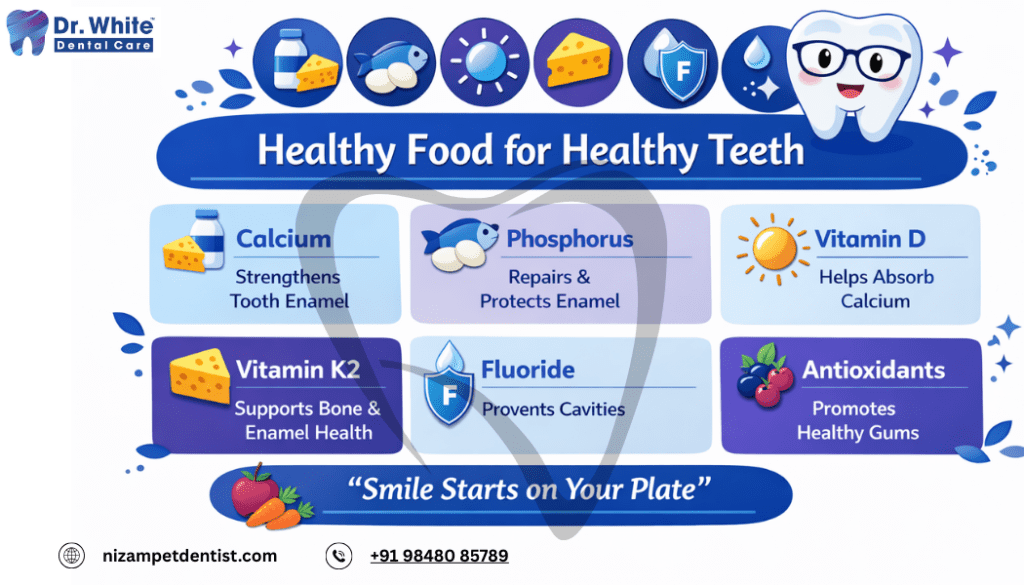
Which Nutrients Help Support Healthy Teeth?
Most people should aim for a balanced diet rather than taking supplements specifically for their teeth. Do not start high-dose vitamin or mineral supplements without advice from a qualified healthcare professional; needs vary by age, diet, health and medication.
Nutrient
Why it matters
Food examples
Calcium
Contributes to the mineral structure of teeth and bones.
Milk, curd, paneer, cheese, calcium-fortified foods, some greens.
Phosphorus
Works with calcium in tooth and bone mineral.
Dairy, eggs, fish, meat, beans, lentils and nuts.
Vitamin D
Helps the body absorb and use calcium.
Oily fish, egg yolk and fortified foods, where available.
Vitamin C
Supports normal collagen formation and gum tissue.
Guava, capsicum, tomatoes, broccoli and fruit.
Protein
Supports the body's growth and tissue maintenance.
Eggs, dairy, fish, chicken, beans, lentils, soy and nuts.
Fluoride
Helps make enamel more resistant to acid attacks.
Fluoride toothpaste; water only where the supply contains it.
Foods and Drinks to Limit for Better Dental Health
Sugary drinks
Soft drinks, sweetened tea or coffee, energy drinks and sweetened packaged beverages.
Sticky sweets
Toffees, caramels, gummies and sweets that cling to teeth.
Frequent biscuits, cakes and desserts
Especially when grazed on between meals.
Juices and smoothies
Even fruit-based versions can expose teeth to free sugars and acids; whole fruit is usually preferable.
Acidic drinks and sour candies
Frequent exposure can contribute to enamel erosion, including from some sugar-free drinks.
Frequent dried-fruit snacking
Dried fruit can be sticky and concentrated in sugar; if you eat it, have it with a meal rather than grazing on it.
You do not necessarily need to ban every treat. A practical approach is to reduce how often sugary foods and drinks touch your teeth, keep them with meals where possible, and choose water between meals. The amount, frequency, stickiness and acidity of a food or drink all matter.
What to do after acidic food or drink
Rinse your mouth with plain water. Avoid brushing immediately after a strongly acidic food or drink; wait around an hour to allow saliva to help neutralise acids and reharden the surface. If you have frequent reflux or vomiting, ask a healthcare professional for advice because stomach acid can also erode enamel.
Simple Tooth-Friendly Meal Ideas for an Indian Diet
There is no single perfect menu for everyone. These examples show how everyday foods can fit into a balanced eating pattern while limiting frequent added sugar.
Breakfast
Idli or dosa with sambar, or eggs with whole-grain toast; choose water and keep sweetened tea or coffee modest.
Lunch
Rice or roti with dal, vegetables and plain curd; add paneer, beans, fish or another suitable protein.
Snack, if hungry
Unsalted nuts if safe to chew, plain curd, a boiled egg, cucumber or whole fruit rather than frequent biscuits or sweets.
Dinner
A balanced meal with vegetables and dal, beans, eggs, fish, chicken or tofu. Drink water and avoid prolonged sipping of sugary drinks.
Adjust food texture and choices for allergies, diabetes, kidney disease, pregnancy, cultural preferences, dental pain or other health needs. A registered dietitian or healthcare professional can help with individual dietary requirements.
Daily habits
Food Choices Work Best With These Daily Habits
✓ Brush twice daily with fluoride toothpaste, using a soft-bristled toothbrush.
✓ Clean between teeth every day with floss or an appropriate interdental brush.
✓ Drink water regularly, especially between meals.
✓ Reduce the frequency of sugary snacks and drinks.
✓ After acidic foods or drinks, rinse with water and wait before brushing.
✓ Attend dental check-ups at an interval recommended for your oral health needs.
✓ Seek dental advice for persistent sensitivity, toothache, bleeding gums, swelling or bad breath.
Food cannot remove hardened tartar, treat an established cavity or reliably cure gum disease. A dentist can identify whether you need preventive care, a professional cleaning or treatment.
Clinical insight
Think About the Pattern, Not One “Superfood”
A practical food question is: “Will this choice help me eat a balanced meal, and am I exposing my teeth to sugar or acid repeatedly through the day?” For example, plain curd with lunch and water between meals is generally a more tooth-friendly pattern than sweetened drinks sipped for hours. The overall pattern matters more than relying on one fruit, seed or supplement.
Individual needs vary. If you have dry mouth, braces, dentures, sensitive teeth, a swallowing problem or a medical diet, ask your dental or healthcare professional which food textures and choices are suitable for you.
Common questions
Frequently Asked Questions About Foods for Healthy Teeth
01 What are the best foods for healthy teeth?
Good choices include milk, plain curd, paneer, cheese, leafy vegetables, whole fruits, beans, eggs, fish, nuts and water. They supply nutrients or support a lower-sugar eating pattern, but they do not replace brushing or dental treatment.
02 Which Indian foods are good for teeth and gums?
Useful options include plain dahi, milk, paneer, dal, chana, rajma, leafy greens such as palak and methi, guava, vegetables, eggs, fish and unsalted nuts. Choose preparations with less added sugar and adapt textures to your needs.
03 Is curd good for teeth?
Plain, unsweetened curd provides calcium and protein and can be part of a balanced diet. Flavoured curd may contain added sugar, so check the label.
04 Is cheese good for teeth?
Cheese provides calcium and protein and chewing it can stimulate saliva. It can be a tooth-friendly snack for many people, but it is not a substitute for oral hygiene.
05 Do apples clean teeth naturally?
Chewing whole apples can stimulate saliva and their fibre can help clear some loose food debris. Apples do not remove plaque like brushing and flossing, and their natural sugars still make good oral hygiene important.
06 What drink is best for healthy teeth?
Plain water is a practical default between meals. Plain milk can also contribute nutrients. Limit frequent sugary drinks and acidic beverages, including many soft drinks and energy drinks.
07 Which foods should I avoid to prevent cavities?
Limit frequent sugary snacks and drinks, sticky sweets and prolonged sipping of sweetened beverages. You do not need to avoid every treat, but frequency and how long food remains on the teeth matter.
08 Can food repair a cavity or rebuild lost enamel?
No food can close a cavity or regrow lost enamel. Saliva and fluoride can help remineralise some early enamel changes, but a suspected cavity needs a dentist's assessment and may require treatment.
09 Are citrus fruits bad for teeth?
Citrus fruits provide nutrients but are acidic. Enjoy them as part of meals rather than sipping juice repeatedly, rinse with water afterwards and wait around an hour before brushing.
10 Do children need special foods for strong teeth?
Children need a balanced, age-appropriate diet with nutrient-rich foods and limited added sugar. Choose safe textures for their age, supervise foods that pose a choking risk, and follow age-appropriate fluoride-toothpaste guidance from a dental professional.
11 Can supplements make teeth stronger?
Supplements are not necessary for everyone and should not be taken in high doses without professional advice. A balanced diet is the starting point; a clinician can assess suspected deficiencies or individual needs.
12 Can a healthy diet replace brushing and dental check-ups?
No. Diet supports oral health, but daily brushing with fluoride toothpaste, cleaning between teeth and professional check-ups remain important. Food cannot remove hardened tartar or treat an established infection.
Get in touch
Need Personalised Dental Advice in Nizampet?
If you have tooth sensitivity, repeated cavities, bleeding gums or difficulty eating certain foods, a dental assessment can help identify the cause. Nizampet Dentist can advise on suitable next steps based on your individual needs.
Nizampet Dentist
Address
1st Floor, House No. 3, 10/2/A, Main Road, opposite Balaji Park Town, Nizampet, Hyderabad, Telangana 500090.
Phone
+91 98480 85789
Email
nizampet@dwdc.in
Medical disclaimer: This article is for general education and is not a diagnosis or a substitute for personalised dental or dietary advice. Contact a qualified dental professional for symptoms or concerns.
Book a consultation
Healthy Eating Is One Part of a Healthy Smile
Choose balanced meals, limit frequent sugar and acid exposure, and combine healthy food habits with daily oral hygiene and appropriate dental care.
Clinic location
Visit Nizampet Dentist
Address: 1st Floor, House No. 3, 10/2/A, Main Road, opposite Balaji Park Town, Nizampet, Hyderabad, Telangana 500090.
Phone: +91 98480 85789
Opposite Balaji Park Town
Nizampet Main Road, Hyderabad. Open Google Maps for live directions to the clinic.
Open Google Maps ↗