
Restorative dental care · Nizampet, Hyderabad
Dental Filling Treatment in Nizampet
A cavity, chipped tooth or sensitive spot deserves a proper diagnosis. Our dental team can assess the tooth and explain whether a tooth-coloured filling, preventive care or a different restoration may be appropriate.
Understand material choices, treatment steps, costs and aftercare before you decide. The aim is to preserve healthy tooth structure wherever clinically possible—not to promise a one-size-fits-all result.
✓ Assessment before treatment ✓ Tooth-coloured options ✓ Nizampet Main Road
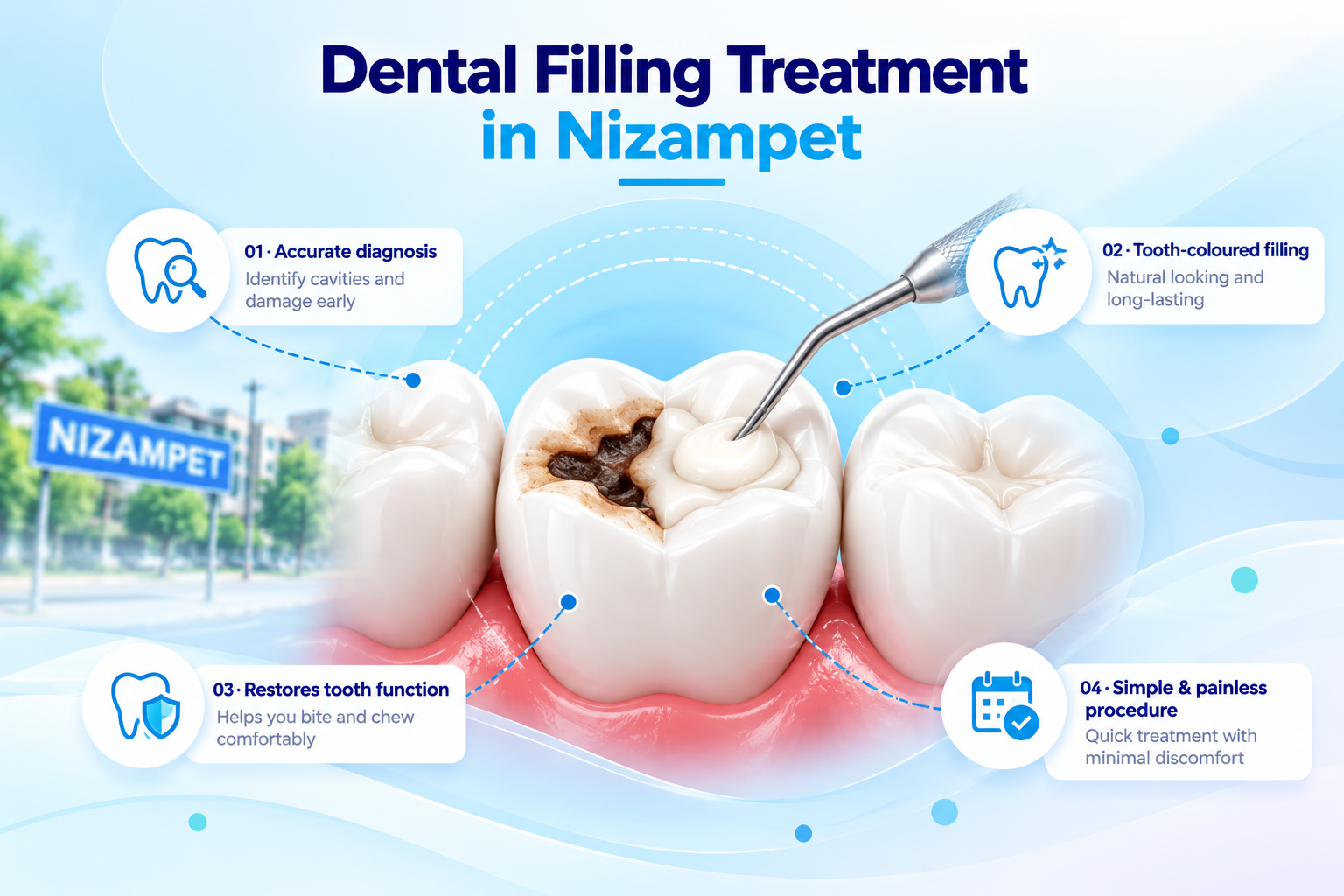
Illustration for education · not a clinical photograph
Nizampet, Hyderabad
Opp. Balaji Park Town
Dr. Sri Lakshmi Champati
BDS · Dental Surgeon
10 AM – 9 PM
Open 7 days
98480 85789
Call for an available slot
tooth restoration
What Is a Dental Filling?
Short answer: A dental filling is a restoration that repairs a cavity or suitable minor tooth damage. The dentist removes decayed tooth tissue when necessary, cleans and prepares the area, then places a material to restore the tooth’s shape and chewing surface.
A filling is considered when enough healthy tooth structure remains. It does not treat every toothache: deeper damage, nerve involvement or a large fracture may require a root canal, crown or another treatment after examination.
Read the NIDCR’s explanation of fillings →Primary goal
Restore a suitable tooth while keeping as much sound tooth structure as practicable.
Material choice
Depends on cavity size, bite, position, age, appearance and clinical requirements.
Important limitation
A filling can wear, chip or develop recurrent decay and may eventually need replacement.
Signs worth checking
When Might You Need a Tooth Filling?
Symptoms alone cannot prove a cavity is present. If you recognise any of these changes, a dental examination can help identify the cause.
Visible hole or dark area
A spot, pit or cavity may suggest tooth decay; staining can have other explanations.
Cold or sweet sensitivity
A sensitive tooth may have decay, exposed dentine, wear or another problem.
Food getting trapped
Repeated food trapping between teeth may occur with cavities or contact changes.
Pain when chewing
Discomfort under biting pressure can involve decay, cracks or the supporting tissues.
Small chip or worn edge
Selected chips may be restored with bonding or a filling after a bite check.
Old filling looks damaged
A cracked, loose or rough restoration should be checked for leakage or decay.
Urgent warning: facial swelling with fever, severe worsening pain, or difficulty swallowing requires prompt medical evaluation; trouble breathing is an emergency.
Early detection matters
Early Tooth Decay vs an Established Cavity
Not every early sign of tooth decay needs drilling. The clinical stage determines what might help.
Stage 1
Early mineral loss
A white-spot lesion may be present without an actual hole. Fluoride, diet changes and monitoring may allow early enamel damage to arrest or remineralise.
Stage 2
Cavity in the tooth
When enamel has broken down into a permanent cavity, the tooth generally needs a restoration to repair the missing structure.
Stage 3
Deep decay or pulp involvement
Advanced damage may require pulp assessment, root canal treatment, a crown or extraction if the tooth cannot be restored.
Further reading: NIDCR — The Tooth Decay Process ↗
Know your options
Dental Filling Materials Your Dentist May Discuss
Materials differ in appearance, handling, strength and suitability. Your dentist will explain which options suit your tooth.
Composite resin
Tooth-coloured material often used for small to moderate cavities on visible or back teeth. A dry working field and proper bonding matter.
Shade matching
Glass ionomer (GIC)
A fluoride-releasing material that may be appropriate for selected lower-stress areas, some baby-tooth restorations or temporary uses.
Selected indications
Dental amalgam
Metal-coloured material with a long clinical history. Its use warrants discussion of patient preferences and FDA-identified higher-risk groups.
Individual risk discussion
Ceramic inlay/onlay
A tooth-coloured indirect restoration that can be considered for selected larger defects when a conventional direct filling may be insufficient.
Indirect restoration
Material safety note: The FDA advises certain groups—including people who are pregnant or nursing, young children, and those with kidney/neurological conditions or relevant sensitivities—to avoid new amalgam fillings when possible and appropriate. Existing sound amalgam fillings should not be removed solely for precautionary reasons without a clinical indication. FDA guidance ↗
At-a-glance comparison
Dental Filling Materials Comparison
Use this table to prepare questions for your consultation. Availability, cost and the most appropriate material depend on examination.
Material
Appearance
Typical consideration
Limitations
Composite resin
Tooth-coloured
Small to moderate restorations; suitable for many visible teeth
May stain, chip or wear; bonding requires moisture control
Glass ionomer
Tooth-coloured, more opaque
Selected low-stress sites and fluoride-releasing indications
Generally less wear-resistant in heavy-load areas
Amalgam
Metal-grey
Selected posterior tooth restorations, where suitable
Visible metal; FDA advises avoidance for certain risk groups when possible
Ceramic inlay/onlay
Tooth-coloured
Some larger defects needing an indirect restoration
May need laboratory work; often higher cost
Reference: American Dental Association — Filling Options ↗. Treatment choice must be individualised.
Understand the diagnosis
Dental Filling vs Root Canal vs Crown
A filling is not automatically the right answer for every decayed or fractured tooth. This decision depends on depth of damage and restorability.
Clinical finding
Possible care
Why it may be chosen
Early enamel change without a hole
Fluoride and preventive monitoring
May help reverse or arrest early demineralisation
Small or moderate cavity
Dental filling
Restore the missing tooth structure
Deep decay involving the pulp
Root canal assessment
Address inflamed or infected pulp where the tooth can be saved
Extensively weakened tooth
Onlay or crown assessment
Restore form and protect remaining tooth structure where suitable
Non-restorable tooth
Extraction assessment
Considered only when predictable restoration is not possible
Explore related options: Root Canal Treatment and Crowns & Bridges.
Patient journey
How Dental Filling Treatment in Nizampet Works
The exact approach to dental filling treatment in Nizampet varies by tooth and material. A typical visit may include these steps:
01
Examine
The dentist checks the tooth, symptoms and bite. X-rays are taken when clinically indicated.
02
Explain
Discuss cavity extent, restoration choices, treatment limitations and a cost estimate.
03
Prepare
Local anaesthesia is used when appropriate; decayed tissue is removed as needed.
04
Restore
The selected filling is placed, shaped and set using the technique appropriate to the material.
05
Check bite
The dentist checks contacts and chewing height, polishes where appropriate and explains aftercare.
Visits and recovery
How Long Does a Dental Filling Take?
Many uncomplicated direct fillings can be completed in one appointment. The actual time depends on how many teeth need treatment, cavity size and position, the filling material and whether anaesthesia or other steps are required.
Indirect restorations such as ceramic inlays may take additional appointments. Do not assume that every filling takes 20–30 minutes or that eating is always immediate.
When can I eat?
Follow your dentist’s instructions for the chosen material. If your mouth is numb, avoid chewing until sensation returns to reduce accidental cheek or tongue bites.
What if it feels high?
If your bite feels uneven, or pain persists or worsens, contact the dentist for assessment and possible adjustment.
Transparent decision support
Dental Filling Cost in Nizampet
The cost of dental filling treatment in Nizampet depends on the tooth, the number and extent of surfaces involved, the chosen material, any diagnostic investigations and whether additional treatment is required.
Because these factors change the treatment plan, ask the clinic for a current itemised estimate after assessment.
Questions to ask before proceeding
✓ Is the quote for one tooth or several?
✓ Does it include X-rays, anaesthesia and follow-up?
✓ Would an onlay, crown or root canal be more suitable?
✓ When might the restoration need maintenance or replacement?
What determines the final quote?
Cavity size and surfaces
Larger or multi-surface restorations may require additional clinical work.
Material selected
Composite, GIC and indirect restorations have different workflows.
Diagnostic needs
An X-ray or additional assessment may be indicated in some cases.
Number of teeth / visits
Multiple restorations or indirect procedures may need more time.
Know your clinical team
Meet Your Restorative Dental Care Team
Professional names and roles matter more than unverified patient-count badges or unsupported specialist titles.
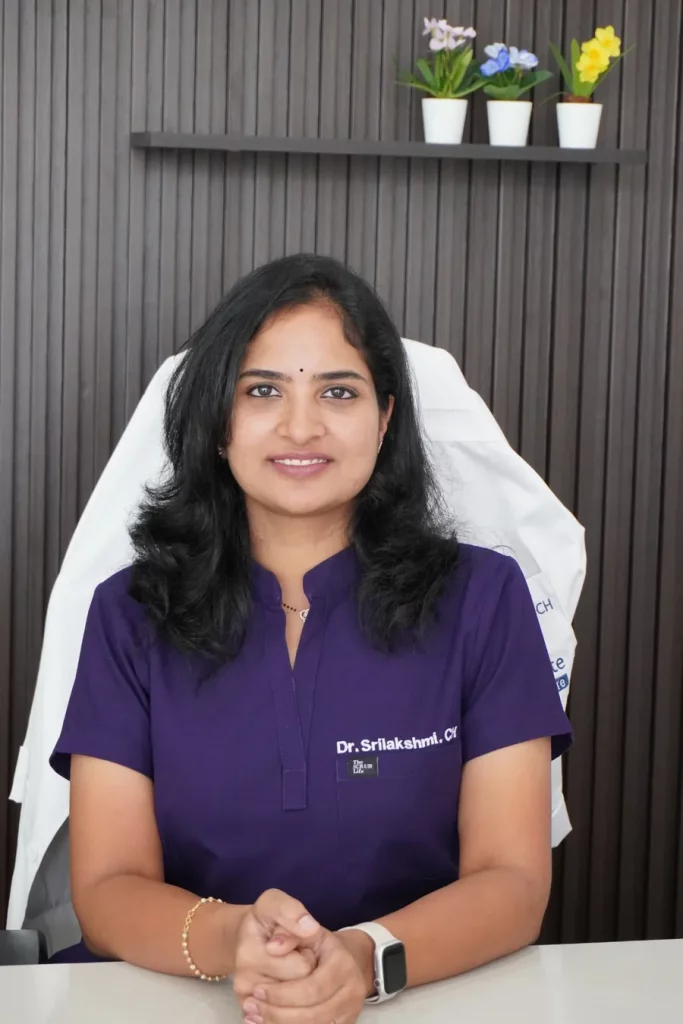
Clinic leadership
Dr. Sri Lakshmi Champati
BDS · Dental Surgeon & Implantologist · Founder, Dr. White Dental Care
Dr. Sri Lakshmi Champati has 13+ years of experience in restorative, cosmetic, preventive and implant dentistry. At your filling consultation, the dentist who will examine and treat your tooth explains the findings and options.
✓ Dentist-led assessment ✓ Treatment options explained ✓ Nizampet branch
Balanced information
Benefits, Limitations and Possible Risks
Knowing what a filling can and cannot do helps set realistic expectations.
Potential benefits
✓ Repairs suitable tooth structure affected by decay or a small fracture.
✓ Can restore chewing contour and reduce food trapping in suitable cases.
✓ May preserve more natural tooth than a more extensive restoration.
✓ Tooth-coloured materials can offer a close visual shade match.
Limitations and risks
! Temporary sensitivity or discomfort may follow treatment.
! Fillings can fracture, wear, stain, loosen or develop decay at their edges.
! Large cavities or cracks may need additional restoration or pulp treatment.
! A filling does not eliminate the need for brushing, flossing and follow-up care.
Care after your visit
Dental Filling Aftercare and Maintenance
How well a restoration performs over time depends on the tooth, the filling and daily care.
1
Wait for numbness to wear off. Avoid chewing your cheek or tongue after local anaesthesia.
2
Brush twice daily with fluoride toothpaste. Clean between teeth regularly using appropriate tools.
3
Limit frequent sugary snacks and drinks. Lowering repeated acid attacks helps prevent new decay.
4
Watch for a high bite or ongoing sensitivity. Contact the clinic if chewing feels uneven or symptoms persist.
5
Attend advised reviews. Existing fillings should be checked for wear, cracks and recurrent decay.
When to contact a dentist promptly
Seek assessment for severe or worsening pain, significant swelling, a lost filling, inability to bite properly, persistent sensitivity or an obvious crack.
If swelling is accompanied by difficulty breathing or swallowing, seek emergency hospital care.
Call the Nizampet ClinicLocal, dentist-led care
Why Consider Nizampet Dentist for Filling Care?
Local, dentist-led restorative assessment with options explained before treatment.
Clear Nizampet location
Find the clinic on Nizampet Main Road opposite Balaji Park Town, open every day from 10 AM to 9 PM.
Named clinical leadership
Dr. Sri Lakshmi Champati, BDS, is the founder of Dr. White Dental Care.
Explain options first
Discuss a filling, preventive care or a different restoration after evaluation, with the chance to ask about costs and follow-up.
Patient experiences
Read Genuine Local Patient Feedback
Read current, first-hand reviews of the clinic on its public Google listing, and ask the team about filling-specific cases if available.
Individual experiences can differ depending on the tooth and complexity. A positive review is not a guarantee of a particular clinical result.
View Clinic on Google Maps ↗Want to share your experience?
If you have visited the clinic, your honest feedback may help other patients understand the consultation and care process.
Contact the clinicFrequently Asked Questions
01 What is dental filling treatment?
A dental filling restores a tooth affected by an established cavity or suitable minor damage. Decayed tooth tissue is removed as needed, and a filling material restores the missing structure and chewing contour.
02 How do I know whether I need a filling?
A visible hole, food trapping, sensitivity or a small chip may warrant evaluation, but none proves that a filling is needed. Your dentist checks the tooth and may recommend imaging depending on the findings.
03 Is dental filling treatment painful?
Local anaesthesia is commonly available when appropriate to reduce discomfort. Some sensitivity may occur after treatment. Pain levels depend on cavity depth, inflammation, anaesthesia effectiveness and the individual tooth.
04 How long does a filling appointment take?
Some simple direct fillings can be completed in a single appointment, but the duration varies with cavity size, number of surfaces and teeth, material, tooth location and diagnostic or anaesthetic needs.
05 Can an early cavity be treated without drilling?
An early, non-cavitated white-spot lesion may sometimes be arrested or remineralised using fluoride and preventive changes. Once a permanent hole has formed, restoration is generally needed. An examination determines the stage.
06 Which is better: composite or GIC filling?
There is no universal best material. Composite offers a tooth-coloured, bonded restoration often used for small to moderate cavities. GIC releases fluoride and may suit selected lower-load sites. Your dentist chooses based on clinical needs.
07 What is the cost of dental filling treatment in Nizampet?
The price depends on cavity size, tooth position, surfaces involved, selected material and any additional procedures. Ask Nizampet Dentist for a current estimate after examination.
08 When is a root canal needed instead of a filling?
Root canal treatment may be considered if the pulp inside a tooth is irreversibly inflamed or infected. A routine filling treats damage that can be restored without that pulp procedure. An examination and, when needed, imaging guide the decision.
09 Can I eat immediately after a filling?
Ask about the material and aftercare instructions for your restoration. If local anaesthesia was used, avoid chewing until numbness has worn off to prevent accidentally biting your lip, tongue or cheek.
10 How long do tooth-coloured fillings last?
There is no guaranteed lifespan. Longevity depends on restoration size, material, tooth location, grinding or biting forces, hygiene, diet and regular checks. Fillings may require repair or replacement over time.
11 Can an existing filling be repaired or replaced?
Sometimes. A dentist checks the old restoration, surrounding tooth structure and any recurrent decay or cracks. A small defect may be repairable, while a larger failure may require replacement or a different restoration.
12 Where can I book a dental filling consultation in Nizampet?
Nizampet Dentist is on Nizampet Main Road opposite Balaji Park Town, Hyderabad 500090. Call +91 98480 85789 between 10 AM and 9 PM daily, or send a WhatsApp appointment enquiry. A requested slot is confirmed by the clinic.
Visit the clinic
Visit Nizampet Dentist in Hyderabad
Looking for a dental clinic in Nizampet or coming from Miyapur, Bachupally or Pragathi Nagar? Use the address below for navigation.
Nizampet Dentist
Opp. Balaji Park Town · Hyderabad. Open the map for live directions to the clinic.
Open Google Maps ↗Nizampet Dentist
Associated with Dr. White Dental Care
Address
1st Floor, House No. 3, 10/2/A, Main Road, opposite Balaji Park Town, Nizampet, Hyderabad, Telangana 500090
Hours
Monday–Sunday: 10:00 AM – 9:00 PM
Phone
+91 98480 85789
Email
nizampet@dwdc.in
Appointment enquiry
Book Your Dental Filling Consultation
Tell us how to contact you and when you would prefer to visit. Your request goes to the Nizampet clinic, and the team will confirm your appointment.
✓ Phone: +91 98480 85789
✓ Mon–Sun · 10:00 AM – 9:00 PM
✓ Nizampet Main Road · Opp. Balaji Park Town
Medical information: Prepared by the Nizampet Dentist team as patient education. This information does not replace diagnosis, a clinical examination or personalised treatment advice. NIDCR, ADA and FDA resources inform the general material guidance. For questions about how patient information is handled, please contact us.