Dental Tourism in India — Affordable World-Class Dental Care
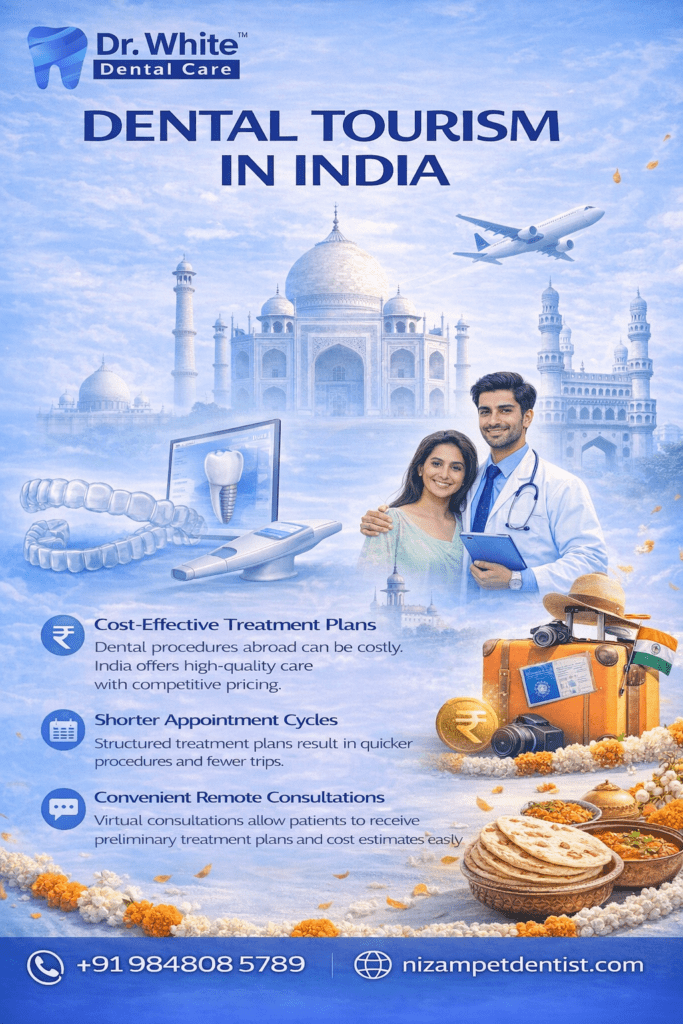
Dental tourism in India refers to international and NRI patients traveling to India to receive dental treatments such as implants, cosmetic dentistry, orthodontic aligners, root canal therapy, or full mouth rehabilitation. India has emerged as a practical destination for this type of care due to its combination of modern dental clinics, skilled clinicians, English-speaking healthcare teams, and broadly accessible treatment options.
In many countries, dental procedures can be expensive or associated with long waiting times. By contrast, patients considering dental tourism in India can benefit from structured treatment planning, shorter appointment cycles, and cost advantages. With the growing use of virtual consultations and remote case assessments, individuals are now able to receive preliminary treatment opinions and estimated plans before traveling, making cross-border dental care easier to evaluate and organize.
Why Choose India For Dental Tourism?
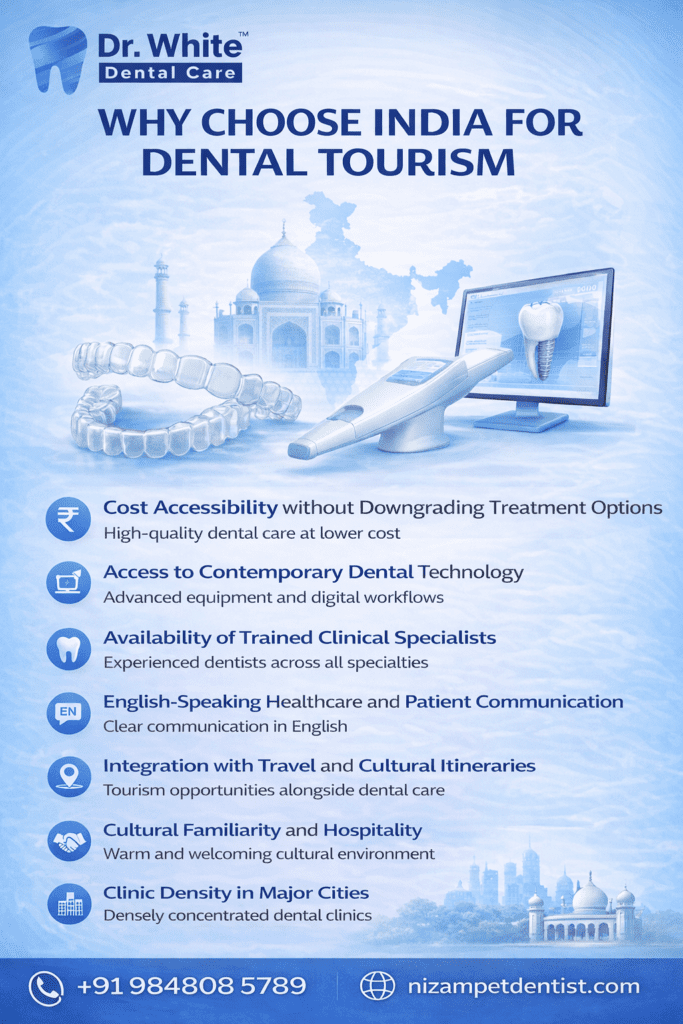
Choosing India for dental care is often a practical decision rather than a purely cost-driven one. International and NRI patients evaluating dental tourism typically compare several variables: treatment standards, communication, scheduling efficiency, and the ability to coordinate travel around clinical timelines. India aligns favorably across these dimensions, which helps explain why the country has become visible within the dental tourism landscape.
1. Cost Accessibility without Downgrading Treatment Options :
Dental care in many Western countries can be prohibitively expensive, especially for comprehensive procedures such as implants, veneers, full mouth rehabilitation, or aligner therapy. In India, these same categories of treatment are commonly accessible at lower price points. For many patients, the difference allows them to complete full treatment plans that might otherwise be deferred or phased out over many years.
2. Access to Contemporary Dental Technology :
Urban dental clinics in India have increasingly adopted digital workflows, including 3D imaging, intraoral scanners, CAD/CAM systems, and digital treatment planning tools. These technologies support more precise diagnosis, enable patients to visualize treatment outcomes, and streamline communication during the pre-travel planning stage.
3. Availability of Trained Clinical Specialists :
India produces a wide network of dental professionals and specialists, including prosthodontists, endodontists, orthodontists, oral surgeons, pediatric dentists, and cosmetic dental practitioners. For patients requiring multi-specialty coordination—such as full mouth rehabilitation or implant-supported restorations—this distribution of expertise can be beneficial.
4. English-Speaking Healthcare and Patient Communication :
Clear communication is one of the most important factors for international dental care. Many clinics in India operate in English during diagnosis, treatment planning, consent, and follow-up discussions. This reduces misinterpretation and makes it easier for patients to understand clinical recommendations and care expectations.
5. Integration with Travel and Cultural Itineraries :
Dental tourism does not necessarily mean spending the entire trip in a dental chair. Cities like Hyderabad, Bangalore, and Mumbai offer tourism attractions, family visitation opportunities, and cultural experiences that can be paired around clinical appointments and recovery periods. This dual-purpose structure appeals to both foreign patients and NRIs returning for dental care.
6. Cultural Familiarity and Hospitality :
Patients often report that logistical comfort, hospitality, and social familiarity play a role in their treatment decisions. India’s cultural environment, availability of familiar food options, and supportive networks (especially for NRIs visiting family) can make the treatment and recovery experience more accommodating.
7. Clinic Density in Major Cities :
India’s major metropolitan areas have dense dental clinic ecosystems that include both general and specialty practices. This allows patients to compare treatment plans, seek second opinions, or coordinate multi-stage care more efficiently than in regions where specialized dental services are limited or concentrated.
How Dental Tourism in India Works: A Typical Patient Workflow?
Patients evaluating dental tourism often want to understand how treatment coordination actually functions across borders. While individual clinics may vary in their processes, a typical workflow follows a structured pattern that allows patients to plan treatment, travel, and recovery timelines with greater confidence.
Step 1 : Initial Inquiry and Case Sharing
The process generally begins with the patient contacting the clinic to discuss their concerns or treatment goals. At this stage, the clinic may request recent dental records, radiographs, oral photographs, or previous treatment summaries to assess suitability before travel.
Step 2 : Virtual Consultation and Preliminary Assessment
After reviewing the case, clinicians may schedule a virtual consultation to discuss potential treatment options, anticipated procedures, and estimated timelines. This step helps set realistic expectations and allows patients to ask questions related to treatment planning, materials, and recovery.
Step 3 : Treatment Planning and Cost Estimation
Based on the preliminary evaluation, the clinic prepares a provisional treatment plan and an estimated cost breakdown. These estimates are typically subject to confirmation through an in-person clinical examination upon arrival, as certain conditions cannot be fully diagnosed remotely.
Step 4 : Travel and Documentation Preparation
Once the patient decides to move forward, they begin travel coordination. This may include flight bookings, accommodation arrangements, and obtaining appropriate documentation or visas depending on their country of origin and the intended duration of stay.
Step 5 : In-Clinic Clinical Evaluation
Upon arrival in India, a detailed clinical assessment is performed. This may include digital scans, radiographs, bite analysis, or other diagnostic steps to finalize the treatment plan. Any modifications based on clinical findings are discussed with the patient before treatment proceeds.
Step 6 : Procedure and Follow-Up Visits
Treatments such as implants, root canal therapy, aesthetic procedures, or orthodontic adjustments are performed according to the finalized plan. For complex cases, multiple visits within the same trip may be required to complete various stages of treatment.
Step 7 : Recovery and Post-Treatment Monitoring
After the procedure(s), patients attend review appointments to monitor healing, adjust restorations, or evaluate bite function. Patients with family support in India often complete recovery in familiar environments, while others may use accommodation near the clinic.
Step 8 : Return and Remote Follow-Up
Once the patient returns home, remote follow-up can continue using digital communication tools. For treatments requiring future adjustments or check-ins, clinics may provide guidance on local maintenance care or recommend return visits depending on case complexity.
Cost and Pricing Expectations for Dental Treatment in India?
Cost is one of the most influential factors behind dental tourism in India. Many international patients face higher dental expenses or insurance limitations in their home countries, especially for procedures that fall under aesthetic, restorative, or elective categories. India is considered a viable alternative because comprehensive dental treatment plans tend to be more accessible and can often be completed within shorter timeframes.
1. Why Dental Costs Differ Between Countries :
Different teeth have different canal anatomy through which the length of procedure and the amount of effort will change.
- Clinical Labor Costs.
- Material and Laboratory Costs.
- Liability and Insurance Structures.
- Facility Operating Expenses.
- Requlatory Frameworks.
- Currency Differentials.
In India, lower operating and labor costs contribute to more accessible pricing without necessarily reducing the range of treatment modalities available to patients.
2. Factors That Influence Individual Treatment Costs :
Within India, treatment prices can vary based on:
- Procedure Type (e.g., implant vs. veneer vs. endodontic therapy).
- Number of Teeth Involved.
- Case Complexity.
- Material or Brand Selection.
- Digital Workflow Requirements.
- Prosthetic Fabrication Needs.
- Specialist Involvement.
- Follow-Up Appointments.
Patients undergoing multi-phase treatments such as implant-supported restorations or full mouth rehabilitation may require staged appointments or multiple visits, which should be planned in advance during the virtual consultation stage.
3. Pricing Comparison (Indicative Reference Table) :
The following table provides a qualitative reference to help patients understand how cost structures compare for certain procedures. Values are based on publicly available information from medical tourism facilitators and international comparison sources — no invented numbers are included.
| Procedure Type | Cost in India (Approximate Range) | Cost in Western Countries (Approximate Range) | Notes |
|---|---|---|---|
| Dental Implant (per tooth) | ₹25,000 – ₹60,000 | USD 3,000 – USD 6,000 | Varies by implant system, bone grafting, and crown type |
| Veneers (per tooth) | ₹8,000 – ₹20,000 | USD 1,000 – USD 2,500 | Porcelain veneers cost more than composite |
| Root Canal Therapy | ₹4,000 – ₹10,000 | USD 800 – USD 1,500 | Crown placement may add additional cost |
| Clear Aligners | ₹1,00,000 – ₹3,00,000 | USD 4,000 – USD 7,000 | Depends on brand, case complexity, and treatment duration |
| Full Mouth Rehabilitation | ₹2,50,000 – ₹8,00,000+ | USD 25,000 – USD 60,000+ | Requires multi-specialty planning and phased treatment |
4. Total Treatment Planning vs. Isolated Procedures :
Some patients pursue single procedures, while others pursue comprehensive care that combines restorative, cosmetic, and functional treatments. Comprehensive cases tend to produce greater perceived value in India because the cost differential is more substantial when multiple procedures are involved.
5. Importance of Preliminary Cost Estimates :
Virtual consultations allow patients to obtain preliminary opinions and cost estimates before traveling. This helps determine:
- Treatment Suitability.
- Expected Timelines.
- Budget Planning.
- Number of Clinical Visits.
- Length of Stay in India.
Why Many Patients Choose Hyderabad for Dental Tourism?
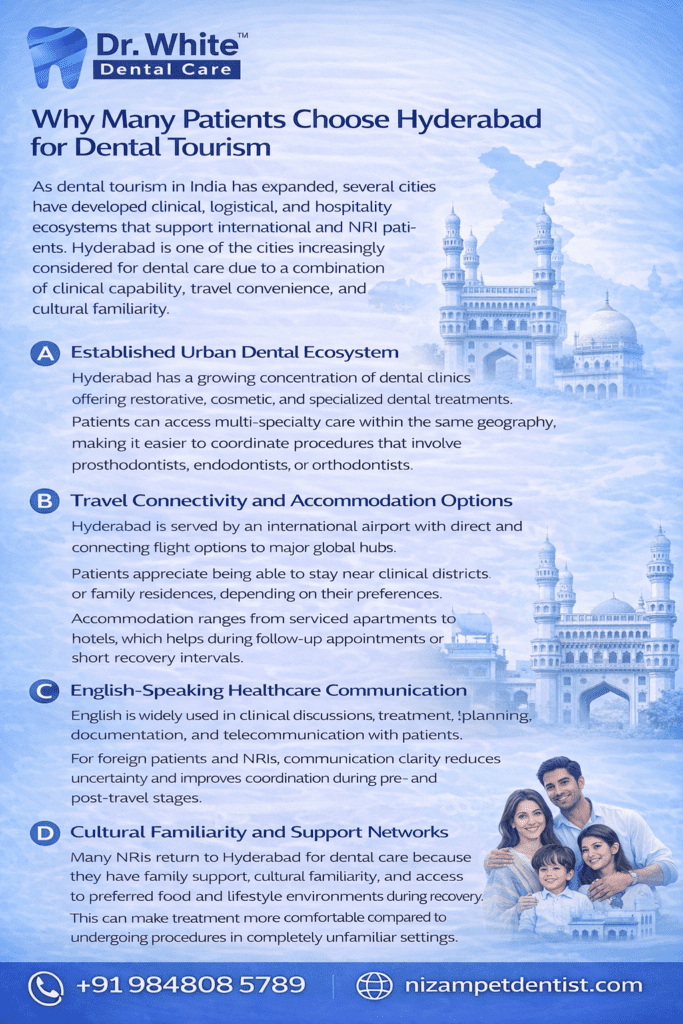
As dental tourism in India has expanded, several cities have developed clinical, logistical, and hospitality ecosystems that support international and NRI patients. Hyderabad is one of the cities increasingly considered for dental care due to a combination of clinical capability, travel convenience, and cultural familiarity.
1. Established Urban Dental Ecosystem :
Dental Tourism In Hyderabad has a growing concentration of dental clinics offering restorative, cosmetic, and specialized dental treatments. Patients can access multi-specialty care within the same geography, making it easier to coordinate procedures that involve prosthodontists, endodontists, or orthodontists.
2. Travel Connectivity and Accommodation Options :
Patients undergoing multi-phase treatments such as implant-supported restorations or full mouth rehabilitation may require staged appointments or multiple visits, which should be planned in advance during the virtual consultation stage.
3. English-Speaking Healthcare Communication :
English is widely used in clinical discussions, treatment planning, documentation, and telecommunication with patients. For foreign patients and NRIs, communication clarity reduces uncertainty and improves coordination during pre- and post-travel stages.
4. Cultural Familiarity and Support Networks :
Many NRIs return to Hyderabad for dental care because they have family support, cultural familiarity, and access to preferred food and lifestyle environments during recovery. This can make treatment more comfortable compared to undergoing procedures in completely unfamiliar settings.
5. Integration With Tourism and Family Visits :
Some patients plan their trips around tourism activities or extended family stays. Historical landmarks, cultural attractions, and culinary experiences make it possible to blend treatment schedules with leisure without compromising clinical follow-up.
Travel & Logistics Planning for Dental Tourism?
Dental tourism involves both clinical care and travel coordination. Planning these elements in advance helps patients manage treatment schedules, appointments, and recovery with fewer disruptions.
1. Travel and Documentation :
Patients traveling from abroad typically begin by reviewing flights and entry documentation. Visa requirements vary by country of origin, so patients should verify details through official government sources before confirming travel dates.
2. Accommodation and Local Transport :
Since dental treatments may involve multiple visits, staying near the clinic can make transportation easier. Patients commonly book hotels or serviced apartments, or stay with family if they have personal ties in India. Local mobility apps and taxis support clinic travel.
3. Budgeting for the Trip :
Beyond treatment fees, patients may budget for accommodation, transportation, meals, medications (if prescribed), and follow-up visits. Clear budgeting reduces unexpected expenses during the stay.
4. Communication and Scheduling :
Virtual consultations, email, and messaging tools allow patients to discuss treatment timelines across time zones. This supports planning for procedures that require staged or sequential visits.
5. Treatment and Recovery Timelines :
Some patients plan their trips around tourism activities or extended family stays. Historical landmarks, cultural attractions, and culinary experiences make it possible to blend treatment schedules with leisure without compromising clinical follow-up.
5. Family and Support Networks :
Many NRI patients coordinate care while staying with relatives, which provides practical support during recovery and follow-up appointments.
Why Most NRI's Choose NizampetDentist For Their Dental Related Problems?
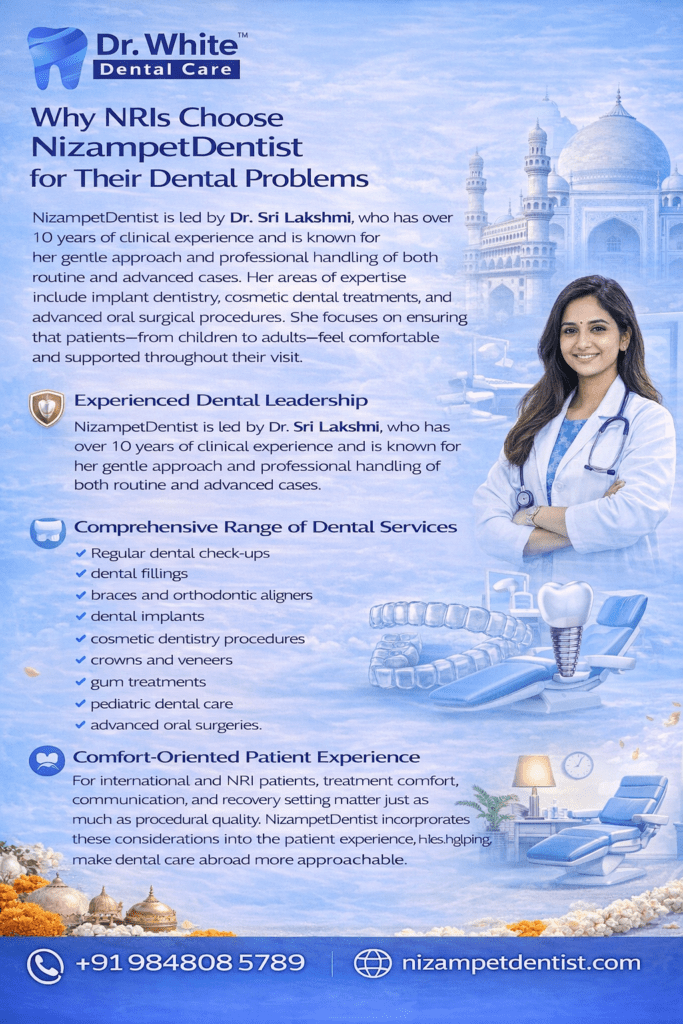
1. Experienced Dental Leadership :
NizampetDentist is led by Dr. Sri Lakshmi, who has over 10 years of clinical experience and is known for her gentle approach and professional handling of both routine and advanced cases. Her areas of expertise include implant dentistry, cosmetic dental treatments, and advanced oral surgical procedures. She focuses on ensuring that patients—from children to adults—feel comfortable and supported throughout their visit.
2. Comprehensive Range of Dental Services :
The clinic provides a broad range of dental treatments, including:
- Regular dental check-ups.
- Dental Fillings.
- Braces and Orthodontic Aligners.
- Dental Implants.
- Cosmetic Dentistry Procedures.
- Crowns and Veneers.
- Gum Treatments.
- Pediatric Dental Care.
- Advanced Oral Surgeries.
Treatment plans are tailored to clinical findings and patient needs to support both oral function and aesthetics.
3. Comfort-Oriented Patient Experience :
For international and NRI patients, treatment comfort, communication, and recovery setting matter just as much as procedural quality. NizampetDentist incorporates these considerations into the patient experience, helping make dental care abroad more approachable.
Pre-Travel Dental Checklist for International and NRI Patients?
Patients planning dental treatment in India often prepare documents and health information before traveling to help streamline clinical decision-making and reduce uncertainties during treatment.
1. Recent Dental Records :
If available, patients may bring or share:
- Recent Dental X – Rays or Scans.
- Treatment Summaries.
- Previous Dental Notes.
- Photographs ( Intraoral and extraoral ).
This provides context for treatment planning and suitability discussions.
2. Medical History Information :
Medical history can influence dental treatment timelines, medication choices, and healing patterns. Patients may prepare:
- Medical History Notes.
- Current Medication List.
- Known Allergies.
- Recent Medical Reports.
3. Treatment Goals and Concerns :
Patients often travel with specific goals such as implants, cosmetic improvements, or functional rehabilitation. Communicating these goals helps align expectations with clinical recommendations.
4. Scheduling Preferences :
Since procedures may require multiple visits, patients should plan:
- Travel Dates.
- Procedure Windows.
- Follow – Up Appointments.
- Recovery Time.
- Return Travel Timing.
5. Financial and Budget Planning :
Aside from treatment fees, budgeting may include:
- Accommodation.
- Transportation.
- Meals.
- Medication ( If Prescribed ).
- Additional Follow – Ups Visits.
6. Communication and Contact Details :
Patients should store clinic contact details for use during travel, especially if multiple appointments or confirmations are required.
We are here
Enquire Now
FAQ
Dental tourism in India refers to international and NRI patients traveling to India to receive dental care such as implants, cosmetic dentistry, orthodontic treatments, or restorative procedures, often combined with travel or family visits.
Patients may consider India due to lower treatment costs, availability of modern dental technology, English-speaking clinicians, shorter waiting times, and supportive family or cultural networks for recovery.
Common procedures include dental implants, veneers, crowns and bridges, orthodontic aligners, root canal therapy, cosmetic smile enhancements, and full mouth rehabilitation.
Safety depends on the clinic, clinician qualifications, sterilization protocols, treatment planning, and patient-specific medical history. Patients are encouraged to review clinic details and discuss their case through virtual consultations before travel.
Treatment costs in India are generally more accessible than in many Western countries. Final costs depend on procedure type, materials used, case complexity, and number of appointments required.
Treatment duration varies. Some procedures can be completed within a few days, while others—such as implants or aligners—may require staged visits or multiple follow-up appointments.
Visa requirements depend on the country of origin and intended duration of stay. Patients should verify their visa category and eligibility through official government resources before traveling.
Yes, implants are commonly requested because they may be significantly more expensive in other countries. Treatment suitability depends on bone condition, oral health, and clinical evaluation.
Many patients combine dental care with sightseeing, cultural activities, or visiting family members, as long as the treatment schedule and recovery needs are respected.
Hyderabad offers a modern dental ecosystem, urban medical infrastructure, English-speaking clinicians, and supportive NRI networks, making it a practical option within India’s dental tourism landscape.
Patients may consider clinician experience, treatment range, sterilization protocols, communication clarity, and virtual consultation availability before selecting a clinic.
Yes. NizampetDentist supports virtual consultations to discuss treatment goals, timelines, and preliminary case suitability before travel. Final treatment plans require in-person evaluation.
Patients may bring recent dental records, radiographs, medical history details, medication lists, and treatment goals to help clinicians plan appropriately.
Some follow-up guidance can be provided remotely for suitable cases. Patients may also be advised to complete local maintenance care, depending on the procedure.
Suitability depends on dental treatment goals, oral health status, medical history, and willingness to coordinate travel around clinical timelines. Individual assessments determine final eligibility.