Home › Blog › How to Prevent Tooth Decay

Dental health guide
Reviewed by Dr. Srilakshmi Champati
BDS · Dental Surgeon · Implantologist · Nizampet Dentist, Hyderabad
This article provides general patient education about preventing tooth decay. Prevention advice should be tailored to your age, history and individual cavity risk.
Preventive dentistry · Everyday oral care
How to Prevent Tooth Decay: 10 Evidence-Based Tips
To help prevent tooth decay, brush twice daily with fluoride toothpaste, clean between your teeth every day, reduce frequent sugar exposure, drink water between meals and keep up with dental check-ups. These habits work together; no single food, mouthwash or home remedy can replace them.
Tooth decay can start without pain, so the most useful prevention plan combines daily habits with professional advice tailored to your cavity risk. This guide explains what works, what to avoid and when to get a dental check-up.
General education only. Your dentist can recommend care based on your age, history, symptoms and individual risk.
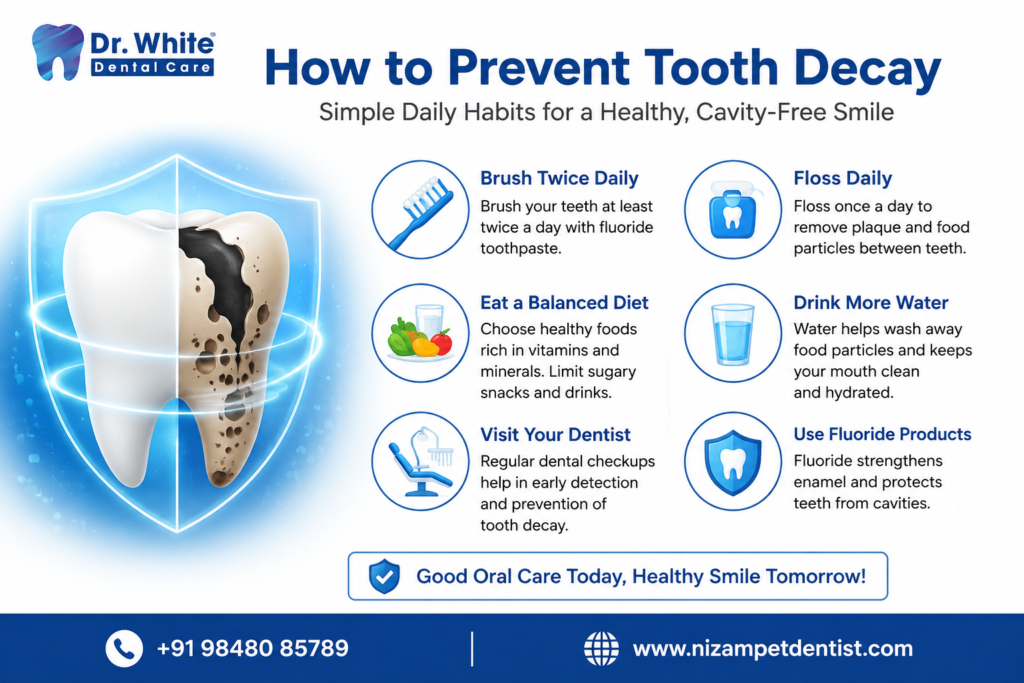
Daily fluoride brushing, interdental cleaning and sensible food choices help protect teeth.
The quick answer
Quick Answer: What Is the Best Way to Prevent Tooth Decay?
Brush for about two minutes twice a day with fluoride toothpaste, clean between your teeth daily, keep sugary foods and drinks occasional rather than frequent, choose water between meals, and visit a dentist at an interval suited to your needs. Very early enamel mineral loss may be reversible, but a cavity that has formed usually needs professional treatment.
Fluoride matters
Fluoride helps enamel resist acid and supports repair of early mineral loss.
Frequency matters
Repeated sugar exposures throughout the day give plaque bacteria more chances to produce acid.
Decay may be silent
Early tooth decay often causes no pain, so routine assessment matters even when teeth feel normal.
Key takeaways
Key Takeaways
Brush twice daily
Use a soft-bristled toothbrush and fluoride toothpaste for about two minutes each time.
Clean between teeth
Floss or use an interdental cleaner every day to remove plaque where a brush may not reach.
Reduce repeated sugar exposure
Limit sugary drinks and snacks, especially between meals and before bedtime.
Choose water more often
Water helps clear food debris and supports hydration; fluoride content varies by water source.
Get personalised prevention
Your dentist may recommend fluoride varnish, sealants or closer reviews if your risk is higher.
Do not wait for pain
Tooth decay can begin without symptoms and is easier to manage when identified early.
Understanding decay
What Is Tooth Decay and Why Does It Happen?
Tooth decay, also called dental caries or cavities, is damage to the hard tissues of a tooth. Bacteria in dental plaque use sugars from food and drinks and produce acids. Repeated acid attacks remove minerals from enamel. If the process continues, the surface can break down and form a cavity.
Saliva and fluoride help replace some of the minerals lost during early acid attacks. When mineral loss repeatedly exceeds repair, decay can progress. The National Institute of Dental and Craniofacial Research ↗ explains that early decay can sometimes be stopped or reversed before a hole forms.
1
Sugar exposure
Sweet snacks and drinks feed plaque.
2
Acid attack
Plaque bacteria produce acids.
3
Mineral loss
Repeated attacks weaken enamel.
4
Prevent and repair
Fluoride, cleaning and fewer sugar hits.
The goal is to reduce acid attacks and support enamel remineralisation. Prevention is most effective before a cavity forms.
Who may have a higher risk?
✓ People who have had recent or repeated cavities.
✓ People with persistent dry mouth or medicines that reduce saliva.
✓ People with gum recession and exposed tooth roots.
✓ Children, especially when sugary drinks or snacks are frequent.
✓ People with braces, bridges or other dental work that makes cleaning harder.
✓ People who snack or sip sweetened drinks repeatedly throughout the day.
Prevention tips
10 Practical Ways to Prevent Tooth Decay
1. Brush twice a day for about two minutes
Brush in the morning and before bed using a soft-bristled toothbrush. Clean the outer, inner and chewing surfaces of every tooth, including the gumline and back molars. Use gentle, controlled movements; scrubbing harder does not make teeth cleaner and can irritate gums.
2. Use fluoride toothpaste
Fluoride helps strengthen enamel, makes it more resistant to acid and supports remineralisation of early mineral loss. Choose a fluoride toothpaste appropriate for your age and follow the label. Spit out the excess. For young children, use an age-appropriate amount, supervise brushing and discourage swallowing toothpaste. Ask a dentist before using high-strength fluoride products.
3. Clean between your teeth every day
A toothbrush cannot fully clean every contact between teeth. Use dental floss, an interdental brush or another cleaner recommended for your mouth once daily. If you have tight spaces, gum recession, braces, bridges or implants, ask your dentist to show you the right tool and technique.
4. Reduce the frequency of sugary snacks and drinks
Sugar is used by plaque bacteria to produce acids that attack enamel. Keep sweets, biscuits, cakes, sweetened tea or coffee, soft drinks, energy drinks and sweetened juices occasional. Having a sweet item with a meal is generally preferable to sipping or nibbling on sugary products repeatedly.
5. Choose water between meals
Water helps rinse away loose food debris and supports hydration. Make water your usual drink between meals instead of sugary beverages. Fluoride levels differ by local water source, so do not assume every tap or bottled water contains fluoride. If your mouth often feels dry, tell your dentist.
6. Choose snacks that are kinder to teeth
Choose balanced meals and snacks such as plain yoghurt, cheese, vegetables, nuts when safe for you, and whole fruit rather than frequent sweet drinks or sticky confectionery. No food can scrub plaque away or replace brushing. Dried fruit can be sticky and concentrated in sugar, so avoid grazing on it throughout the day.
7. Be aware of acidic drinks and enamel erosion
Many soft drinks, energy drinks and fruit juices are acidic and may erode enamel. Sugar-free does not always mean non-acidic. Choose water more often, avoid sipping acidic drinks for long periods, rinse with water afterwards and do not brush immediately after an acidic drink. Ask your dentist about sensitivity or enamel wear.
8. Do not ignore dry mouth
Saliva washes away debris and helps neutralise acids. Dry mouth can be associated with dehydration, some medicines or medical conditions and can increase cavity risk. Drink water regularly and speak with your dentist or doctor if dryness persists. Do not stop or change prescribed medicine without medical advice.
9. Ask about professional prevention if you are at higher risk
Your dentist may recommend professional fluoride treatment, a specific home-care product or shorter review intervals if you have repeated cavities, exposed roots, dry mouth or other risk factors. Children and teenagers may benefit from dental sealants on the grooves of back teeth.
10. Keep regular dental check-ups
Early decay may not hurt. A dentist can examine tooth surfaces, assess your cavity risk and recommend imaging when clinically needed. Professional cleaning removes hardened deposits that brushing cannot, but the visit schedule should be based on your oral health history rather than a one-size-fits-all rule.
Further guidance: CDC guidance on fluoride ↗ · ADA toothpaste information ↗ · ADA caries risk assessment guidance ↗ (explains why prevention plans should consider habits, saliva, previous decay and clinical findings).
Daily routine
A Simple Daily Routine to Protect Your Teeth
You do not need a complicated routine. Consistent habits are more useful than occasional intensive cleaning.
Morning
Brush for about two minutes with fluoride toothpaste. Eat a balanced breakfast and choose water with or after meals.
During the day
Keep sugary snacks and drinks occasional, avoid constant sipping, and choose water between meals. Rinse with water after acidic drinks.
Before bed
Clean between teeth, brush with fluoride toothpaste and avoid sugary food or drinks after brushing.
If you wear braces, have a bridge, experience dry mouth or have a history of frequent cavities, ask your dentist to personalise this routine.
Children’s teeth
How to Prevent Tooth Decay in Children
Children need help with brushing until they can clean all tooth surfaces effectively. Use fluoride toothpaste in an age-appropriate amount, supervise brushing and encourage children to spit rather than swallow. Follow your dentist’s advice on the amount of toothpaste for your child’s age and cavity risk.
✓ Offer water between meals and limit sweetened drinks and frequent sugary snacks.
✓ Avoid putting a child to bed with a bottle containing milk, juice or another sugary drink; follow your child’s dental professional’s advice for infant feeding and oral care.
✓ Arrange dental visits early and keep up with age-appropriate reviews.
✓ Ask whether fluoride varnish or sealants are suitable for your child’s teeth.
✓ Check that the back teeth are being cleaned, not only the visible front teeth.
Parents and caregivers
Baby teeth matter too
Untreated decay in primary teeth can cause pain and infection and may affect eating or sleep. Seek dental advice if you notice white or brown spots, pain, swelling or a visible hole.
Early signs
Early Signs of Tooth Decay: When to See a Dentist
Tooth decay may not cause symptoms at first. Possible warning signs include:
✓ A chalky white spot or a brown, black or dark area on a tooth.
✓ Sensitivity to sweet, hot or cold foods and drinks.
✓ Food repeatedly getting trapped in one area.
✓ A visible hole, rough area or damaged tooth surface.
✓ Toothache or discomfort when biting.
These signs do not confirm decay on their own; sensitivity and staining can have other causes. Arrange a dental examination if you notice a change. Severe or increasing pain, facial swelling, fever, pus or difficulty opening your mouth needs prompt assessment. Difficulty breathing or swallowing, or rapidly spreading facial swelling, requires emergency medical care.
Can tooth decay be reversed naturally?
Very early mineral loss may be stopped or remineralised with fluoride and changes to daily care before a cavity forms. Once a hole has developed, missing tooth structure does not grow back naturally. A dentist will assess whether the tooth needs monitoring, fluoride treatment, a filling or more extensive care.
Do not try to treat a cavity with lemon, charcoal, baking soda mixtures or other abrasive home remedies. They do not rebuild lost tooth structure and may irritate the mouth or contribute to enamel wear.
Common Mistakes That Increase Cavity Risk
Common mistake
A better approach
Brushing only once a day
Brush twice daily with fluoride toothpaste and clean between teeth every day.
Brushing very hard
Use a soft-bristled brush and gentle technique for about two minutes.
Sipping sweet drinks all day
Keep sweet drinks occasional and choose water between meals.
Assuming no pain means no cavity
Attend risk-based check-ups because early decay may be symptom-free.
Using mouthwash instead of brushing
Treat mouthwash as an optional addition, not a replacement for fluoride brushing and interdental cleaning.
Ignoring dry mouth
Discuss persistent dryness and possible causes with a dentist or doctor.
Clinical insight
Prevention Should Match Your Cavity Risk
Two people can have different cavity risks even if they brush the same number of times a day. A history of recent cavities, dry mouth, exposed roots, frequent sugar intake, dental appliances and the ability to clean effectively all affect the prevention plan. Your dentist may recommend extra fluoride, sealants, dietary changes or more frequent reviews depending on what the examination shows.
The practical goal is to find problems early, protect tooth structure and make the daily routine achievable. If you have repeated cavities despite regular brushing, ask for a caries-risk review rather than simply switching toothpaste brands repeatedly.
Near you
Tooth Decay Prevention in Nizampet, Hyderabad
Nizampet Dentist is located on Main Road opposite Balaji Park Town in Nizampet, Hyderabad. If you have a history of cavities, tooth sensitivity, visible spots or questions about fluoride, a dental check-up can help identify your needs and build a prevention plan.
Dr. Srilakshmi Champati, BDS, is listed on the clinic’s published profile as a dental surgeon and implantologist. Treatment and prevention recommendations should be based on a clinical assessment and your individual history.
Related reading:
Common questions
Frequently Asked Questions
01 What is the most effective way to prevent tooth decay?
Brush twice a day for about two minutes with fluoride toothpaste, clean between your teeth daily, reduce how often you consume sugary foods and drinks, drink water between meals, and attend dental check-ups at an interval suited to your risk. No single habit replaces the others.
02 Can tooth decay be prevented completely?
Daily fluoride use, good cleaning, fewer sugar exposures and professional prevention can greatly reduce the risk, but they cannot guarantee that cavities will never develop. Dry mouth, exposed roots, previous decay, some medicines and other factors can increase risk.
03 Can early tooth decay be reversed?
Very early mineral loss, before a hole forms, may be stopped or remineralised with fluoride and improved oral care. Once a cavity has formed, the lost tooth structure does not grow back; a dentist needs to assess the tooth and recommend suitable treatment.
04 Does fluoride toothpaste prevent cavities?
Yes. Fluoride helps enamel resist acid and supports remineralisation of early mineral loss. Use a fluoride toothpaste appropriate for your age and follow the product label and your dentist’s advice. Children should use an age-appropriate amount and be supervised so they do not swallow toothpaste.
05 How many times a day should I brush my teeth?
For most people, brushing twice a day for about two minutes with fluoride toothpaste is recommended. Brush gently along the gumline and all tooth surfaces with a soft-bristled brush. Brushing harder is not a substitute for good technique.
06 Is flossing necessary to prevent tooth decay?
Cleaning between teeth once a day helps remove plaque from areas a toothbrush may not reach. You can use floss, interdental brushes or another cleaner recommended for your teeth and dental work.
07 Does sugar cause tooth decay?
Mouth bacteria use sugars from foods and drinks to produce acids that remove minerals from enamel. Both the amount and how frequently teeth are exposed matter, so keep sugary items occasional and preferably with meals rather than sipping or snacking on them repeatedly.
08 Can a cavity heal on its own without a filling?
A very early lesion may be managed without drilling if the tooth surface has not broken down, but this requires a dentist’s assessment and a suitable prevention plan. A formed cavity generally needs restorative treatment; home remedies cannot rebuild missing tooth structure.
09 Is mouthwash enough to prevent cavities?
No. Mouthwash can be an additional aid in selected situations, but it does not replace brushing with fluoride toothpaste or cleaning between teeth. Ask your dentist whether a fluoride mouth rinse is useful for your age and cavity risk.
10 How often should I visit the dentist to prevent cavities?
The right interval depends on your history and risk. Some people need more frequent reviews because of recent cavities, dry mouth, gum recession, braces or other risk factors. Ask your dentist to set a schedule for your needs rather than relying on one interval for everyone.
11 How can I prevent tooth decay in children?
Brush children’s teeth twice a day with an age-appropriate amount of fluoride toothpaste and supervise brushing. Limit frequent sugary snacks and drinks, avoid putting a child to bed with a bottle containing anything sugary, and ask the dentist about fluoride varnish and sealants for molars when appropriate.
12 Do acidic drinks cause tooth decay?
Sugary drinks can increase cavity risk, and acidic drinks can also erode enamel. Choose water most often, avoid sipping acidic drinks over long periods, rinse with water afterwards, and avoid brushing immediately after an acidic drink.
13 Can dry mouth increase the risk of cavities?
Yes. Saliva helps wash away food debris and neutralise acids. Persistent dry mouth can increase cavity risk and may be related to medicines, dehydration or medical conditions. Tell your dentist if your mouth often feels dry; do not stop prescribed medicines on your own.
14 What are the early signs of tooth decay?
Early decay may have no symptoms. A chalky white spot, brown or dark mark, sensitivity to sweet, hot or cold foods, food repeatedly catching in one place, or tooth pain can be warning signs. Only a dental examination can determine whether decay is present and how advanced it is.
15 Where can I get advice about preventing tooth decay in Nizampet?
Nizampet Dentist is located on Main Road opposite Balaji Park Town in Nizampet, Hyderabad. You can call +91 98480 85789 to ask about a dental check-up and cavity-prevention advice. The dentist can assess your individual risk and recommend suitable care.
Get in touch
Need Advice About Preventing Tooth Decay?
If you have recurring cavities, sensitivity or concerns about a child’s teeth, a dental check-up can help you understand the cause and choose an appropriate prevention plan. Contact the clinic to ask about an appointment.
Nizampet Dentist
Dr. White Dental Care, Nizampet branch
Address
1st Floor, House No. 3, 10/2/A, Main Road, opposite Balaji Park Town, Nizampet, Hyderabad, Telangana 500090.
Phone
+91 98480 85789
Email
nizampet@dwdc.in
References and Further Reading
National Institute of Dental and Craniofacial Research (NIDCR) — Tooth Decay ↗
Centers for Disease Control and Prevention (CDC) — About Fluoride ↗
CDC — Oral Health Tips for Adults ↗
American Dental Association (ADA) — Toothpastes ↗
ADA — Home Oral Care ↗
ADA — Caries Risk Assessment and Management ↗
Medical disclaimer: This article provides general dental education and does not replace an examination or personalised advice from a qualified dental professional. Seek professional care for symptoms or concerns.
Prevention plan
Protect Your Smile With a Practical Prevention Plan
Get advice based on your oral health, past cavities and daily routine. A check-up can help identify early decay and the right preventive steps.
Clinic location
Visit Nizampet Dentist
Address: 1st Floor, House No. 3, 10/2/A, Main Road, opposite Balaji Park Town, Nizampet, Hyderabad, Telangana 500090.
Phone: +91 98480 85789
Call before visiting to confirm appointment availability.
Opposite Balaji Park Town
Nizampet Main Road, Hyderabad. Open Google Maps for live directions to the clinic.
Open Google Maps ↗