Dental Implant Recovery Timeline
Dental Implant Recovery Timeline : The Complete Healing Guide
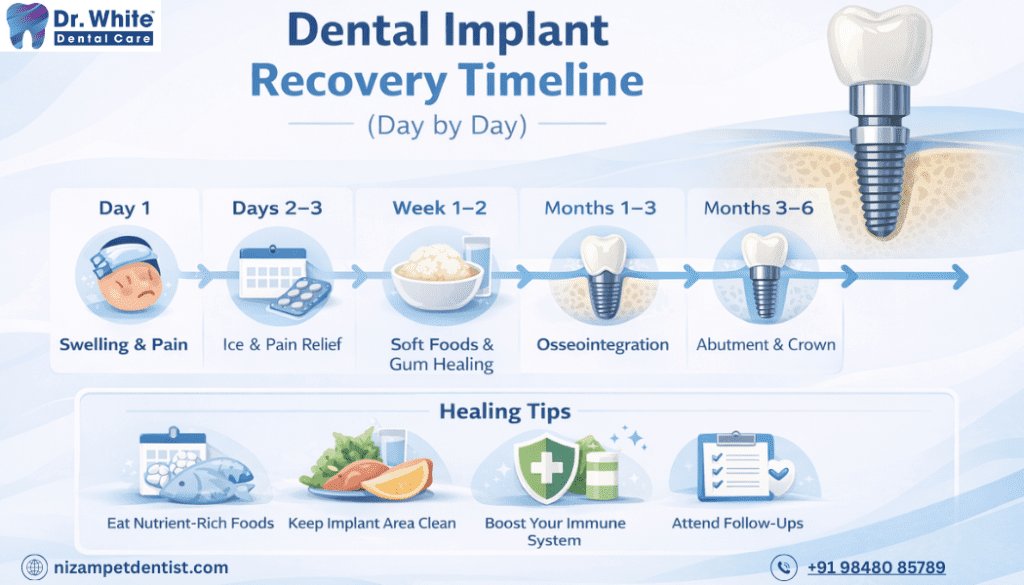
Dental implant recovery timeline is a gradual process that occurs in clearly defined stages. During the first 1–3 days after surgery, mild swelling, discomfort, and tenderness are common. By Week 1–2, gum healing progresses and most patients return to normal daily activities. Over the next 1–3 months, a critical process called osseointegration takes place, where the implant fuses securely with the jawbone. Once this phase is complete, the final abutment and dental crown are placed, typically within 3–6 months.
While healing is usually smooth, patients should watch for warning signs such as severe pain, persistent swelling, implant mobility, infection, or fever. Supporting recovery with nutrient rich foods, proper oral hygiene, immune system care, and regular follow ups improves outcomes. With careful post operative care and patience, most patients experience successful healing and long term implant stability, resulting in a strong, natural looking smile that can last for decades.
What Is a Dental Implant?
A Dental implant is a permanent solution for replacing missing teeth. It consists of:
- A titanium implant post placed into the jawbone
- An abutment that connects the implant to the crown
- A custom made dental crown that looks like a natural tooth
Unlike dentures or bridges, implants fuse directly with your Jawbone, making them extremely stable and long lasting.
How Long Does Dental Implant Recovery Take?
Quick Answer:
- Initial recovery: 7–10 days
- Soft tissue healing: 2–4 weeks
- Full bone healing (osseointegration): 3–6 months
- Final crown placement: After bone integration is complete
The full dental implant healing timeline depends on several factors:
- Single Dental implant vs multiple dental implants
- Implant location (front tooth implant recovery time may differ)
- Whether bone grafting is required
- Your overall health
- Smoking habits
- Immune system response
Dental Implant Healing Stages Day by Day
Day 0: Surgery Day:
The implant post placement procedure usually takes 1-2 hours.
After surgery:
- You’ll experience numbness from anesthesia
- Mild bleeding is normal
- Gauze is placed to support blood clot formation
- Swelling begins within a few hours
What to Do:
- Rest
- Avoid spitting forcefully
- Avoid rinsing
- Eat soft, cool foods
- Follow post operative instructions strictly
This marks the start of your recovery after implant placement.
Day 1 -First 24 Hours After Surgery:
This is the most sensitive phase of the Dental implant recovery process.
Symptoms:
- Mild to moderate discomfort
- Slight bleeding
- Beginning of dental implant swelling timeline
- Jaw tenderness
Dental implant recovery pain duration is usually manageable with prescribed anti-inflammatory medication.
Pain is often less severe than tooth extraction recovery.
Day 2-3: Peak Swelling & Inflammation:
This is when inflammation peaks.
What’s Happening Internally:
- Your body activates immune response
- Soft tissue healing begins
- Swelling increases
- Minor bruising may appear
Swelling after dental implant surgery typically peaks around 48–72 hours.
Care Tips:
- Ice packs (20 minutes on/off)
- Soft food diet
- Avoid exercise
- Gentle surgical site care
Day 4–7: Initial Gum Healing:
By this stage:
- Swelling begins reducing
- Pain decreases significantly
- You may return to work
- Stitches may dissolve or be removed
The Gum tissue begins visibly closing over the implant site.
Gum healing is a crucial part of the early dental implant surgery healing stages.
Week 2–4: Soft Tissue Stabilization:
At this point:
- Discomfort is minimal
- Implant feels stable
- Surgical site fully closes
- You may resume most normal activities
However, inside the bone, deeper healing continues.
Month 1–3: The Osseointegration Phase (Most Important Stage)
This is the most critical part of the dental implant recovery timeline.
The implant fuses with your jawbone in a process called : Osseointegration
What Is Osseointegration?
It’s the biological process where bone cells attach directly to the titanium implant surface, creating permanent stability.
This bone integration period determines the long term success of the implant.
How Long Does Osseointegration Take?
- Lower jaw: 3–4 months
- Upper jaw: 4–6 months
You won’t see visible changes, but internally, jawbone healing is actively securing the implant.
Month 3–6: Abutment & Crown Placement
Once osseointegration is complete, the final phase begins.
Step 1: Abutment placement
This minor procedure attaches the connector piece to the implant.
Mild tenderness may last 1–3 days.
Step 2: Dental crown Placement
Your custom crown is secured, completing the restoration.
Now your dental implant recovery timeline is complete.
You can chew normally and enjoy full function.
Dental Implant Recovery With vs Without Bone Graft
Some patients need additional procedures before implant placement.
Without Bone Grafting
Total recovery: 3–6 months
With Bone grafting
If jawbone density is insufficient, bone graft recovery period may require:
- 3–6 months before implant placement
- Additional healing time afterward
In upper jaw cases, a Sinus lift may be required.This extends the overall dental implant healing timeline.
Single vs Multiple Dental Implant Recovery
Single Tooth Implant Recovery Time
Usually straightforward with minimal discomfort.
Multiple Dental Implants Healing Time
May involve:
- Slightly longer swelling duration
- Increased surgical complexity
- Extended recovery instructions
However, healing stages remain similar.
What Affects Dental Implant Recovery Time?
Several factors influence healing:
- Smoking (slows bone integration)
- Diabetes
- Poor oral hygiene
- Excessive pressure on implant
- Immune health
- Location of implant
Maintaining excellent oral care significantly improves implant stability.
What to Follow After Dental Implant Surgery
Eating Timeline:
- Day 1–3: Liquids & soft foods
- Week 1: Soft diet
- Week 2: Gradual normal foods
- After crown placement: Normal chewing
Exercise:
- Avoid heavy exercise for 3–5 days
- Light walking is fine
Brushing:
- Avoid direct brushing first 24 hours
- Resume gently around implant after Day 2
Tips to Speed Up Dental Implant Healing
- Avoid smoking completely
- Follow all post operative instructions
- Use prescribed mouth rinse
- Eat protein rich foods
- Avoid crunchy foods
- Avoid alcohol
- Stay hydrated
- Get proper sleep
- Maintain gentle brushing
- Avoid chewing on implant side
- Attend follow ups
- Take medications as directed
- Reduce stress
- Avoid touching surgical site
- Keep immune system strong
Warning Signs During the Dental Implant Recovery Timeline
While most patients experience smooth healing, it’s important to recognize when something may not be normal during your dental implant recovery timeline day by day.
Mild swelling, slight tenderness, and temporary discomfort are expected during the early dental implant surgery healing stages. However, certain symptoms could indicate complications affecting gum healing, soft tissue healing, or the critical Osseointegration phase.
Contact your dentist immediately if you experience any of the following warning signs:
- Severe or worsening pain after 5-7 days – Discomfort should gradually improve. Pain that intensifies instead of decreasing may signal infection or complications within the Jawbone during the bone integration period.
Persistent swelling beyond 7-10 days – The normal dental implant swelling timeline peaks around 48–72 hours and improves within a week. Increasing swelling, especially with redness or warmth, may indicate infection.
- Implant mobility or looseness – A properly healing implant should feel stable. Movement during the dental implant healing timeline may suggest failed integration with the jawbone.
- Pus, discharge, or bad taste – Healthy recovery after implant placement should not include yellow discharge, foul odor, or persistent bad taste. These may be signs of infection affecting the Gum tissue.
- Fever or chills – A mild temperature within 24 hours can occur, but ongoing fever (above 100.4°F / 38°C) may indicate systemic infection.
- Numbness that does not resolve – Temporary numbness from anesthesia recovery is normal. However, prolonged numbness beyond 48 hours may indicate nerve involvement, especially in lower jaw implants.
- Gum recession around the implant – If the gum begins pulling away and exposing implant threads, it could signal inflammation, excessive pressure, or healing complications.
Complications during the dental implant recovery time after surgery are uncommon when proper post-operative instructions and surgical site care are followed. Early detection and prompt professional evaluation significantly improve outcomes.
Long Term Implant Care After Recovery
Even after full recovery:
- Brush twice daily
- Floss regularly
- Schedule professional cleanings
- Avoid smoking
- Monitor implant stability
Dental implants can last 20+ years with proper care.
We are here
Enquire Now
Error: Contact form not found.
FAQ
Soft tissue heals in 1–2 weeks. Full recovery including osseointegration takes 3–6 months.
Most patients report mild discomfort lasting 3–5 days. Severe pain is uncommon.
Swelling peaks at 48–72 hours and subsides within 5–7 days.
Soft foods for 7–10 days. Normal eating after 2 weeks, depending on comfort.
Signs of healthy healing:
- Gradual pain reduction
- No excessive bleeding
- No implant mobility
- Healthy gum appearance
Contact your dentist if you notice:
- Persistent severe pain
- Pus discharge
- Fever
- Loose implant
- Severe inflammation
Although rare, implant failure can occur if Osseointegration does not properly occur. Factors like smoking, uncontrolled diabetes, infection, or excessive pressure on the implant may interfere with bone integration.
The Dental crown is typically placed after 3–6 months once full osseointegration is confirmed. In some cases, temporary crown healing may occur earlier if implant stability is strong.
Yes, after 24 hours you can gently rinse with warm salt water to support soft tissue healing. Avoid aggressive swishing, as this may disturb the surgical site care process.
The Gum tissue typically appears mostly healed within 2–4 weeks. Complete tissue maturation may take a few months, especially if additional procedures like Bone grafting were performed.