How to Prevent Tooth Decay
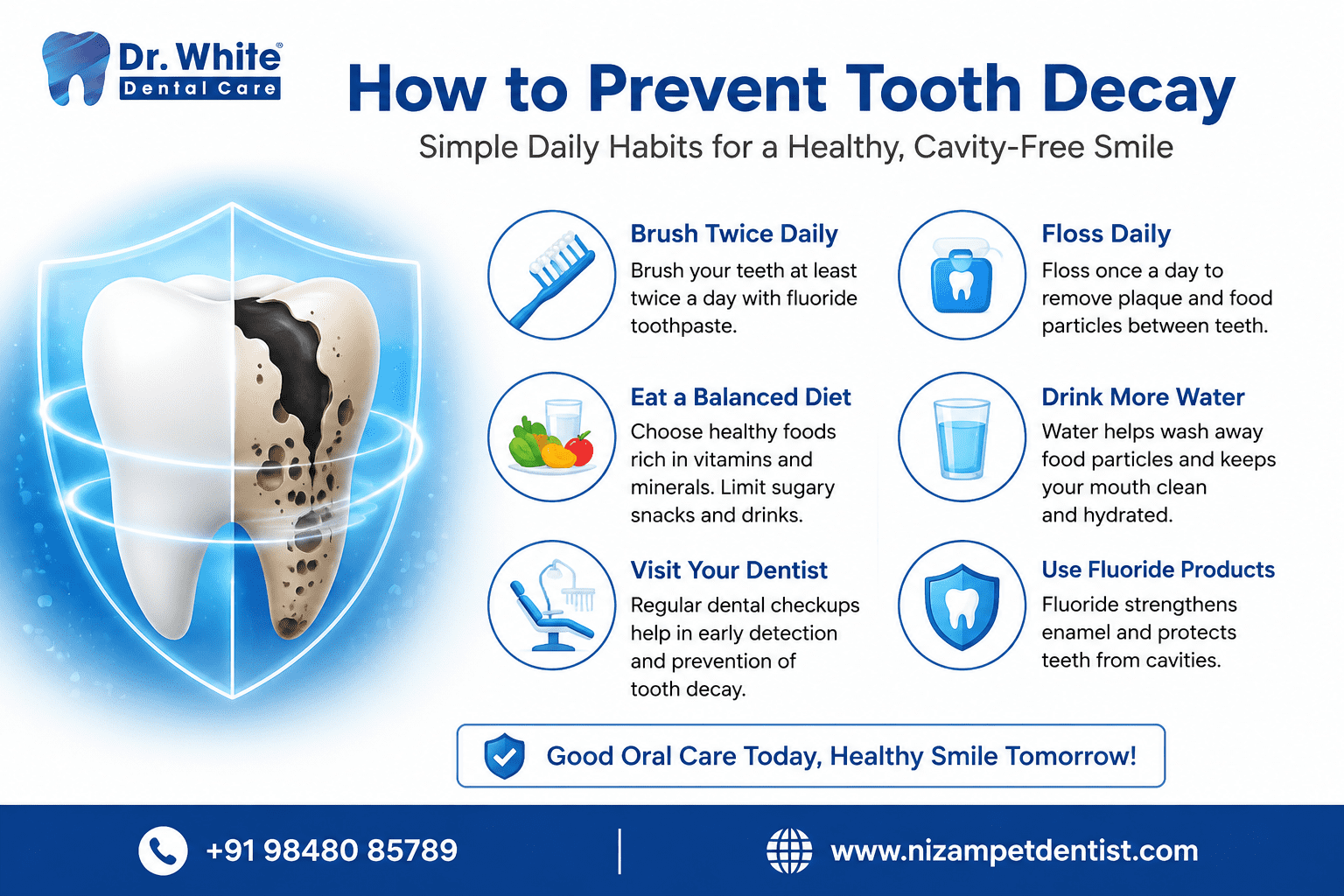
Tooth decay, also called dental caries or cavities, is one of the most common oral health problems for children and adults alike. It often develops slowly and painlessly at first, which makes it easy to miss. Left unchecked, weakened enamel can progress into a cavity requiring professional treatment.
The good news, however, is that decay is largely preventable. Brushing twice daily, cleaning between teeth, using fluoride toothpaste, limiting sugary foods and drinks, and keeping up with dental visits can substantially lower your risk. None of these habits are complicated or expensive, and most can be worked into a routine you already have.
Understanding how decay forms can help you make better daily choices, rather than just following advice without knowing why it works. Below are the most effective, evidence-backed ways to protect your teeth and avoid the discomfort and expense of restorative dental work
What Is Tooth Decay?
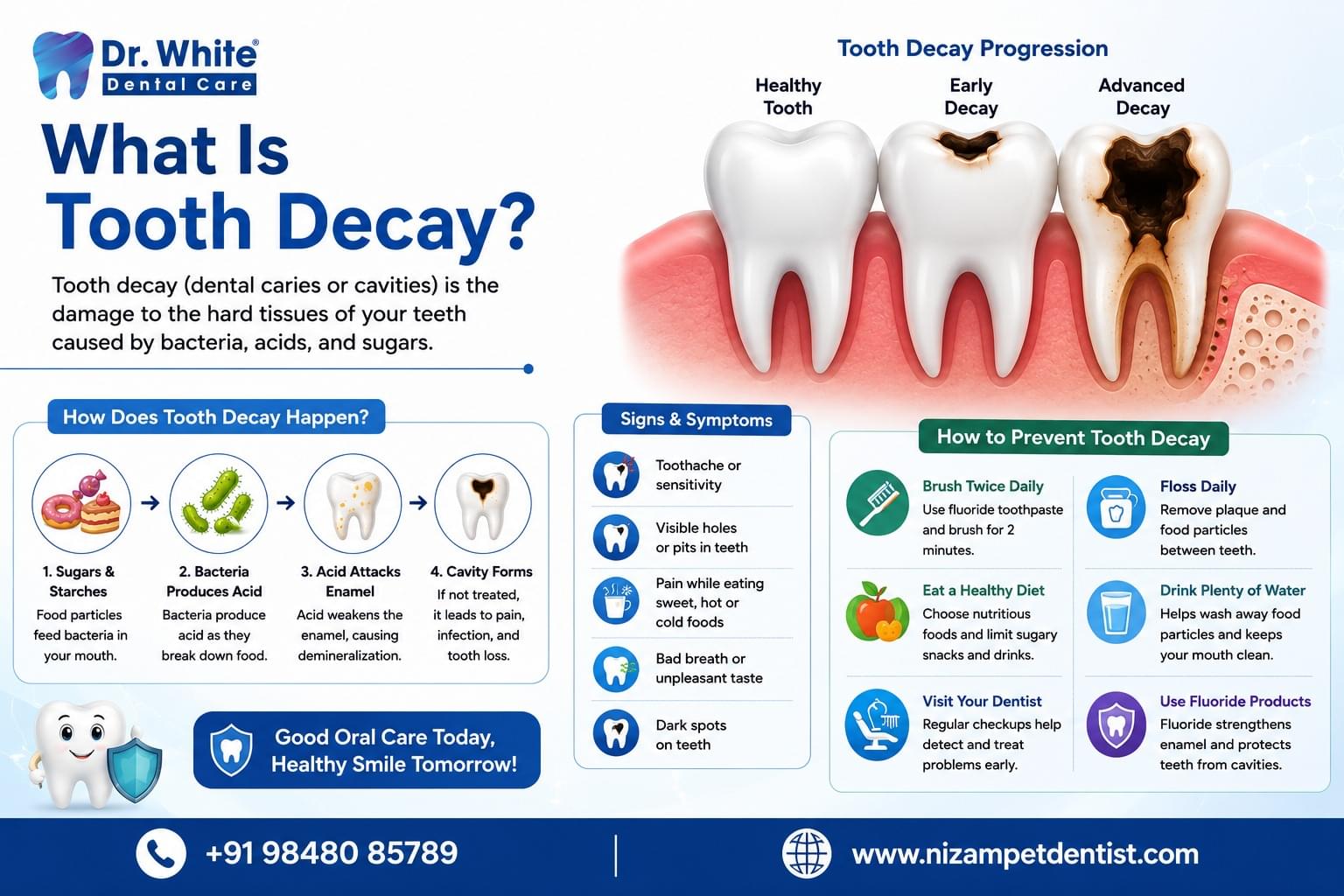
Tooth decay is damage to a tooth’s hard surface caused by repeated acid attacks. Bacteria in the mouth combine with food particles to form plaque, a sticky film on teeth. When you eat sugar, plaque bacteria produce acid that strips minerals from enamel. Over time, this weakens enamel and can create a cavity Learning how to prevent tooth decay starts with simple daily habits such as brushing twice a day, cleaning between your teeth, using fluoride toothpaste, limiting sugary foods and drinks, and visiting your dentist regularly.
Risk factors include:
- Inconsistent or poor brushing
- Skipping the spaces between teeth
- Frequent sugary foods or drinks
- Plaque buildup
- Low fluoride exposure
- Dry mouth
- Frequent snacking
- Certain medications or conditions
- Irregular dental checkups
Because decay can begin before symptoms appear, prevention and regular checkups matter.
- Gum disease damage: Severe gum disease can destroy the bone that supports your teeth. A graft helps rebuild this lost bone and protects remaining teeth.
- Missing teeth: If a tooth has been missing for months or years, the bone underneath shrinks. A dental bone graft before implant treatment restores the area so an implant can be placed securely.
- Injury or trauma: Accidents, falls, or sports injuries can damage the jawbone, and grafting helps repair the area.
- Tooth extractions: Dentists sometimes place a graft immediately after removing a tooth to prevent bone loss.
- Preparing for implants: A bone graft ensures the implant has strong support, much like a tree needs firm soil for its roots.
10 Effective Ways to Prevent Tooth Decay
1. Brush Twice a Day
Brush for about two minutes, morning and night, with fluoride toothpaste. Use a soft-bristled brush and gentle strokes, covering outer, inner, and chewing surfaces plus the gumline. Brushing harder isn’t better — it can irritate gums and wear enamel.
2. Use Fluoride Toothpaste
Fluoride strengthens enamel, supports remineralization of weakened spots, and boosts resistance to acid. Twice-daily brushing with fluoride toothpaste is enough protection for most people; those at higher risk may need extra fluoride treatments from a dentist.
3. Clean Between Your Teeth Daily
A toothbrush can’t reach every gap. Use floss, interdental brushes, or a water flosser once a day to remove trapped plaque and food debris. The best tool depends on your teeth, gums, and any dental work — consistency matters most.
4. Limit Sugary Foods and Drinks
Sugar fuels the bacteria that produce enamel-attacking acid. Cut back on candy, cakes, cookies, soda, energy drinks, sweetened coffee or tea, and sugary juices. You don’t need to eliminate treats entirely — just reduce how often your teeth are exposed to sugar.
5. Avoid Frequent Sugary Snacking
How often you eat sugar matters as much as how much. Constant snacking gives bacteria repeated chances to produce acid. Choose vegetables, whole fruit, plain dairy, cheese, nuts, or water between meals, and favor whole fruit over juice.
6. Drink Plenty of Water
Water rinses away food particles and supports hydration, while saliva helps neutralize acid and remineralize enamel. Swapping sugary drinks for water reduces sugar and acid exposure throughout the day.
7. Be Careful With Acidic Beverages
Soda, energy drinks, and fruit juice can erode enamel and raise cavity risk. Avoid sipping them slowly, choose water between meals, rinse with water afterward, and hold off brushing right after acidic drinks. See a dentist if you notice sensitivity or enamel wear.
8. Don’t Ignore Dry Mouth
Saliva protects teeth by washing away debris, neutralizing acid, and aiding remineralization. Persistent dry mouth — sometimes linked to medications, dehydration, or mouth breathing — raises decay risk and is worth discussing with a dentist.
9. Consider Sugar-Free Gum After Meals
Chewing sugar-free gum, especially with xylitol, stimulates saliva flow and can help when brushing isn’t immediately possible. It’s a helpful extra, not a replacement for brushing and interdental cleaning.
10. Visit Your Dentist Regularly
Routine checkups catch problems — early decay, cavities, gum disease, plaque buildup, cracked teeth — before symptoms appear. Your dentist can recommend a visit schedule based on your risk factors and history.
Why Prevention Matters
Preventing decay preserves natural tooth structure and avoids more invasive treatment. Very early enamel changes may be managed with fluoride and better hygiene, but a fully formed cavity generally needs restorative care such as a filling, crown, or in more advanced cases a root canal. Good prevention helps you avoid pain, chew comfortably, and maintain long-term oral health.
Beyond comfort, prevention also has a financial upside. Routine cleanings and checkups are far less costly than fillings, crowns, or root canals, and catching a problem early almost always means a simpler, shorter, and less expensive fix than catching it late. Investing a few minutes a day in brushing and interdental cleaning is a small trade-off compared to the time and money a neglected cavity can eventually demand.
Best Daily Routine
.
Morning: Brush two minutes with fluoride toothpaste, cover the gumline thoroughly, drink water, eat a balanced breakfast.
During the day: Limit sugary snacks and drinks, choose water between meals, avoid constant grazing, rinse with water after eating when possible.
Night: Clean between teeth, brush two minutes with fluoride toothpaste, avoid sugary foods afterward, and follow any personalized dentist advice.
Consistency matters more than complexity. A simple routine followed every day will protect your teeth far better than an elaborate one you only manage occasionally, so it’s worth building a schedule you can realistically stick to long term.
Signs You May Have Tooth Decay
Watch for white or chalky spots, brown or dark discoloration, sensitivity (especially to sweets, hot, or cold), pain when biting, a visible hole, food repeatedly trapped in one spot, or a persistent toothache. Don’t wait for these to worsen — schedule an exam.
Can Early Decay Be Reversed?
Very early mineral loss can sometimes be arrested or remineralized with fluoride and good hygiene. A fully formed cavity, however, won’t heal on its own and needs professional treatment — which is why early detection matters.
Common Mistakes That Increase Risk
- Brushing only once a day instead of twice
- Skipping interdental cleaning, leaving plaque between teeth
- Sipping sugary drinks frequently throughout the day
- Ignoring tooth sensitivity, which can signal decay or gum recession
- Waiting for pain before seeing a dentist
- Brushing too aggressively, which can wear enamel and irritate gums
- Using an old or worn toothbrush, which cleans less effectively even with good technique
- Overlooking diet as a whole, focusing only on brushing while ignoring how often sugar and acid reach the teeth throughout the day
Conclusion
Preventing tooth decay comes down to consistent, everyday habits: brush twice daily with fluoride toothpaste, clean between your teeth, limit frequent sugar exposure, drink plenty of water, and keep up with dental checkups.
Because decay can develop quietly and without obvious symptoms, don’t wait for pain before seeing a dentist. Early examination generally allows for simpler, faster, and less invasive care overall. If you notice sensitivity, discoloration, a visible cavity, pain, or food repeatedly catching in one particular spot, schedule an exam soon. For advice tailored to your situation — cavity prevention, professional cleaning, fluoride treatment, or decay treatment — a qualified dentist can guide your next steps and help you build a daily routine that fits your specific needs and risk level.
We are here
Enquire Now
FAQ
No natural remedy replaces proven care: brush twice daily with fluoride toothpaste, clean between teeth, limit sugar, drink water, and see your dentist regularly.
- Twice a day, about two minutes each time, with fluoride toothpaste.
Yes — it strengthens enamel, supports remineralization, and improves acid resistance.
.
Yes, it removes plaque and debris from areas a toothbrush misses.
Only in very early stages; a formed cavity needs professional treatment.
- Yes — bacteria convert sugar into acid that wears down enamel, and frequent exposure raises risk.
Yes, both from sugar content and, often, acidity that erodes enamel.
Early mineral loss might improve; a full cavity requires a dentist’s evaluation.
It depends on your individual risk factors — your dentist can recommend a schedule.
Mouthwash can be a useful addition, especially a fluoride rinse, but it works best alongside brushing and interdental cleaning rather than as a substitute for either one.